


In Argentina these days, justice is played like football—only with fewer rules and far more elbows. On one side of the pitch stand the judges, who have now ordered three times that Konstantin Rudnev, a 58‑year‑old Russian spiritual teacher with failing lungs, be moved from a maximum‑security prison to house arrest. On the other side, the prosecutors, who seem determined to keep him behind bars at any cost, appeal every judicial decision as if the fate of the nation depended on preventing one sick man from breathing fresh air. The match is currently in extra time, with judges repeatedly granting house arrest and the prosecution repeatedly blocking it, a spectacle that would be comic if it weren’t so cruel.
The case has become a kind of judicial farce: a man with severe pulmonary fibrosis, who asks for medicine every day in Russian and receives no interpreter, is kept in a high‑security facility while every other defendant in the same case has long since been released. The supposed “victim” insists she is not a victim. She is not heard. Yet the prosecutors insist on portraying Rudnev as a threat so grave that only steel bars can contain him.
To understand how Argentina ended up in this absurd situation, one must rewind the tape—back to Russia, back to Montenegro, and back to a long‑running campaign to turn a yoga teacher into a public enemy.
Konstantin Rudnev was born in Novosibirsk in 1967, raised between a communist household and a deeply religious grandmother who had survived Stalin’s repressions. It was she, not the Soviet state, who shaped his worldview, offering him a glimpse of something beyond the ideological cement of the USSR.
As a teenager, he discovered yoga—one of the few spiritual windows available in the late Soviet era—and by the late 1980s, he was teaching small groups in Novosibirsk. His early students describe him as a young man obsessed with self‑improvement, someone who had been bullied, had witnessed the brutality of the Soviet system, and had decided to reinvent himself.
By the early 1990s, as the Soviet Union collapsed and spiritual experimentation flourished, Rudnev’s groups grew. He founded the Siberian Association of Yogis and the “Olyrna” Association in 1991, then a correspondence school that reached across the former USSR. By 2000, there were an estimated 20,000 followers in Russia and more than 100,000 worldwide.
This success, however, attracted the attention of two powerful institutions: the Russian Orthodox Church, which saw new spiritual movements as competitors, and the Russian state, which had long treated independent religious groups as suspicious by default. That Rudnev was an outspoken critic of the regime did not help. The anti‑cult movement, led by fanatical figures such as Alexander Dvorkin, began portraying Rudnev as the leader of a dangerous “cult,” “Ashram Shambhala.” This narrative would follow him for decades.
The first police raid came in 2008. Nothing was found. The second raid, in 2010, was a theatrical operation worthy of a counterterrorism film: masked OMON officers stormed the house at dawn, forced everyone to the floor, and—according to Rudnev—planted the drugs that later became the basis for the most serious charges against him.
After a two‑year investigation involving thousands of witnesses and voluminous files, prosecutors still had no solid evidence. Most witnesses admitted that their impressions of Rudnev came not from personal experience but from television programs and hostile websites.
Sexual crime charges rested almost entirely on the testimony of a single woman who offered no corroborating evidence and whose alleged relationship with Rudnev could not be independently verified.
The drug charges were equally flimsy: no traces of drug use were found in Rudnev’s blood, urine, or hair; no paraphernalia was discovered; and neither he nor any of his associates tested positive for narcotics.
Yet in 2013, the Novosibirsk Court of Public Order sentenced him to eleven years in prison for the fabricated charges of drug trafficking, leading an “extremist cult,” and exploiting A.V.’s “helpless state.” He served the entire sentence under harsh conditions.
When he was released in 2021, he fled Russia and sought asylum in Montenegro. But the Russian anti‑cult narrative followed him. Local media began publishing exposés—almost certainly inspired by Russian sources—accusing him of trying to rebuild his “cult.” Police raided the hotel where he was staying. Russia wanted him back, or at least wanted him nowhere.
So he moved to Argentina, a country where he had no followers, no organization, and no intention of teaching. He lived quietly with his wife, walking, meditating, and trying to rebuild a life. Then came the Bariloche affair.
In March 2025, a young Russian woman gave birth in a hospital in Bariloche. Medical staff, noticing she spoke little Spanish and had two Russian friends assisting her, called the police. At some stage, under pressure to provide a copy of the child’s father’s passport, she produced Rudnev’s. She had never met him, and the only connection was that her landlady was assisting him in immigration matters and kept a copy of his passport. Suddenly, a routine childbirth became the opening scene of a “Russian cult” thriller.
Within days, twenty men and women were arrested at the Bariloche airport and elsewhere, including Rudnev and his wife. The charges: participating in a “cult” involved in human trafficking and drug dealing.
It would be laughable if it hadn’t destroyed lives. The supposed “victim” confirmed she had never been harmed. Forensic tests disproved the drug‑trafficking allegations. Investigators found no evidence of any organized group in Argentina. The entire “cult” narrative evaporated.
Yet Rudnev remained in prison. Why? Because the prosecution imported the Russian mythology wholesale. They relied on tabloid articles from Moscow as if they were evidence. They cited accusations from people who had never been to Argentina. They treated a decade‑old Russian conviction—one widely regarded by scholars as fabricated—as if it were a blueprint for a new crime.
As one defense lawyer put it: “They brought in headlines from yellow‑press Russian outlets and called it evidence.” The result is a bureaucratic hallucination: a man imprisoned not for anything he did in Argentina, but for a reputation manufactured in Russia, recycled in Montenegro, and now weaponized in Patagonia. Scholars and human rights organizations have repeatedly called for the end not only of his detention but also of a case in which no crime has been committed, and prosecutors have supplied no evidence of wrongdoing.
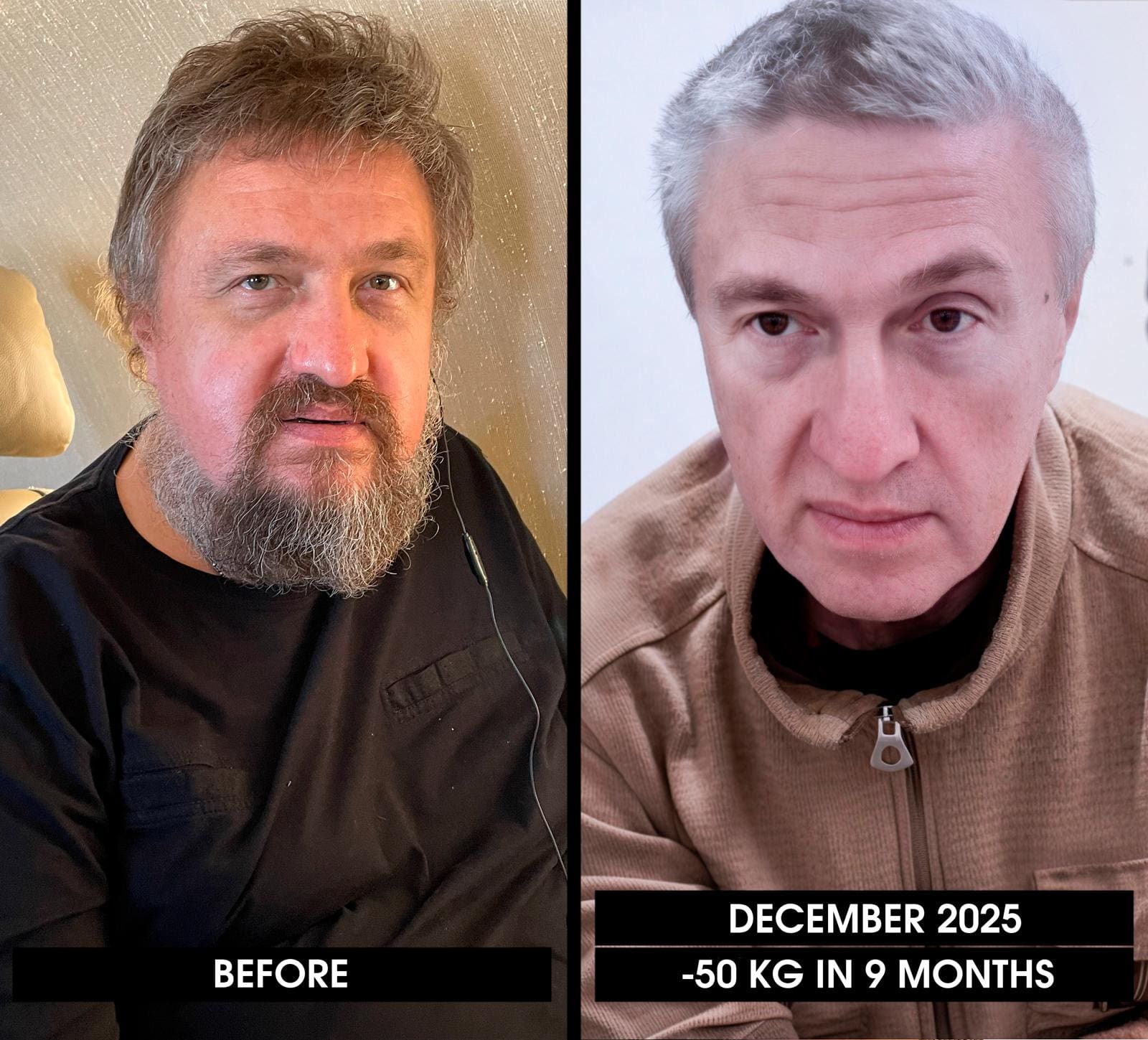
Meanwhile, Rudnev’s health deteriorates. He suffers from severe pulmonary fibrosis. He has lost fifty kilos in jail. He receives inadequate medical care. International NGOs and the United Nations have taken notice.
Argentinian judges, to their credit, have recognized the obvious three times: that keeping a gravely ill man in a maximum‑security prison when there is no evidence against him is not justice but cruelty. Everyone agrees—except the prosecutors.
Why this prosecutorial obsession? Is it bureaucratic inertia? Fear of embarrassment? Or something darker—foreign influence, perhaps, an obsession with “cults,” or the irresistible allure of a ready‑made villain?
Whatever the reason, the result is the same: a man who has already survived one politically motivated prosecution is now trapped in another, this time in a country that prides itself on human rights.
The Rudnev case is not about yoga, or tantra, or extraterrestrial metaphysics. It is about the dangerous ease with which a narrative—once launched—can cross borders, infect institutions, and override evidence. It is about how a man can be condemned not for what he has done, but for what others have said about him.
And it is about Argentina, a nation that now finds itself playing in a match it never asked to join, trying to block shots fired from Moscow.
The judges have shown courage. The prosecutors have shown stubbornness. The human rights community is watching. And Konstantin Rudnev is still waiting for justice.
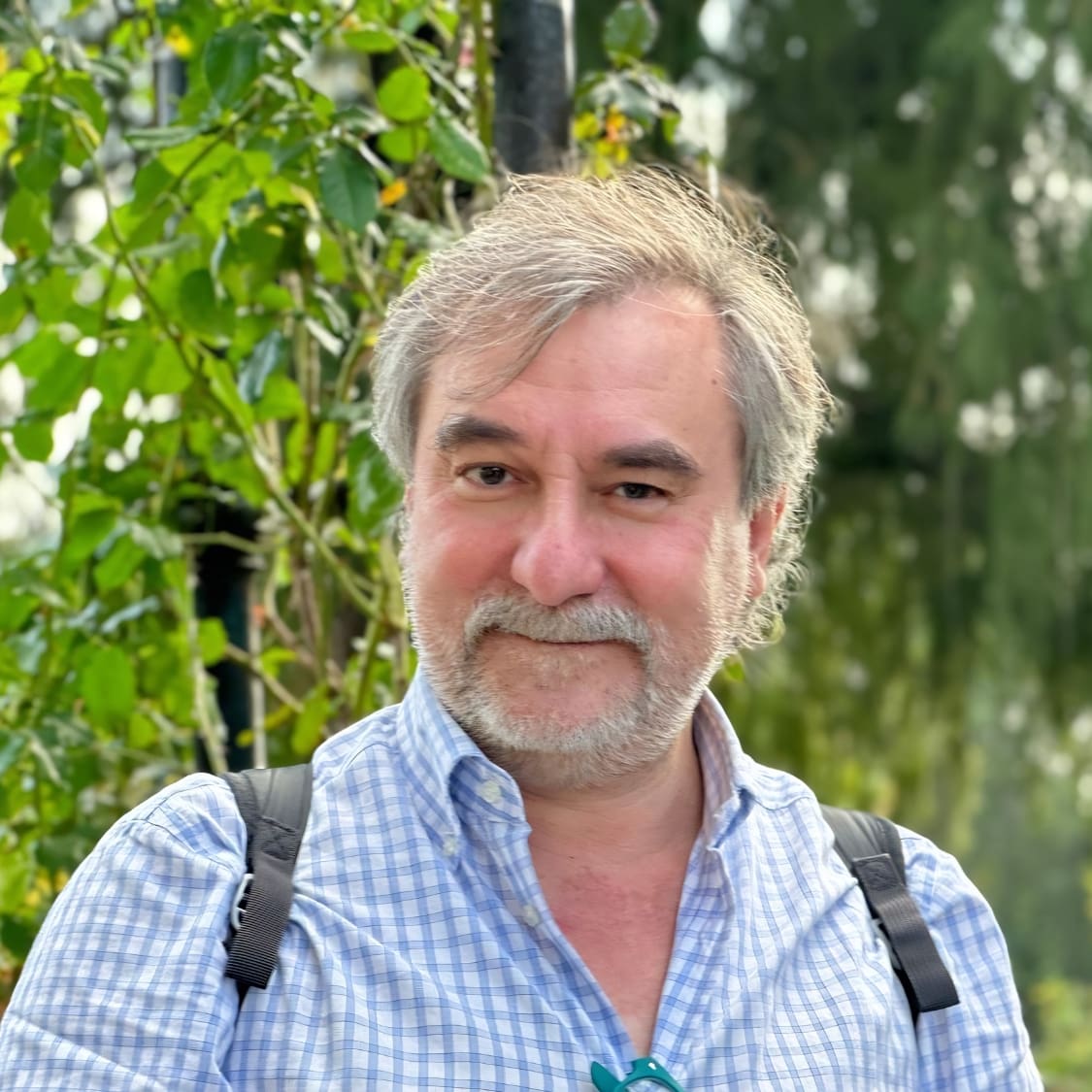
Marco Respinti is an Italian professional journalist, member of the International Federation of Journalists (IFJ), essayist, translator, and lecturer. He has contributed and contributes to several journals and magazines both in print and online, both in Italy and abroad. Author of books and chapter in books, he has translated and/or edited works by, among others, Edmund Burke, Charles Dickens, T.S. Eliot, Russell Kirk, J.R.R. Tolkien, Régine Pernoud and Gustave Thibon. A Senior fellow at the Russell Kirk Center for Cultural Renewal (a non-partisan, non-profit U.S. educational organization based in Mecosta, Michigan), he is also a founding member as well as a member of the Advisory Council of the Center for European Renewal (a non-profit, non-partisan pan-European educational organization based in The Hague, The Netherlands). A member of the Advisory Council of the European Federation for Freedom of Belief, in December 2022, the Universal Peace Federation bestowed on him, among others, the title of Ambassador of Peace. From February 2018 to December 2022, he has been the Editor-in-Chief of International Family News. He serves as Director-in-Charge of the academic publication The Journal of CESNUR and Bitter Winter: A Magazine on Religious Liberty and Human Rights.


