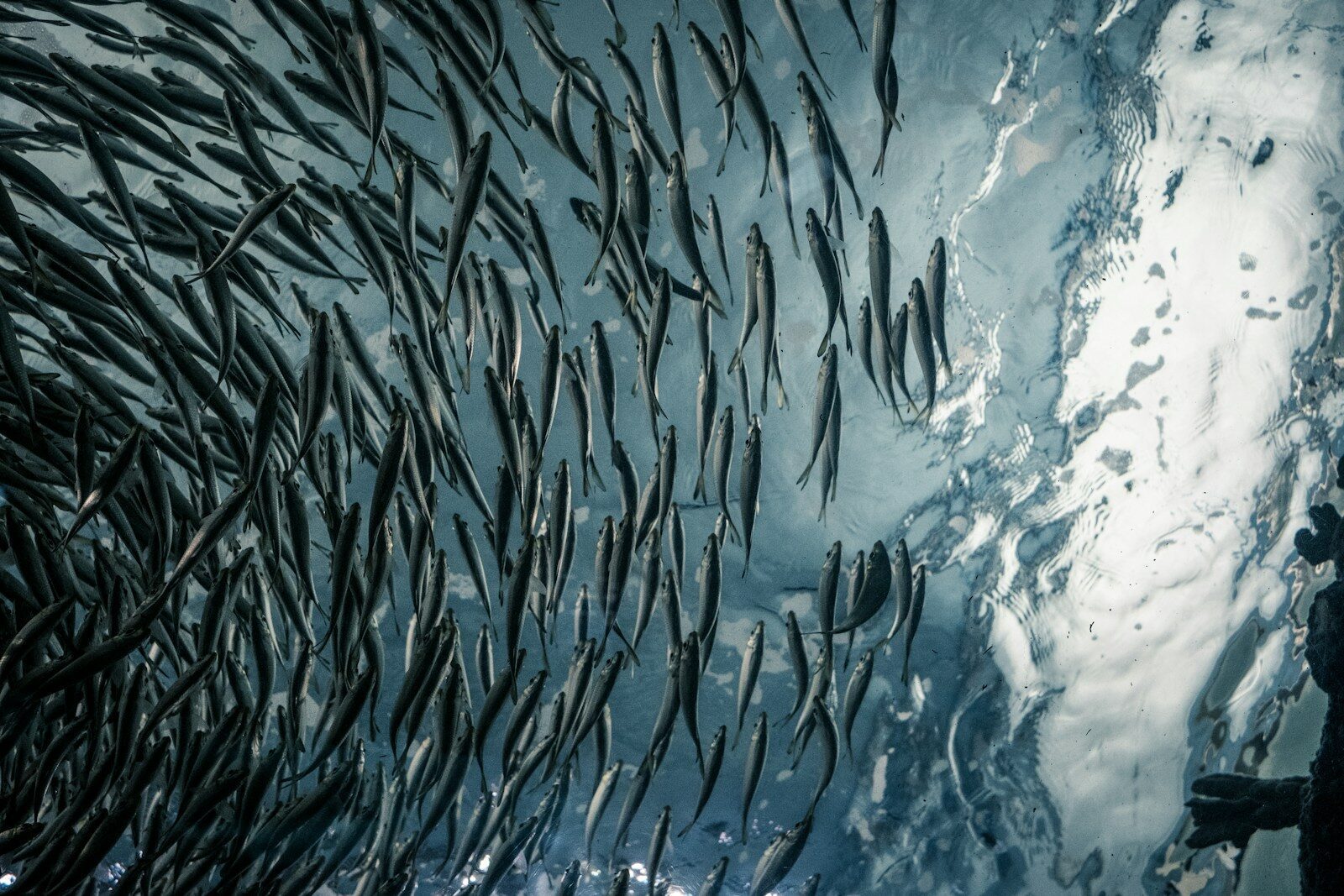


Four years ago, when Russian tanks crossed into Ukraine, the Kremlin imagined a swift, crushing bite—one decisive chomp that would shatter Ukrainian resistance, terrify Europe into submission, and restore Moscow’s imperial authority. Instead, as the fourth anniversary of the war arrived, the image that best captures the conflict is not that of a predator feeding, but of one slowly losing its teeth on a prey that can defend itself. Ukraine did not collapse. Russia did not win.
Four Years of Resistance: Achievements, Losses and Challenges – A commemoration in Brussels
On the occasion of the 4th anniversary of the war, many commemorative events were held in Brussels.
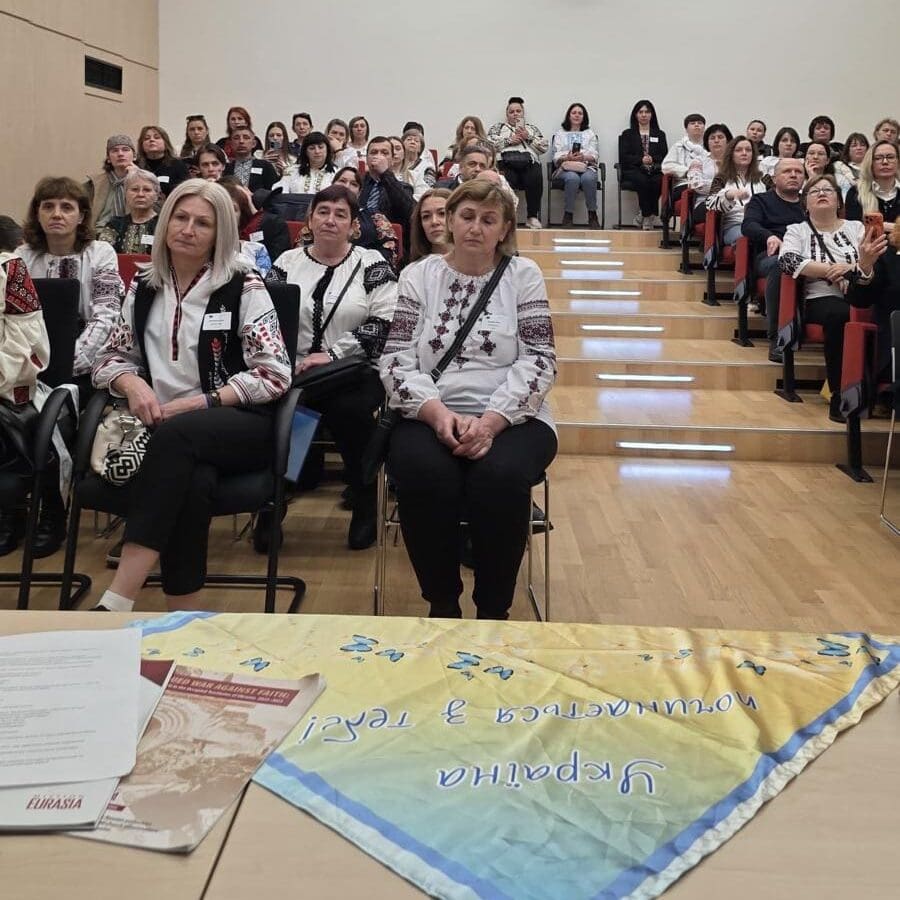
On 24-25 February, the Belgian association “Ukraine-EU” organized the screening of movies (with translations in the untertitles) showing various aspects of the war in the premises of the European Economic and Social Committee (EESC). On the program:
“On the Other Side of Peace” (30 min)
“Cyborgs: Heroes never Die” (120 min)
“Mariupol: Chronicle of Hell” (120 min)
“The Little People Who Unleashed a Great War”
“Delayed Consequences”
“Peaceful 21” (120 min)
There were also the presentation of the book “A Story Worth Hearing” by physician and veteran Yevhen Dubrovskyi, panel discussions and award ceremonies.
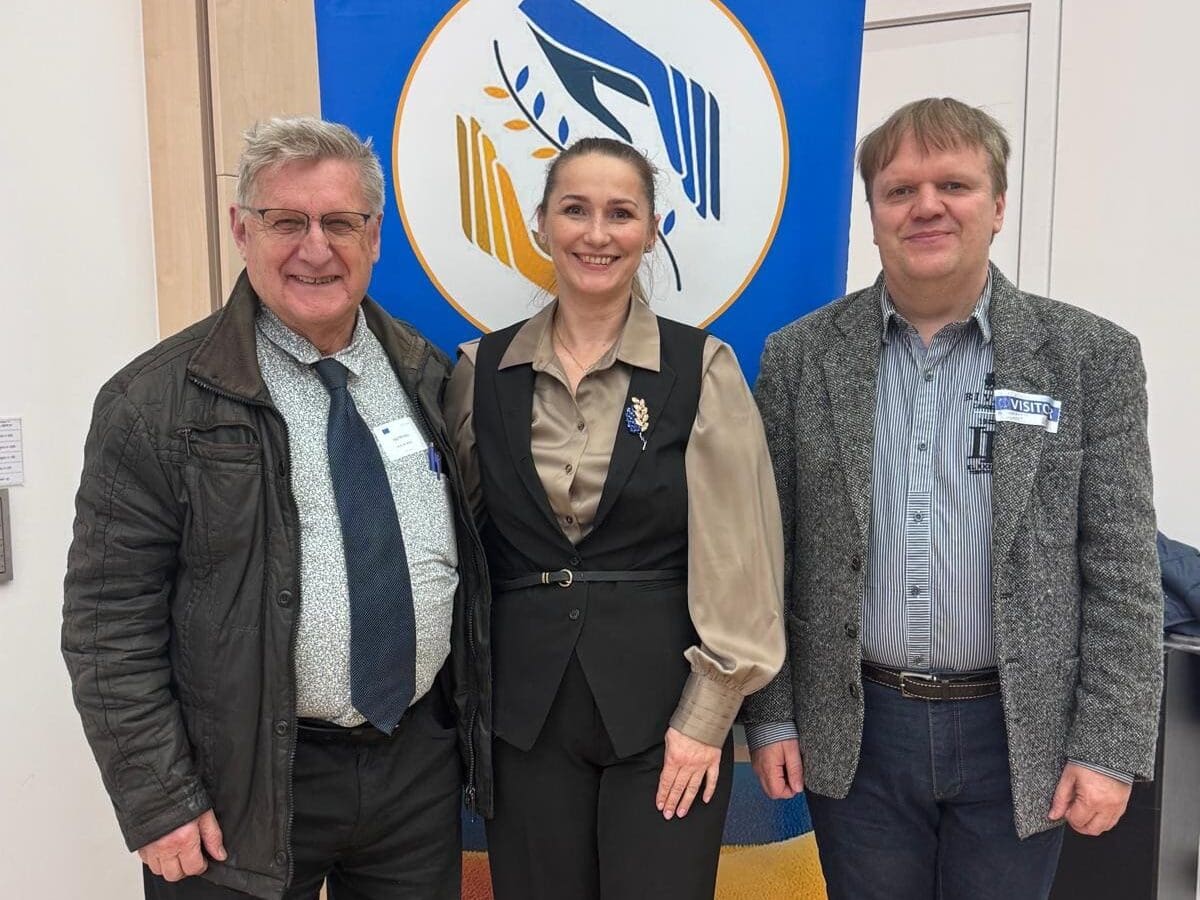
Three combatants (volunteers) from the front-line testified about their lives under enemy fire. Among which Olga Komant, the driving force of Ukraine-EU (hello@ukraine-eu.com).
One film particularly moved me: On the Other Side of Peace. The reason for this is that all victims were asked an important and painful question: ‘How did you experience 24 February, the attack and invasion of Ukraine, and what are the consequences for you today?’
Anyone in the United States who is asked a similar question about September 11 does not have to think twice before answering. That day remains a painful scar 25 years later. But all over the world, everyone clearly remembers what he or she was doing on that day.
The message of suffering and distress experienced in all its diversity during half an hour, about 24 February 2022, is deeper and more human than any television programme hosting the best experts although they are also quite useful. The reason is that they are constructed, honestly and intelligently of course, but often too rationally. Emotional testimonies are filtered and short. Ordinary people in their simple environment speak from their heart and take the time to show the desastrous consequences of the war.
The film is truly moving because it is as if the victims are speaking directly to each of us, face to face, in this film. The pain of ordinary people hits us in the face and covers us with their blood. Such a film cannot leave us unmoved and inactive after seeing it. Watch it HERE.
The other movies also have their respective qualities and can be found on You Tube. Example: “Cyborgs: Heroes Never Die”
Putin bitting off more than he can chew
Vladimir Putin, who sought to devour a neighbor, has spent four grinding years wearing down his own power against a target that refused to be swallowed.
From the outset, the invasion was meant to be overwhelming. The Kremlin assumed that Ukraine would fall in days, that Kyiv would be decapitated, and that the world would accept the result as an unpleasant but inevitable fact. That confidence was not merely military; it was ideological. Putin believed Ukraine was not a real country, not a real people, and therefore not a real opponent. The belief that Ukraine was not a real country was the first tooth he lost. An allegedly non-existent people and country still prohibits an ogre from swallowing it alive after four years of warfare.
Ukrainians were a real nation. They existed and resisted—at first with desperation, then with organization, and eventually with growing competence. The failure to take Kyiv in the opening weeks was not just a battlefield setback; it was a strategic fracture. Every subsequent phase of the war has been shaped by that initial miscalculation. What was intended as a lightning strike became a grinding war of attrition, one in which Russia has repeatedly slammed its jaw shut on something far harder than expected.
The second tooth Putin lost was military credibility in the eyes of the West. Before the invasion, Russia marketed its armed forces as modern, professional, and fearsome. Four years later, the image lies in ruins. The war exposed deep weaknesses: corruption hollowing out logistics, rigid command structures unable to adapt, and a system that punished initiative while rewarding loyalty. Russia’s military power progressively appeared to be far less formidable than advertised. Ukraine, by contrast, learned quickly, innovated constantly, and turned necessity into strength. The longer the war lasted, the more Russia’s bite weakened.
A third tooth fell on the economic front. The Kremlin assumed that Europe would fracture under internal pressure and cowardice, that energy dependence would paralyze Western governments, and that sanctions would be symbolic at best. Instead, Russia found itself increasingly isolated. Sanctions did not cause instant collapse, but they worked like a poison. The war reshaped Russia’s economy into something more brittle, more militarized, and less capable of long-term growth. A predator can survive on brute force for a while, but without healthy teeth, it struggles to feed itself. He is now vulnerable to the vagaries of the global economy and the geopolitical upheavals.
The fourth tooth Putin lost was narrative control. The invasion was framed as a heroic defense against NATO encroachment, a civilizational struggle to restore historical unity. But narratives require results. Four years on, the story no longer convinces as it once did. Ukraine still stands. Its language, culture, and political identity are stronger than ever, not weaker. Far from returning to Russia’s orbit with bread and salt, Ukraine has cemented itself as a separate nation with a shared sense of sacrifice and purpose. Every missile strike that failed to break Ukrainian morale only reinforced the very identity the Kremlin tried to erase. Moreover, more European countries have joined NATO and a military defence of Europe by the Europeans is emerging.
Other teeth are now shaking because their roots are slowly getting rotten. Politically, the war has also eaten away at Putin’s political authority from within, even if the effects can still remain under control. While open dissent has been crushed, loyalty built on fear is not the same as legitimacy built on success. Each year of fighting without victory has raised uncomfortable questions among elites and ordinary Russians alike. Why are so many dying? Why are resources vanishing? Why does the promised triumph never arrive? The Kremlin can suppress these questions, but it cannot erase them. Over time, they wear down the foundations of power, like gums inflamed from constant strain.
What about the future?
The future is unpredictable because Russia’s war on Ukraine and the West is Putin’s personal war but he goes on believing that he can swallow Ukraine whatever the human costs and despite four years of evidence.
Moscow remains dangerous, but danger is not the same as respect. Countries now view Russia less as a partner or rival and more as a chronic risk—unpredictable, sanction-ridden, and willing to burn the future of its own people for the sake of imperial nostalgia. Putin sought to intimidate and paralyze the EU countries with fear in particular. Instead, he is teaching them how to live without him and despite him.
The human, military and material losses have been immense on both sides: lives lost, cities destroyed, families uprooted, and futures postponed. Ukraine has paid in blood for every Russian tooth knocked loose. But endurance matters. Survival matters. Four years into the war, Ukraine exists, not as a conquered territory or failed state, but as a battered yet functioning nation, still choosing its own path. That alone represents a strategic defeat for the Kremlin.
For Putin, Ukraine was thought to be an easy meal—a demonstration of strength to awe the world. Instead, it has become the battlefield where his power has been ground down, bite by bite.
Four years on, the image is clear. Ukraine still stands, wounded but unbroken. It has become the shield that Europe cannot do without.
Putin, who came to consume, although uninvited, has spent these years gnawing on something he could not swallow—losing his teeth one by one on a nation that refused to disappear.