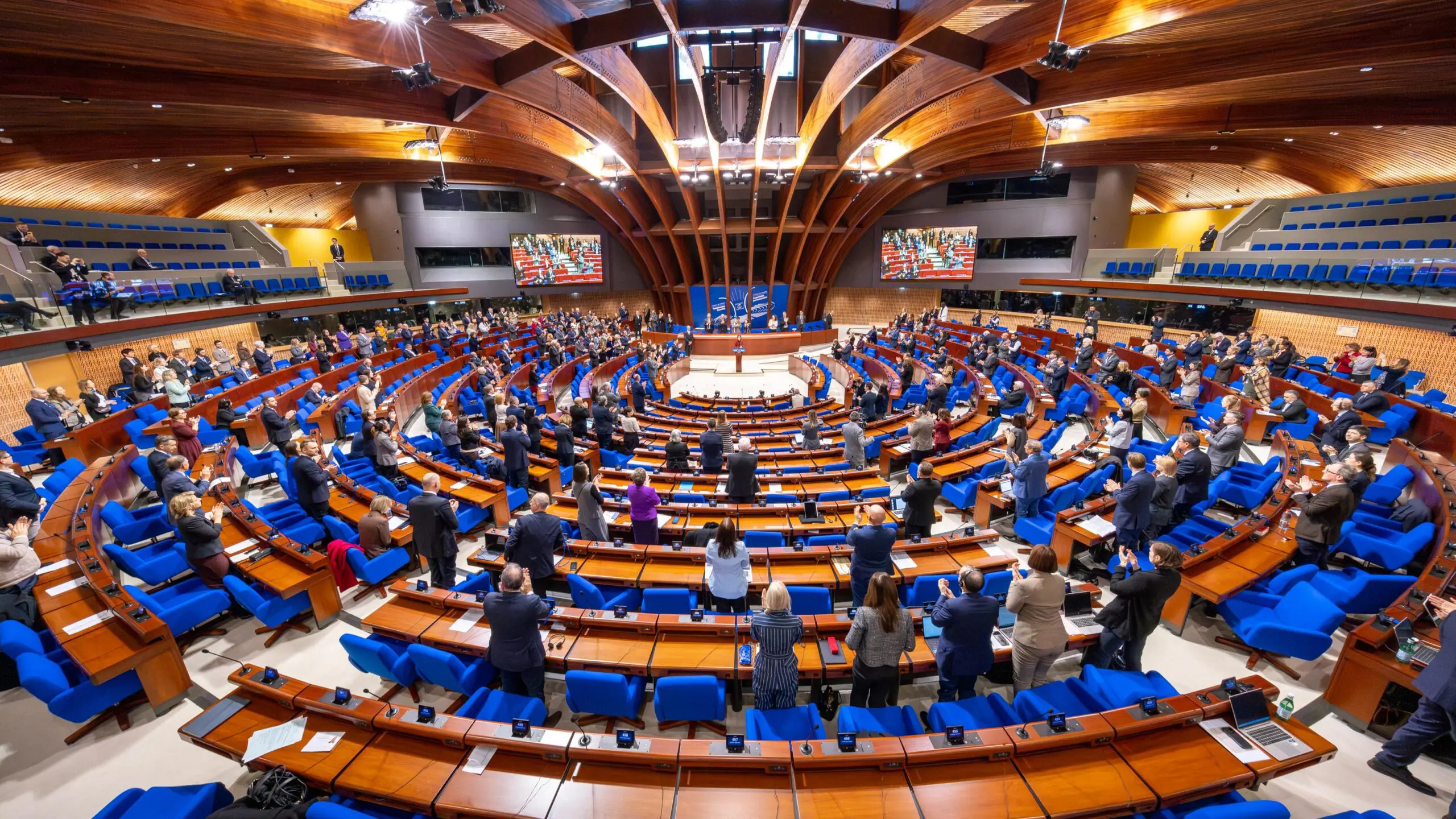
The Parliamentary Assembly of the Council of Europe’s (PACE) in a unanimous decision reiterated its long-term position against a possible new protocol on the involuntary placement and involuntary treatment of persons in mental healthcare services. The Assembly pointed out it would “make it more difficult to abolish coercive practices” in such settings.
Assembly firm on the ground of human rights
The Assembly had been asked by the Council’s executive body, the Committee of Ministers, to give an opinion on the draft of a possible new protocol to the Convention on human rights and biomedicine (Oviedo Convention). The possible new Protocol has been subjected to strong criticism and opposition from within the Council of Europe itself, the UN human rights mechanism and treaty bodies and civil society from even before the drafting work started more than a decade ago. The PACE earlier expressed its opposition to such a draft Protocol with Recommendations in 2016, 2019, 2022, and 2024.
The Assembly following a yearlong review with hearings and debates decided to keep firm on the ground of human rights and in line with the UN CRPD. The Assembly therefore rejected the draft protocol as it stands and recommended that, “before considering to examine the draft protocol, the Committee of Ministers commission a study to determine its compatibility with the CRPD.”
The Assembly further pointed out that “Since the ultimate objective would be to phase out involuntary measures,” it invites the Committee of Ministers to consider proceeding by means of a more flexible instrument than a protocol, for example a recommendation. It stressed that “such a recommendation should be fully in alignment with the CRPD, its General comments and guidelines.”
The UN CRPD has already been ratified by all Council of Europe member states and embodies a “paradigm shift” towards respect for the autonomy of persons in this situation, the parliamentarians pointed out.

The Rapporteur on the Opinion, Ms Carmen Leyte in her presentation of the Opinion among others noted “we heard from the committee of the United Nations Convention on the Rights of Persons with Disabilities and civil society organisations who warned us that the additional protocol blatantly contradicted the international obligations of the member states, and ran the risk of actually legitimising practices that should be phased out. They pointed towards good practices in some states that have managed to reduce coercion.”
The political groups all aligned with the Opinion

Ms Bianca-Eugenia Gavrilă, Spokesperson for the group European Conservatives, Patriots & Affiliates“In our view, coercion should not be normalised but progressively reduced and replaced with more humane and effective forms of support.” She added “We note with concern that coercive practices can cause lasting harm, including trauma and a loss of trust in mental health services, as reported by many people with lived experiences.”
The Alliance of Liberals and Democrats for Europe group as their spokesperson, Mr Bertrand Bouyx, expressed fully endorses the rapporteur’s vigilance regarding respect for autonomy in mental healthcare. The opinion sets the objective of eliminating involuntary measures, Mr Bouyx noted.

Ms Laura Castel, spokesperson for the Group of the Unified European, pointed out that “For too long, we have viewed disability through an obsolete medical model that treats human beings as objects of treatment, rather than subjects of rights. This protocol seeks to legally shield the use of force, allowing medical decisions to override human will.”
And she phrased it in to the most severe context. “We are told that coercion is “necessary”, but the evidence says otherwise. There is no clinical evidence supporting the therapeutic benefits of involuntary institutionalization,” Ms Laura Castel emphasized. And she added, “On the contrary, the risks are devastating. Research shows that the risk of suicide for those interned involuntarily is 55 times higher than in the general population. And further, coercion does not heal; it traumatizes.”

Ms Luz Martinez Seijo, Spokesperson for the group Socialists, Democrats and Greens Group referred to the responsibility the parliamentarians carry, “this dossier has an ethical dimension to it, which I think raises questions that we must address. This is precisely where we, as politicians, need to act.” And she stressed, “Having listened to the different parts, I would like to express my clear position, which is against the additional protocol to the Oviedo Convention, as we are talking about involuntary placement and involuntary treatment in the mental health care sector.”
Ms Luz Martinez Seijo further noted “I want to make it quite clear that this debate is neither technical nor medical nor procedural – it is a human rights debate. The protocol is based upon an erroneous premise, fundamentally erroneous, the idea that coercion in mental health could be compatible with a modern system of human rights, provided it is adequately regulated. But regulating coercion doesn’t make it legitimate. It just makes it more acceptable, if you like, from an institutional vantage point.”
Mr Jan Filip Libicki, Spokesperson for the Group of the European People’s Party thanked for the “clear and unambiguous call to reject the draft additional protocol in its current form. This position reflects genuine concern for human rights understood in a coherent manner and in full compliance with the international obligations of the Council of Europe.”
We must not legitimise human rights violations
In the pursuing debate members reinforced the position against the possible new Additional Protocol. Ms Nerea Ahedo (Spain), noted that “I think we must be clear that we must never legislate to give the appearance of legitimising any human rights violations.” And she added “This Protocol falls well short of those standards and I wonder whether the two can ever truly be compatible. What we should be doing is promoting alternatives and trying to reduce or get rid of involuntary measures, and making it clear that all people enjoy the same legal capacity.”
In addressing his colleagues in the Assembly, Mr Georgios Stamatis (Greece), pointed to the individuals involuntarily placed or interned in psychiatric institutions. “We don’t necessarily know what different measures are used within these institutions,” he noted. “We are reaching out to these people,” and we are saying to them, “You are not alone. We stand by your side, and we are there in order to put an end to a type of treatment that is tantamount to torture often,” he concluded.
Ms Kolbrún Áslaugar Baldursdóttir (Iceland), summarized the concern of many parties “The United Nations Committee on the Rights of Persons with Disabilities has expressed serious concern about this draft additional protocol. It concludes that the text is incompatible with multiple provisions of the Convention, including the rights to equality and non-discrimination, liberty and security, physical and mental integrity and the right to health. The Committee has therefore urged states’ parties to oppose the draft.”
She added “I have discussed this draft with the organisations of persons with disabilities in Iceland and with the Icelandic Human Rights Institute. Their assessment echoes these concerns: the draft does not provide sufficient safeguards against coercion and continues to rely on substitute decision-making, rather than supported decision-making.” And she concluded “Our responsibility is to ensure that Council of Europe standards fully comply with the Convention on the Rights of Persons with Disabilities (CRPD) and strengthen, rather than undermine, the international human rights system.”
Civil society welcome the PACE reject of the draft Protocol
“We welcome the unanimous decision of the Parliamentary Assembly of the Council of Europe’s (PACE) to adopt a negative opinion on the draft Additional Protocol to the Oviedo Convention,” the European Disability Forum (EDF) that defends the interest of 100 million persons with disabilities in Europe stated in an official response.
“This Protocol, which we have long been opposed to, takes the wrong approach to regulating the use of involuntary treatment and placement in psychiatry,” Markaya Henderson, Project Officer of the EDF noted.
And she added “We consider the PACE opinion to represent an important step toward ensuring the protection and promotion of human rights in mental healthcare, in line with the United Nations Convention on the Rights of Persons with Disabilities (CRPD).”