
Following the series of earthquakes on Mount Athos in recent months, engineering teams from the Technical Chamber of Greece/Central Macedonia Regional Department and the Aristotle University of Thessaloniki documented damage to almost all monasteries and hermitages. The damage included cracks in domes, dome drums, arches and walls, as well as collapsed chimneys, with the most serious damage to temples and cells in the monasteries of Vatopedi, Iver, Hillendar, St. Dionysius, Zograf and Simonopetra.
A total of 3,000 to 4,000 buildings will undergo detailed pre-seismic control. Experts emphasize that although the damage is significant, there is no danger of collapse and the structures of Mount Athos are holding up thanks to traditional anti-seismic techniques that have been applied for centuries. The first fortification works have already begun, and the government has announced its readiness for additional funding for the restoration and protection of the cultural heritage of Mount Athos.
The information was presented during a special scientific conference organized by the Technical Chamber of Greece with the assistance of the Faculty of Civil Engineering of the Aristotle University of Thessaloniki, the Organization for Anti-Seismic Planning and Protection and the Center for the Preservation of the Heritage of Mount Athos. “There are more problems in the monasteries that are close to the epicenter. The most vulnerable are the temples with domes and vaults. The damage is expected and we know how to restore it,” said the chairman of the board of directors of the Technical Chamber, Ilia Pertsinidis. He assured that funding has been secured and a restoration project is forthcoming. Regarding the seismic activity in the area, he added: “It is a bit strange that the phenomenon is not calming down, but according to seismologists, no stronger tremors are expected.”
And more specifically, the announced results of the inspection of all damaged buildings are as follows:
1. Great Lavra Monastery: Cracks in the plaster of the masonry in the archondarika.
St. Eustathius Cell – Mylopotamos: Cracks in the plaster of the masonry in the temple.
2. Vatopedi Monastery: Falling parts of chimneys and cracks in the old St. Andrew’s temple and in the corridor of the offices.
St. Demetrius Skete: Cracks and falling plaster on the masonry.
3. Iver Monastery: Worsening of old static problems in the outer narthex and in the narthex of the main temple; cracks in the masonry in the corridors.
Konak (representative office) in Kareia: Serious damage to the temple (dome, arches, pendants, columns); slight damage to the interior walls of the remaining building; likely widening of old cracks in the masonry.
4. Monastery “Hilendar”: Severe damage to chimneys; slight damage to the main temple and to the walls of the monastery wings (buildings).
Cell “St. Tryphon”: Serious damage to the temple (cracks in the dome, drum, arches, columns).
Cell “St. Paisios”: Serious damage to the temple (same damage).
5. Monastery “St. Dionysios”: Light to moderate damage to the refectory and the main temple; severe damage to chimneys and wooden verandas on the northern facade.
Temple “St. Artemios” – Monoxylite: Serious damage to the temple (cracks in the dome, drum, arches, columns).
6. Monastery “Kutlumush”: Worsening of old static problems in the western part of the main temple; severe damage to the two chapels on the upper floor of the northern wing (cracks in the dome, drum, arches).
Cell “St. John the Baptist” – Cracks in the plaster of the masonry and falling chimneys.
7. Monastery “Pantokrator”: Falls and damage to chimneys; cracks in the masonry of the tower in various places.
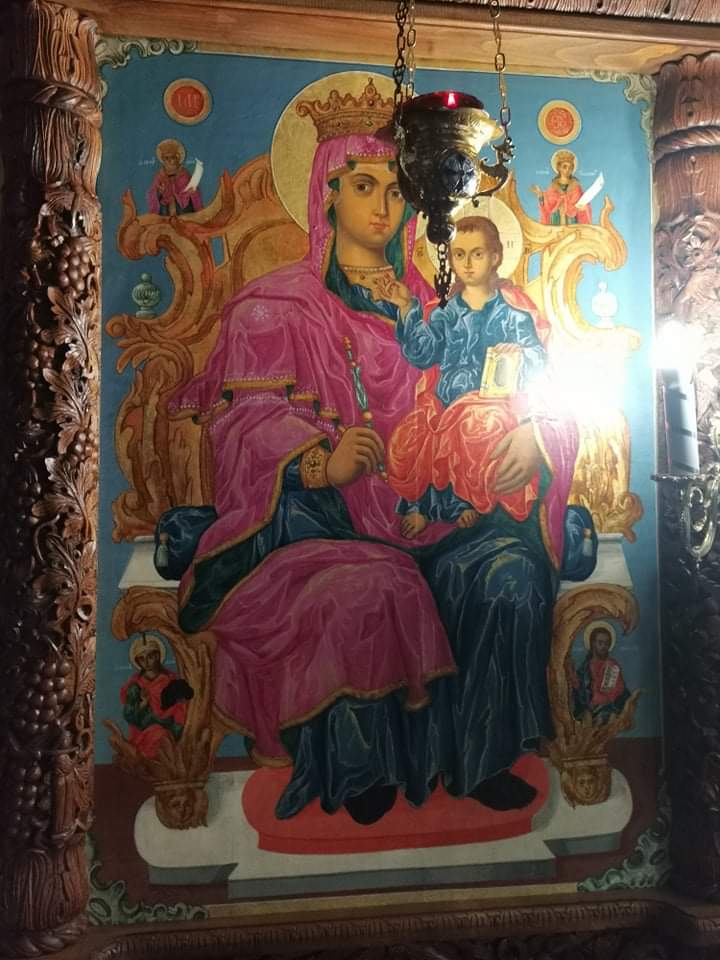
Cell “Assumption of the Virgin” (“It is Worthy”, until recently inhabited by Bulgarian monks) – Kareia: Extensive cracks in the stone walls, mainly in the eastern part of the building, along the entire height. Immediate geotechnical and static investigation is recommended.
Skete “St. Prophet Elijah”: Cracks in the plaster of the temple and the complex.
8. Monastery “Xiropotam”: Cracks in the plaster of the main temple and buildings.
9. Monastery “Zograf”: Severe damage to chimneys.
Cemetery temple: Serious damage to the temple (dome, drum, arches, columns).
St. George’s Cell: Serious damage throughout the complex (temple, auxiliary buildings, surrounding area).
10. Dohiar Monastery: Cracks in arches, vaults and masonry.
11. Simonopetra Monastery: Cracks in arches and vaults, above doors and between openings; damage to chimneys, cracks in masonry; damage to stone roofs.
St. George’s Cell – Kalata – Kareia: Cracks in plaster and falling chimneys.
12. St. Paul’s Monastery: Severe damage to chimneys; possible minor damage to the main temple.
The Fast in the Zarkadi area: Severe damage with collapse of the southeast corner; cracks in masonry.
13. Stavronikita Monastery: Cracks in plaster and falling chimney.
14. Xenophon Monastery: Cracks in dome drums; peeling plaster; worsening of old cracks.
15. Grigoriou Monastery, Karea monastery: Moderate damage to the temple (dome, arch), slight damage to plaster.
St. Philotheus Cell – Karea: Serious damage to the northeast corner.
16. Esphigmen Monastery, Karea monastery: Cracks in plaster.
Old monastery – Karea: Fall of chimney and damage to the roof.
St. Tryphon Cell: Cracks and plaster collapse, and roof damage.
17. St. Panteleimon Monastery: Cracks in dome drums and masonry; chimneys falling; plaster peeling.
18. Konstamonite Monastery: Severe damage to chimneys; serious damage to partition masonry and plaster.