The founder of the largest investment construction company “Samolet” in Russia, Mikhail Kenin, died suddenly at the age of 56. The company, which he founded together with Igor Yevtushevsky 13 years ago, is today the largest developer in the country in terms of housing construction, RBC reports.
“Mikhail Borisovich was one of those people who leave their mark on the earth. A rare person, endowed with natural talents, an excellent organizer and a successful entrepreneur. A personality with a capital letter, with a subtle sense of beauty, compassion, helping and at the same time able to manage. A person ready to take risks and make difficult decisions. A person who created the largest development company in the country,” a statement from “Samolet” said.
Kenin was a member of the board of directors of “Samolet” and a co-owner (29.12% stake, according to SPARK, the largest shareholder). At the beginning of August, the group of companies ranked first in Russia in terms of housing construction: 4.7 million sq. m. (249 buildings with 110,300 apartments), which is almost 4% of all housing construction in Russia.
Kenin was born on September 1, 1968 in Moscow. He graduated from the Moscow Aviation Technological Institute. From 2007 to 2012, he headed the board of directors of the company Glavstroy-SPB. Kenin was also a member of the board of directors of Bank Saint Petersburg.
In 2011, the businessman joined the board of directors of PJSC Russian Aquaculture, now known as Inarctica. This company is called the largest producer of salmon grown in aquaculture (i.e. artificial) conditions. Kenin received a share in it (11.1%) in 2012, according to SPARK. By the time of the businessman’s departure in 2018, it was 21.3%.
In 2012, Kenin, together with Igor Evtushevsky, founded the Samolet group. It specializes in housing construction. For a long time it worked in Moscow and the Moscow region, St. Petersburg and the Leningrad region, but subsequently began to actively expand the regions of its presence. Currently, the group has 4.7 million sq. m in the active stage of construction (according to the Unified Information System for Housing Construction) or 4.96 million sq. m (according to information from the Unified Resource of Entrepreneurs). Currently, Samolet is the largest housing developer in Russia.
In November 2024, Forbes reported that Mikhail Kenin was looking for a buyer for his stake in Samolet. The group itself denied this information. Samolet CEO Anna Akinshina said in an interview with RBC that the company usually does not comment on the actions of shareholders. “You can find an up-to-date list of shareholders-affiliates on the website of the Center for Corporate Disclosure. Mikhail Kenin is present in it and his share is clearly indicated there,” she emphasized then.
The difference between new construction and secondary market housing can reach up to 80%
The difference in housing prices in the primary and secondary markets in Russia is on average about 55-60%, but in some regions it can reach 80%, said Fyodor Vilomov, General Director of the Rating Agency for the Construction Complex (RASK).
Based on data from the Bank of Russia, the difference in prices for new buildings and the secondary market in the second quarter of 2025 was on average 60% across the country (EUR 2,200 versus EUR 1,370). In central Russia it was 80% (EUR 3,150 versus EUR 1,750).
“On average in Russia, the difference in prices between housing in new buildings and on the secondary market is about 55-60%. In certain regions and cities with a population of over a million people with developed housing construction, the difference can really reach 80%,” said Vilomov.
The expert explains the imbalance by a number of factors: preferential mortgages, which apply mainly to new buildings, increase demand and, as a result, prices. Low demand for the “secondary” is observed in the context of a high prime interest rate and expensive market mortgages. “Until the prime interest rate drops to at least 10-12%, it is difficult to talk about leveling off the secondary housing market,” Vilomov believes. Prices and demand are also influenced by the quality of housing, infrastructure and the quality of amenities. The increase in construction costs and the shortage of personnel exert separate pressure on the growth of prices for new buildings.
“If we simulate a situation where a borrower cannot maintain a preferential mortgage on an apartment in a new building, then it will be difficult for him to resell it without losing money. At least, because the same preferential mortgage will not apply to him, which narrows the level of possible demand and limits the possible selling price,” noted the CEO of RASK.
Denis Zhidkov, head of the territorial sales department of the A101 group of companies, agrees with him, indicating that the difference between the price of housing in the primary and secondary markets in the capital region can actually reach 80%. According to him, the difference began to grow rapidly around 2020 with the advent of preferential mortgages.
Calculations of average values should be evaluated critically, and the red price of the difference between the price of housing in new buildings and in the secondary market is 30%, according to mortgage market expert Sergey Gordeyko.
“The most honest for the calculations is to take one city and region. The red price of the difference is 30%. According to the Central Bank, there is a large share of overestimation in the calculations. If you compare carefully, then for identical real estate the difference will be 20%,” said Gordeyko. According to him, preferential lending provokes an increase in prices for new buildings, and the price difference will decrease, including if we exclude mass installment plans for new housing. The average asking price per square meter for new buildings in the Russian Federation is 154,600 rubles, which is 20.3% higher than the average price per square meter of finished housing – 1,380 EUR, Alexander Ivanov, a leading analyst at the federal company “Etazhi”, told TASS. At the same time, the average selling price on the secondary market is lower, since against the background of the low availability of mortgages, buyers focus on properties with a maximum discount and those whose price has decreased. If we compare by transactions, 1 square meter of finished housing costs an average of 1040 EUR, and in this case the average price per square meter in new buildings will be more expensive than in the secondary market by almost 60%, the expert noted. At the same time, a sharp cancellation of preferential lending or its strict restrictions could provoke a decrease in construction volumes, and then a supply deficit, Ivanov noted.
According to Elena Chegodaeva, head of the analysis and consulting department at NDV Real Estate Supermarket, the average difference between the prices of primary and secondary housing in cities with a population of over a million is 25%. The largest is observed in Chelyabinsk – 34%, in Moscow – 31%, in Perm – 30%. However, the calculation methods of the Central Bank of the Russian Federation and individual companies and aggregators may differ, she added.
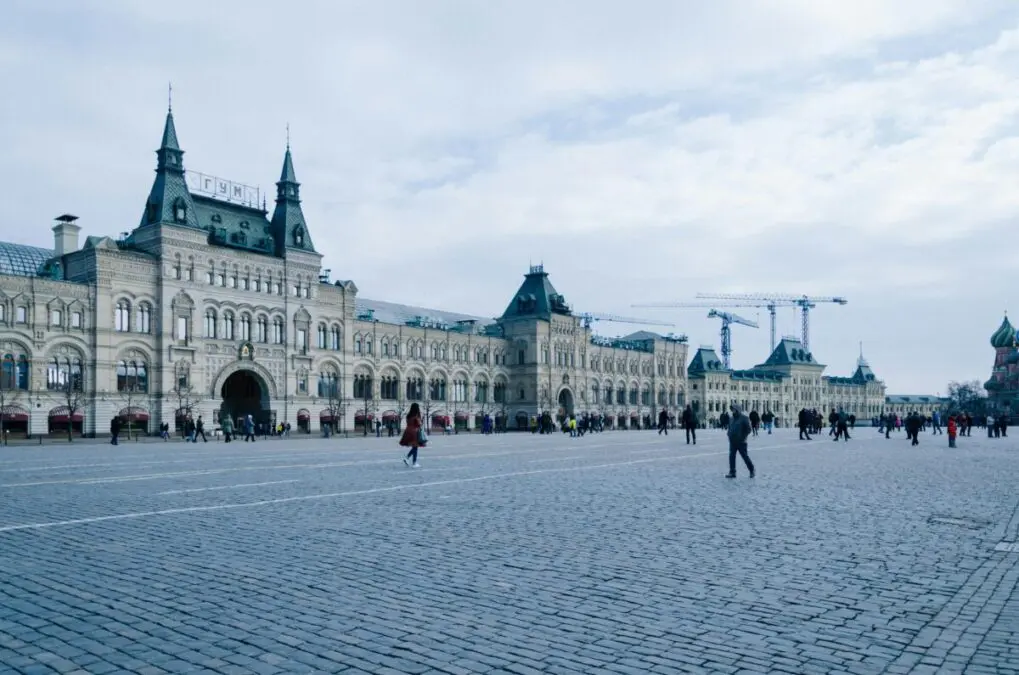
Illustrative Photo by Pixabay: https://www.pexels.com/photo/brown-concrete-building-415980/