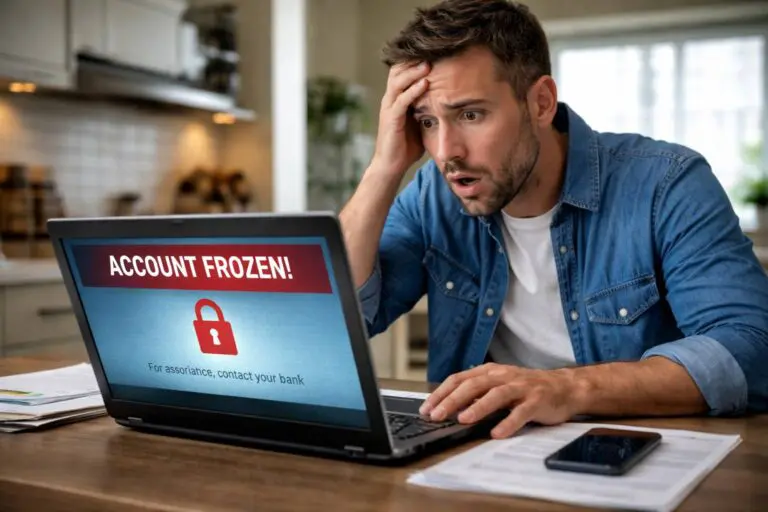
You try to pay for groceries or rent — and your card is declined. You check your banking app: your account has been frozen. No warning, no clear explanation. In that moment, daily life stops. Access to your own money suddenly becomes uncertain.
Across Europe, banks can legally freeze accounts in certain situations, often linked to anti-money laundering checks or suspected fraud. But you also have rights — including the right to information, to challenge decisions, and to regain access as quickly as possible.
Step 1: Confirm why your account was frozen
Your first move is to contact your bank immediately. Ask clearly:
- Why the account was frozen
- Whether the restriction is temporary or indefinite
- What documents or actions are required from you
Under EU rules on financial transparency and anti-money laundering, banks may not always be able to disclose full details if an investigation is ongoing. However, they should still provide general information. See guidance from the European Banking Authority.
Step 2: Provide requested documents quickly
In many cases, accounts are frozen due to verification checks. Banks may request:
- Proof of identity (passport or ID card)
- Proof of address
- Source of funds (salary slips, contracts, invoices)
Submit documents as soon as possible and keep records of everything you send. Delays on your side can prolong the freeze.
Step 3: Assert your right to access essential funds
Even when an account is restricted, you may still have the right to access essential funds for basic needs such as food, rent, or medical expenses. This depends on national law and the nature of the freeze.
The European Commission’s payment services guidance highlights the importance of access to basic banking services across the EU.
Step 4: File a formal complaint with your bank
If the situation is unclear, prolonged, or seems unjustified, submit a written complaint through your bank’s official complaints procedure.
State clearly:
- What happened and when
- How it affects you (missed payments, hardship)
- What resolution you expect
Banks are generally required to respond within set timeframes under EU consumer protection standards.
Step 5: Escalate to financial authorities if needed
If the bank’s response is unsatisfactory, you can escalate the issue to your national financial ombudsman or supervisory authority.
You can find your national authority via the European Banking Authority consumer page or consult the European Central Bank contacts for guidance.
Step 6: Consider legal advice in serious cases
If your account remains frozen for an extended period without justification, or if you suffer financial damage, you may need legal assistance. In some cases, courts can order access to funds or compensation.
This becomes particularly important if the freeze relates to cross-border transactions or mistaken identity in anti-fraud systems.
Data Snapshot: Bank Account Freezes in Europe
* Thousands of suspicious transaction reports are filed annually across the EU (Europol Financial Intelligence)
* Anti-money laundering checks are the most common trigger for account restrictions (European Banking Authority)
* Delays often arise from incomplete documentation or cross-border verification issues
Why this situation happens more often than expected
Banks in Europe are under strict legal obligations to monitor accounts for fraud, money laundering, and sanctions compliance. This has led to more frequent account freezes, sometimes affecting ordinary customers with legitimate transactions.
Understanding this context can help you respond calmly and effectively — focusing on documentation, communication, and escalation where needed.
If your situation is linked to suspected fraud or scams, you may also find useful guidance in this European Times article on how Europe is fighting online scams.
Keywords
bank account frozen Europe
EU banking rights consumer
account blocked what to do EU
financial complaint Europe bank
access to funds EU law