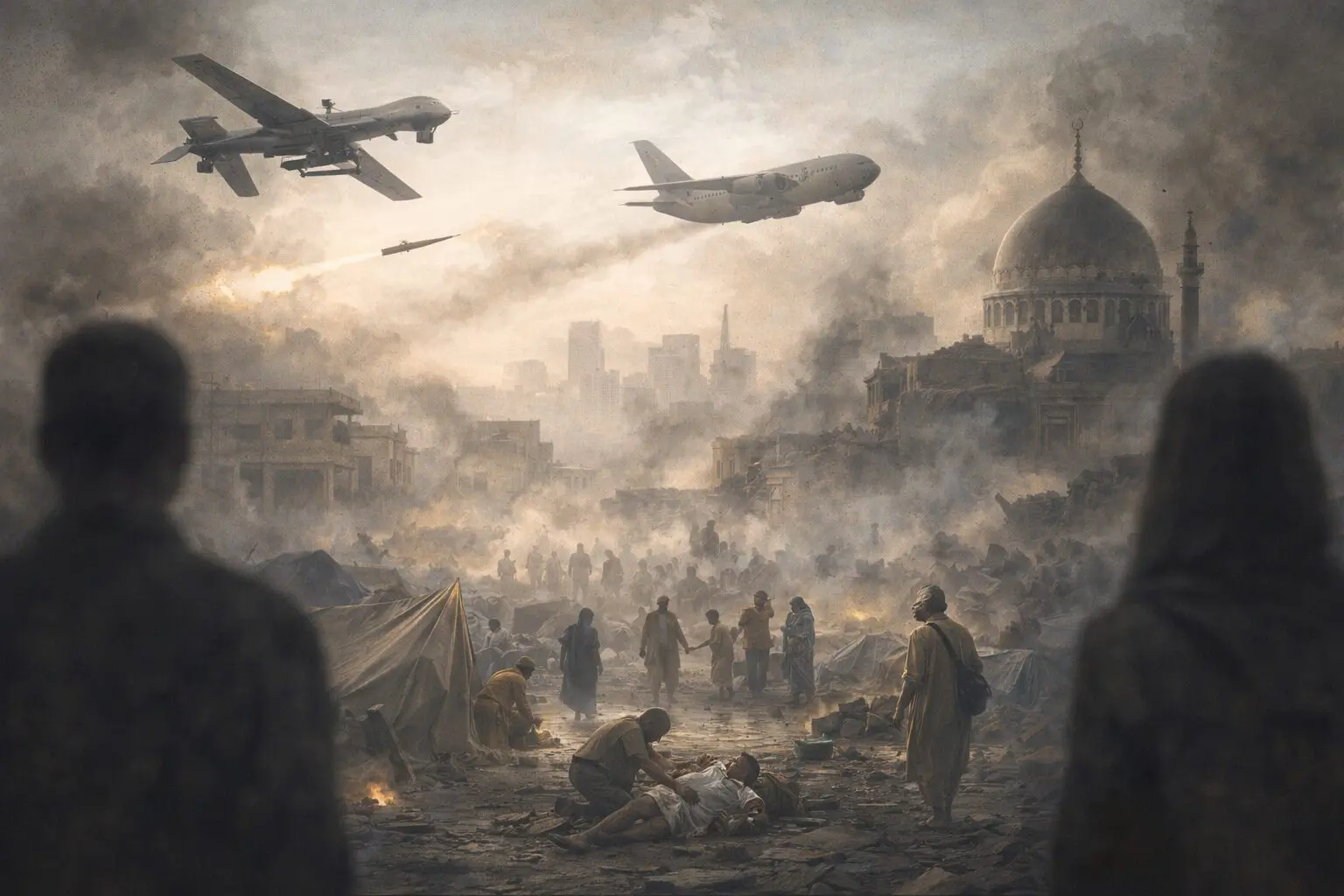

When the United States under Donald Trump joined Israel in military strikes against Iran—just as negotiations appeared to be gaining traction—the global reaction was swift, but not uniform. Across much of Asia, Africa, and Latin America, the attacks were widely condemned as violations of international law. In Europe, however, the response was markedly different: cautious, restrained, and notably ambiguous.
This divergence raises three interrelated questions.
- How are the strikes viewed in terms of legality and morality?
- What explains the timing and underlying motivations behind the decision to use force?
- And why has Europe, unlike much of the Global South, refrained from outright condemnation?
Bashy Quraishy
Secretary General – European Muslim Initiative for Social Cohesion – Strasbourg
Thierry Valle
Coordination des Associations et des Particuliers pour la Liberté de Conscience
Legality: Between self-Defense and prohibition of force
At the heart of the legal debate lies the United Nations Charter, which establishes a clear prohibition on the use of force under Article 2(4), except in cases of self-defense (Article 51) or when authorized by the Security Council.
The U.S. and Israel have framed their actions in terms of self-defense, arguing that Iran’s nuclear program, missile capabilities, and regional activities constitute an imminent threat. However, this justification is highly contested.
International law traditionally requires that self-defense be:
- Necessary
- Proportionate
- In response to an imminent armed attack
The key point of contention is the meaning of “imminence.” While some legal scholars accept the concept of anticipatory self-defense, others argue that strikes aimed at preventing a future threat—so-called preventive war— fall outside the bounds of legality.
In the absence of clear evidence of an imminent attack, many states, particularly in the Global South, view the strikes as a violation of sovereignty and international law. European governments, by contrast, have largely avoided making explicit legal judgments, instead emphasizing the need for “restraint” and “de-escalation.”
Morality: Just war and the risks of escalation
Beyond legality, the strikes are being judged through the lens of just war theory, which distinguishes between the justification for war (jus ad bellum) and conduct within war (jus in bello).
Critics raise several ethical concerns:
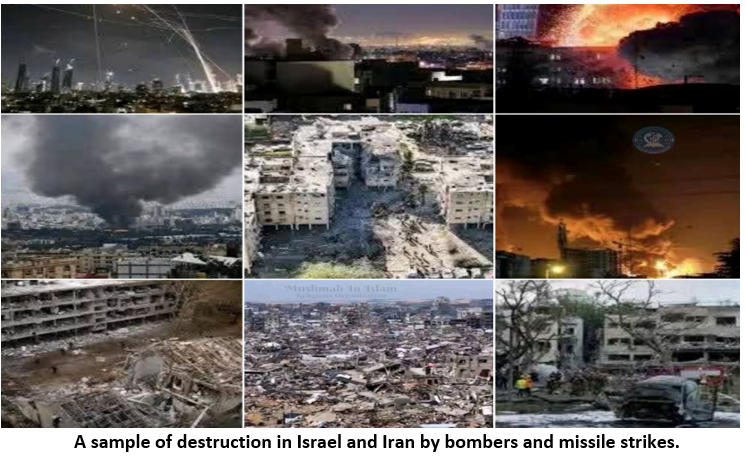
- The risk of civilian casualties and infrastructure damage
- The potential for regional escalation
- The possibility that military action undermines long-term stability
Even if framed as a preventive measure, the moral calculus must weigh uncertain future threats against immediate and tangible harm. A central question remains unresolved:
Does the possibility of limiting Iran’s capabilities justify the risks of a wider war?
Motivations: Beyond a single explanation
A widely circulated view—both in the Global South and parts of the West, is that Benjamin Netanyahu persuaded Trump that a decisive preemptive strike could “solve” the Iran problem once and for all.
There is some basis for this claim. Netanyahu has long been skeptical of diplomacy with Iran and has consistently favored a more forceful approach. Israel’s strategic preference for military action over negotiation is well established.
However, reducing the decision to Israeli influence alone oversimplifies a far more complex reality.
A convergence of interests
The United States and Israel already shared key strategic concerns:
- Iran’s nuclear ambitions
- Its regional influence through allied groups
- Its missile capabilities
In this sense, Israeli pressure likely reinforced rather than created the policy direction.
American strategic calculations
Washington appears to have had its own motivations:
- Strengthening deterrence
- Forcing a more favorable negotiating position
- Protecting regional assets and allies
- Demonstrating resolve domestically and internationally
There is also evidence that the use of force may have been intended as a form of coercive diplomacy—a way to gain leverage in negotiations rather than replace them entirely.
Miscalculation and timing
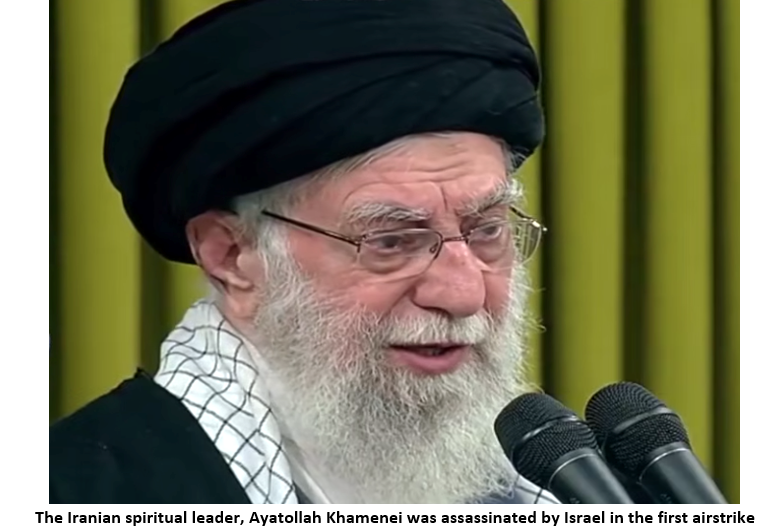
Perhaps most importantly, the decision reflects a broader pattern of miscalculation. The assumption that a limited strike could decisively weaken Iran or compel rapid concessions appears, at least so far, to have been overly optimistic. Rather than a single, coherent plan, the strikes seem to reflect a convergence of strategic alignment, political calculation, and opportunistic timing. But this calculation backfired and actually hardened Iran’s resolve to fight for its survival after its spiritual leader and top military and political leadership was assassinated by Israeli missile strikes.
Europe’s silence: Strategy over sympathy
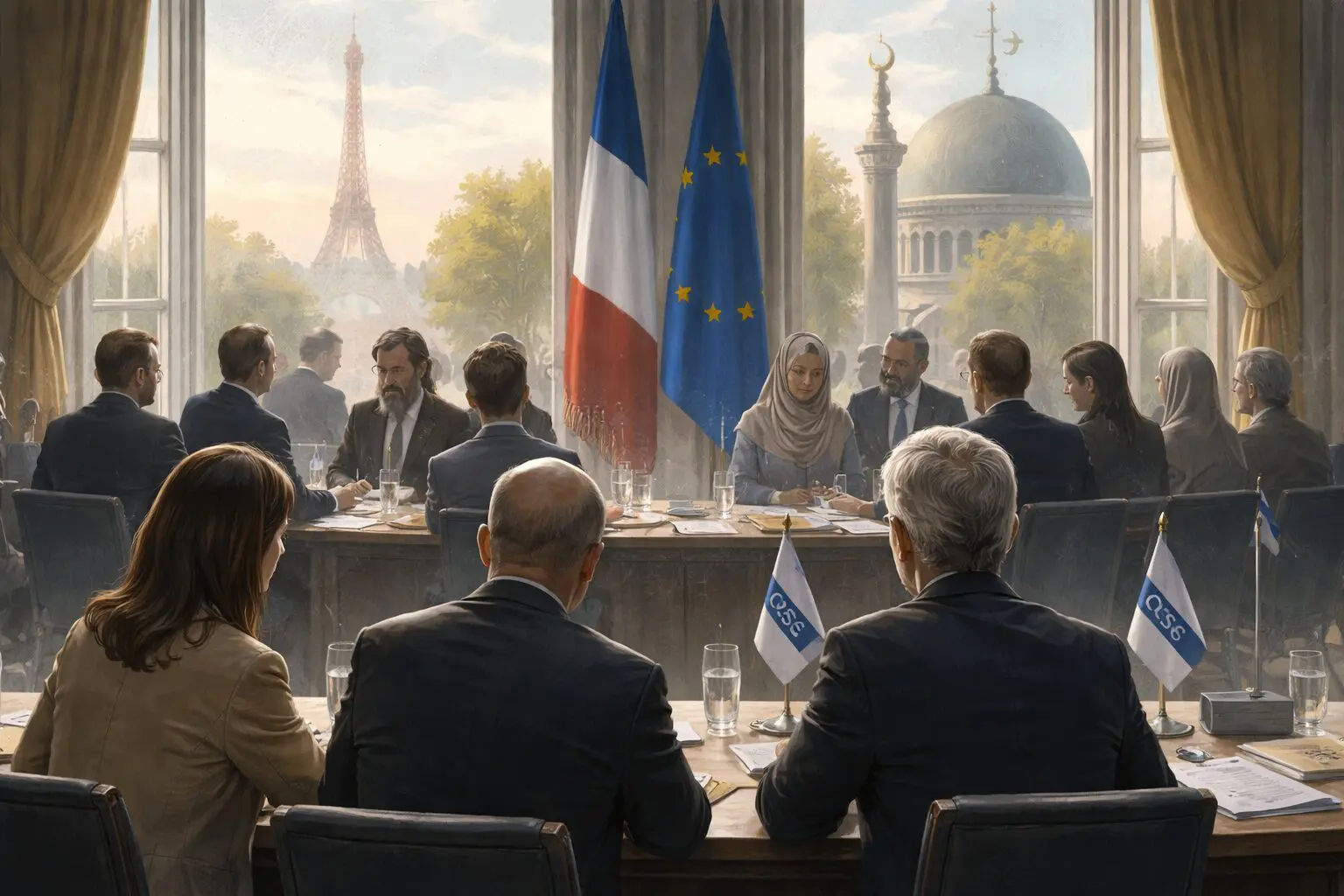
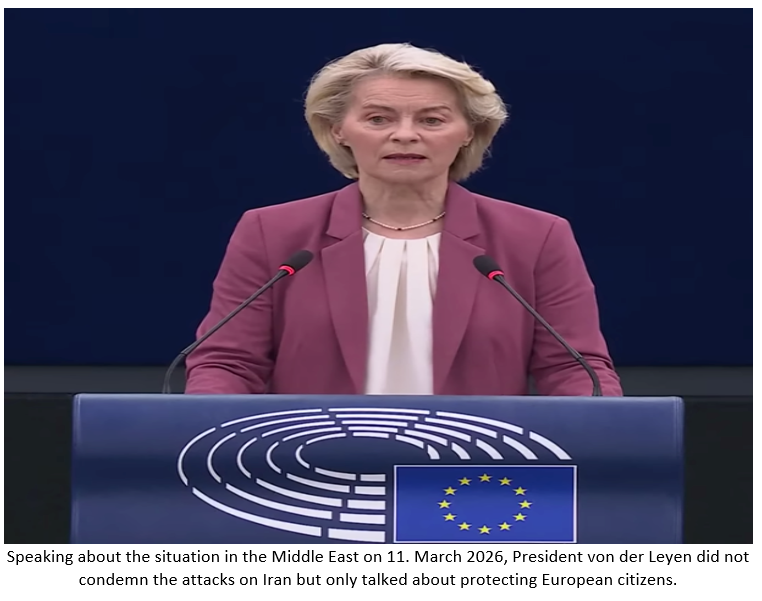
If the legal and moral questions are contested, Europe’s response has been even more so. Unlike many Global South countries, European states have largely refrained from explicitly condemning the strikes.
This is not because of simple cultural alignment with the United States or Israel, nor primarily because Iran is a Muslim-majority country. While such perceptions may influence public discourse, they do not adequately explain government policy.
Instead, four structural factors are more decisive.
1. Strategic dependence on the United States
Most European countries rely on the U.S. for security through NATO. Openly condemning Washington risks weakening a critical alliance, particularly in a period of heightened geopolitical tension.
2. Internal divisions
There is no unified European position. Some states are more aligned with U.S. policy, others more critical. The result is a lowest-common-denominator response: calls for restraint without attribution of blame.
3. Distrust of Iran
European governments have long-standing concerns about Iran’s nuclear program, missile development, and regional activities. This prevents a straightforward framing of Iran as a victim.
4. A diplomatic preference for ambiguity
European foreign policy often prioritizes maintaining dialogue with all parties. Language emphasizing “de-escalation” and “stability” reflects a deliberate attempt to preserve diplomatic space.
Global South vs. Europe: A diverging lens
The contrast with the Global South is striking. Many countries in Asia, Africa, and Latin America:
- Place greater emphasis on sovereignty and non-intervention
- Have fewer security dependencies on the U.S.
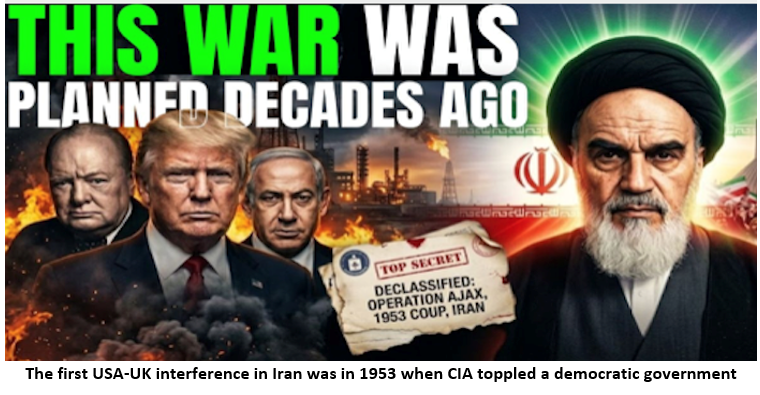
- View Western military actions through the lens of historical experience
As a result, they are more willing to characterize the strikes as unlawful or aggressive.
The divergence is therefore less about culture or religion, and more about geopolitical position and historical perspective.
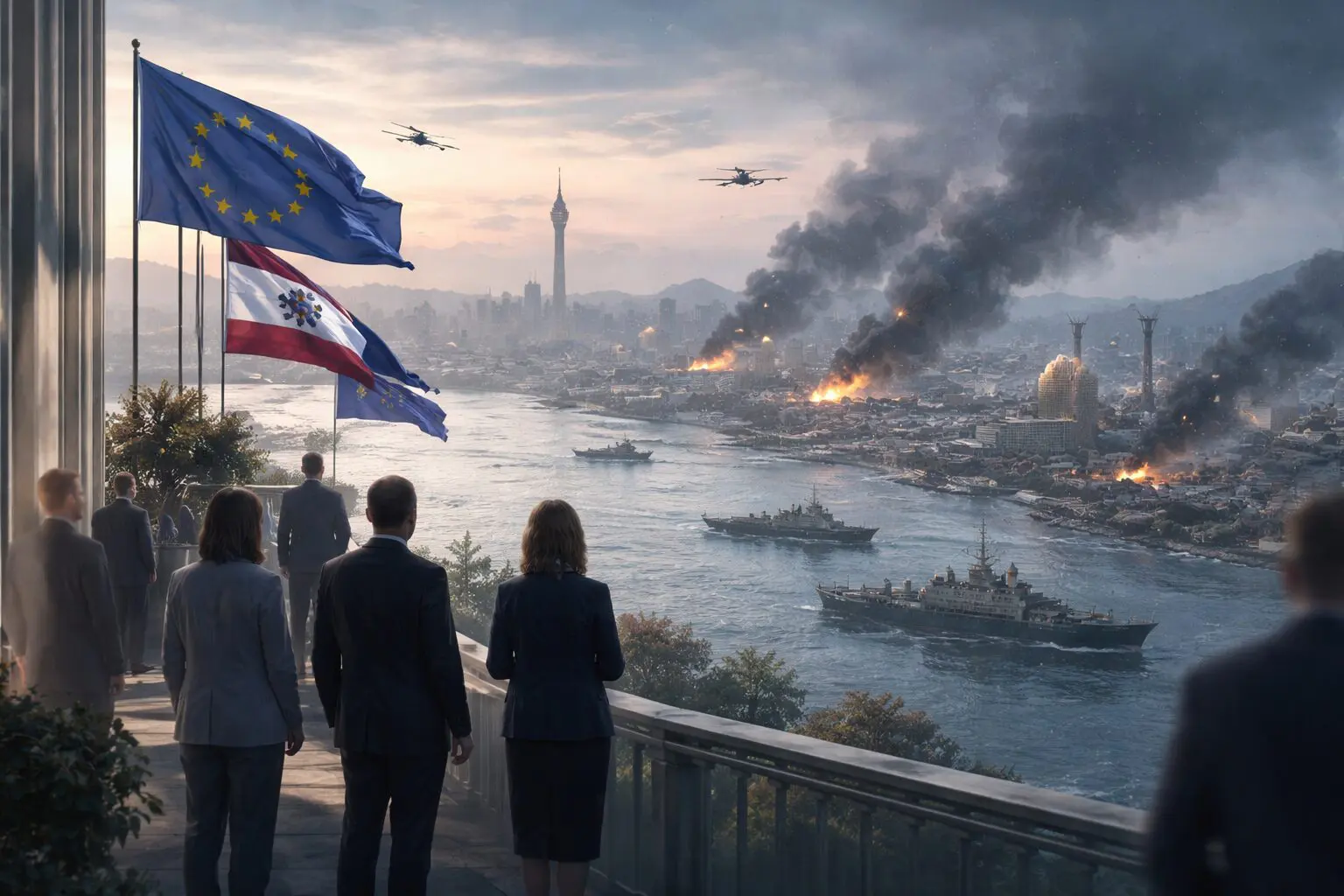
Europe after 30 days: Reactive and constrained
After a month of conflict, Europe finds itself in a largely reactive role. Its options are limited:
- Diplomacy: pushing for ceasefire and negotiations
- Economic management: mitigating energy shocks and inflation
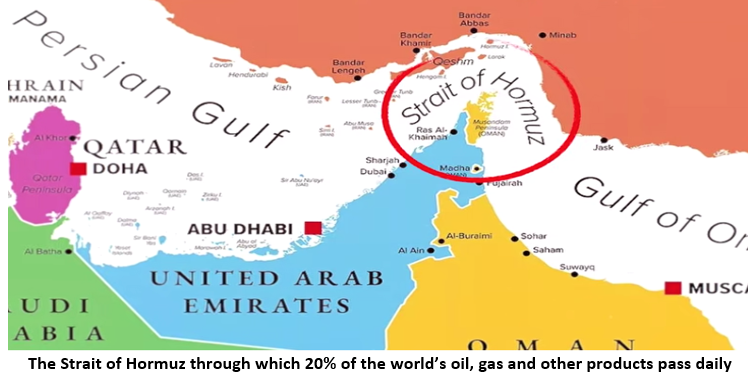
- Security: protecting maritime routes without direct involvement
At the same time, the conflict has exposed structural weaknesses:
- Dependence on external energy supplies
- Reliance on U.S. security guarantees
- Lack of a unified foreign policy
In effect, Europe is economically affected, politically cautious, militarily absent, and diplomatically secondary.
What Europe could have done differently?
The current situation also highlights missed opportunities, but Europe might have:
- Taken a clearer legal and political stance earlier
- Played a more active role in pre-war diplomacy
- Maintained stronger channels of influence with Iran
- Reduced its vulnerability to external energy shocks
- Developed a more unified foreign policy framework
Without these elements, Europe’s ability to shape events has remained limited.
Complexity over simplicity
The U.S.– Israeli strikes on Iran sit at the intersection of contested legality, ambiguous morality, and complex strategic calculation.
There is no single explanation:
- Not purely self-defense
- Not simply aggression
- Not solely the result of Israeli influence
Rather, the conflict reflects a layered convergence of interests, perceptions, and miscalculations. Europe’s muted response, in turn, is less a sign of agreement than of constraint—shaped by alliances, divisions, and strategic caution. In a conflict where narratives compete as much as missiles, the most important insight may be this:
the absence of clear positions often reveals not neutrality, but limited power.
Now is the time for regaining European self-esteem
No matter, how anyone analysis the ongoing destructive war between the mighty USA and Israel on one side and a middle power Iran on the other, Europeans, especially the EU should have taken a clear stand on this issue and advised President Trump that the old -unipolar World Order where might is right was a mantra, is over. Today, we have a multipolar reality that must be understood, accepted, and worked with. It is in the interest of Europe that it becomes a bridge between North and South and not play the second fiddle to American Cowboy mentality and war mongering.
A clear European stand would be good for peace, sharing of common humanistic values and above all, would strengthen European self-esteem and create respect globally.