
Bashy Quraishy
Secretary General – European Muslim Initiative for Social Cohesion – Strasbourg
Thierry Valle
Coordination des Associations et des Particuliers pour la Liberté de Conscience, CAP Freedom of Conscience
Pakistan, Afghanistan and the unfinished history of a border
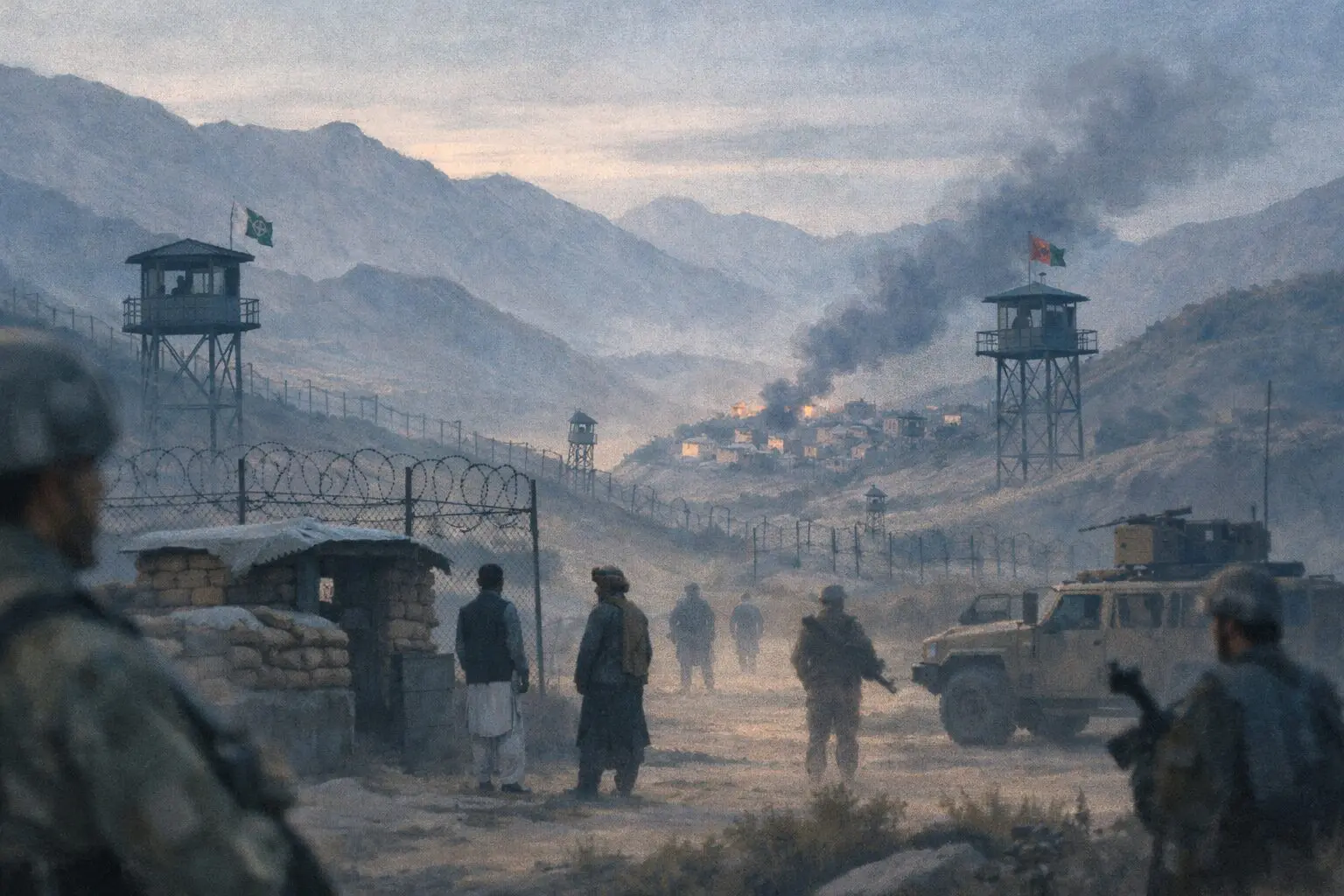
More than a century after the Durand Line was drawn by British imperial officials, the disputed frontier between Pakistan and Afghanistan has once again erupted into open conflict. What appears to be a sudden war is in fact the culmination of decades of unresolved history—colonial borders, militant movements, regional rivalries, and a fragile state system struggling to contain them.
When fighting erupted between Pakistan and Taliban-ruled Afghanistan on 27 February 2026, many observers described it as a shocking escalation. In reality, it was anything but sudden. At the centre of it all lies a colonial line on the map.
The frontier separating the two countries has been one of the most volatile borders in the world for decades. It is a line drawn by empire, contested by nationalism, exploited by militant groups, and entangled in the rivalries of regional powers. The current conflict is less a new war than the violent resurfacing of a century-old dispute.
The British border that never settled
The origins of the crisis go back to 1893, when the British Empire attempted to secure its north-western frontier in India. British diplomat Mortimer Durand negotiated a border agreement with Afghan ruler Abdur Rahman Khan.
The line they drew—later known as the Durand Line—cut directly through the traditional lands of the Pashtun tribes, dividing communities between Afghanistan and what was then British India.For the British, the line was a strategic buffer against imperial rivals. For the tribes it split apart, it meant little. And for Afghanistan, it would later become a symbol of colonial injustice.
When Pakistan emerged from the partition of British India in 1947, it inherited the Durand Line as its international border. But Afghanistan never fully accepted it. Kabul argued that the agreement had been imposed by colonial power and that the Pashtuns living along the frontier should have the right to determine their own political future.
The dispute poisoned relations from the very beginning. Afghanistan was the only country to vote against Pakistan’s entry into the United Nations in 1947—a symbolic act that foreshadowed decades of mistrust.
Cold war alliances and the refugee state
Despite this hostility, Pakistan would soon become Afghanistan’s lifeline. When the Soviet Union invaded Afghanistan in 1979, millions of Afghans fled across the border. Pakistan suddenly became the epicentre of one of the largest refugee crises in modern history. At its peak, around three million Afghans were living in Pakistan. Many remained for decades. Entire generations were born and raised in refugee camps and cities such as Peshawar and Quetta.
Pakistan also became the logistical heart of the anti-Soviet resistance. With support from the Central Intelligence Agency and funding from Saudi Arabia, Pakistan helped arm and train the Afghan mujahideen. But the infrastructure created for that war—training camps, militant networks, ideological madrassas—did not disappear after the Soviet withdrawal. Instead, they evolved. Out of this environment emerged the movement that would later dominate Afghanistan.
The rise of the Taliban
In the chaos of Afghanistan’s civil war during the 1990s, a new force appeared: the Taliban. The group consisted largely of Afghan students educated in religious schools in Pakistan’s border regions. Promising order after years of warlord violence, they captured Kabul in 1996 and established an Islamic emirate. Pakistan was one of the few countries that recognised the Taliban government. The relationship was shaped by strategic calculations: Islamabad hoped that a friendly government in Kabul would give it strategic depth in its long-standing rivalry with India. But regional geopolitics would soon complicate this picture.
India’s quiet battlefield
For decades, Afghanistan has also been a theatre for the rivalry between India and Pakistan. During the Afghan republic established after the 2001 overthrow of the Taliban, India invested heavily in Afghan infrastructure, diplomacy, and development projects. New highways, the Afghan parliament building, and numerous hospitals and schools were built with Indian assistance. Pakistan interpreted this growing presence with deep suspicion, fearing that India could use Afghan territory to support separatist or militant groups operating inside Pakistan.
Islamabad repeatedly accused Indian intelligence agencies of backing insurgent networks in Pakistan’s western provinces—allegations that India consistently denied. Whether exaggerated or not, the perception of encirclement shaped Pakistan’s security thinking. Afghanistan was never merely a neighbour; it was part of the broader strategic competition between South Asia’s two nuclear-armed rivals.
When allies become adversaries
When the Taliban returned to power in 2021 after the withdrawal of the NATO mission from Afghanistan, many in Pakistan expected relations to improve. Instead, the opposite happened. The central problem was the rise of Tehrik‑i‑Taliban Pakistan, commonly known as the TTP. Though ideologically close to the Afghan Taliban, the TTP is focused on overthrowing the Pakistani state.
Islamabad accuses the Afghan Taliban government of allowing TTP fighters to operate from Afghan territory and launch attacks across the border. Kabul denies responsibility but has shown little willingness—or ability—to dismantle the group. In Pakistan, militant attacks surged after 2021. For the Pakistani military, patience gradually ran out.
From border clashes to war
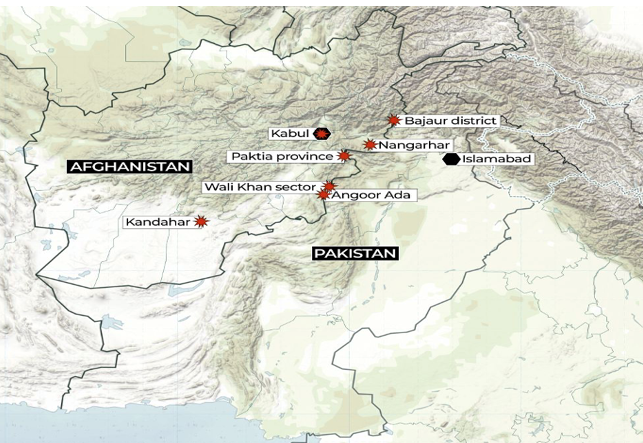
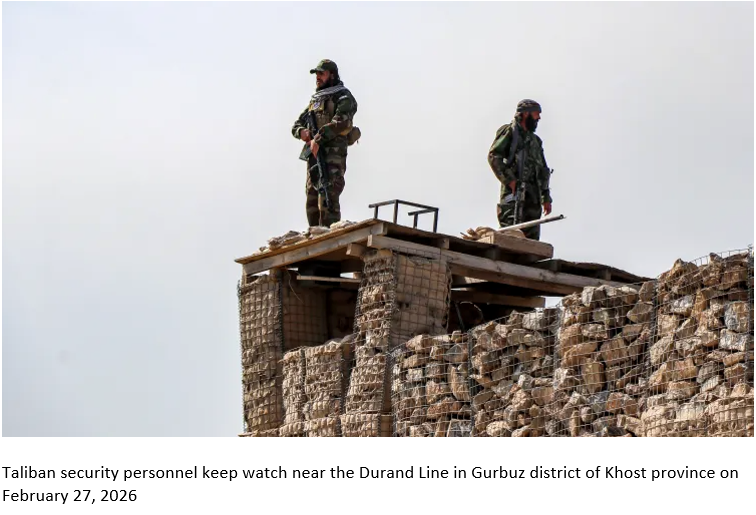
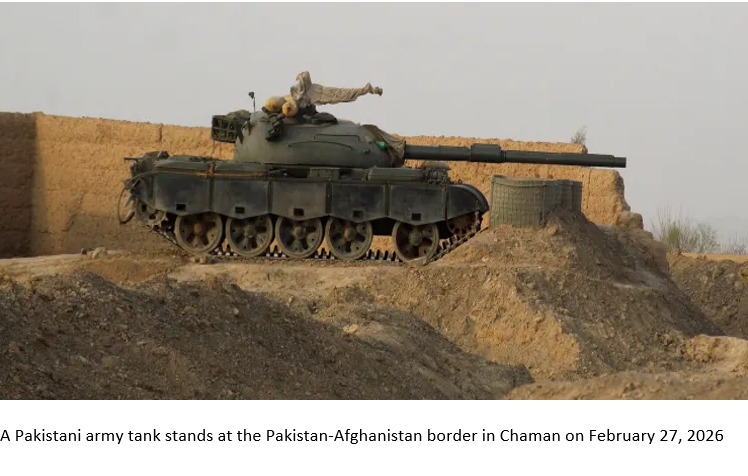
Skirmishes along the Durand Line have been frequent for years. Pakistan built border fences and launched occasional airstrikes against militant targets. Afghan Taliban forces responded with artillery and small-arms fire. What changed in early 2026 was the scale.
Pakistani strikes inside Afghanistan triggered direct retaliation from Taliban forces, turning sporadic clashes into open military confrontation. What had long been a shadow conflict suddenly became a declared war. Looking at the military strength, Pakistan has world’s 6th largest armed forces. It is very professional; battle hardened and has a very strong air force. Taliban can not match this fire power. Yet a sustained and prolonged conventional campaign would be a burden. Afghanistan faces deep economic collapse and international isolation. Pakistan is struggling too with political instability and financial crisis. For both governments, war is costly. But backing down also carries political risks.
Europe’s quiet reaction
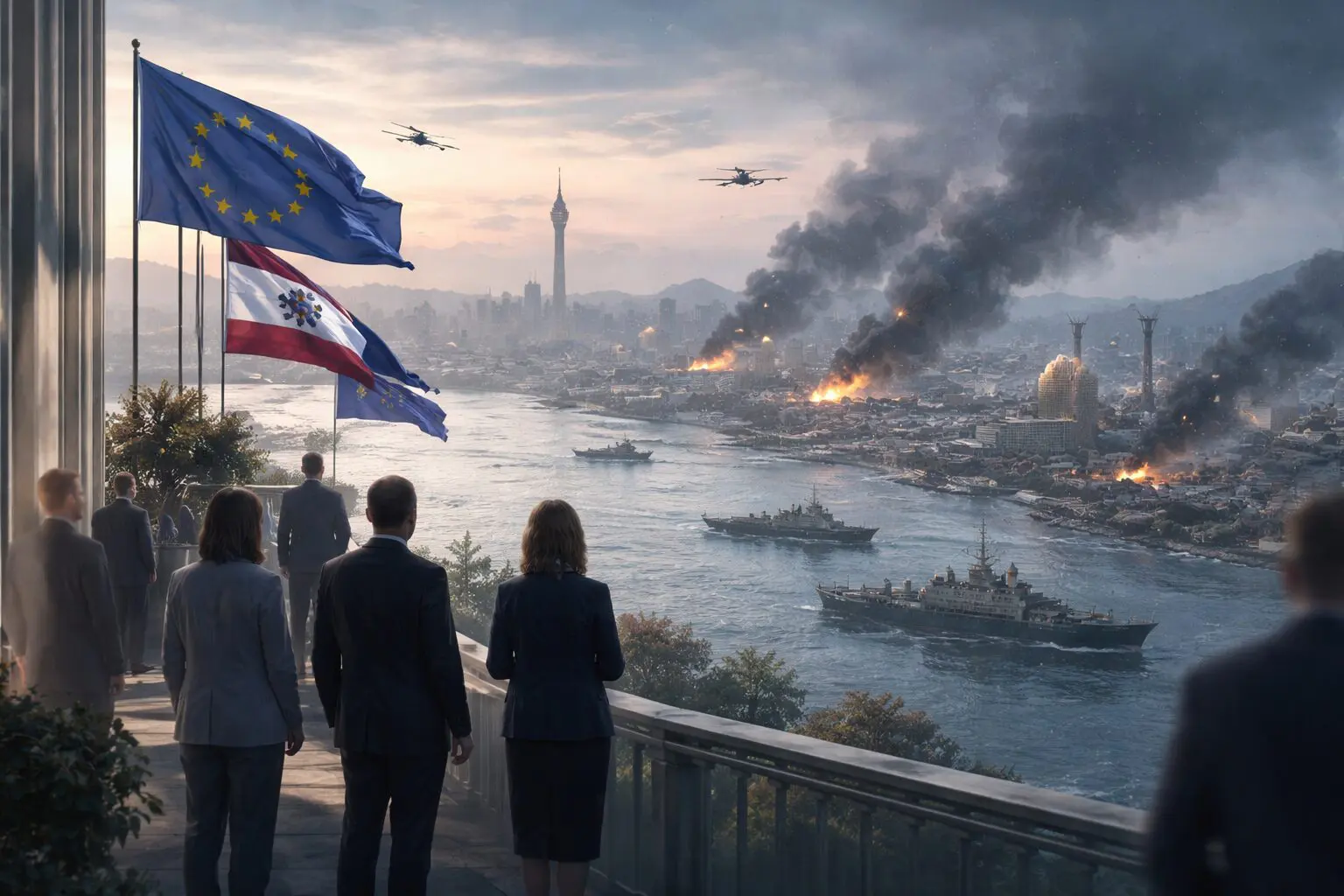
The response from Europe has been notably subdued. Part of the explanation lies in strategic distraction. Since 2022, European political attention has been overwhelmingly focused on the war involving Ukraine and the confrontation with Russia.
Another reason is diplomatic ambiguity. Most European states do not formally recognise the Taliban government, limiting their ability to engage directly with Kabul. Finally, there is a sense of geopolitical distance. For European policymakers, Afghanistan remains associated with the long NATO intervention that ended in withdrawal in 2021. Many governments are reluctant to re-enter the country’s complex politics.
Yet the consequences of instability in the region—extremism, regional war, and asylum seekers flow will not remain confined to South Asia.
Why Europe should pay attention?
For many European policymakers, the fighting between Pakistan and Afghanistan may appear distant—a regional dispute unfolding thousands of kilometres away. That perception is misleading. The stability of the Afghanistan–Pakistan frontier has direct implications for European security in at least two ways.
First, extremism risks.
The region has historically been a breeding ground for transnational militant networks. Groups operating in the borderlands, including Tehrik-i-Taliban Pakistan and other militant organisations maintain ideological and operational links with extremist movements beyond South Asia. When state authority weakens along the frontier, these groups gain space to recruit, train, and expand their influence.
Europe has already experienced the consequences of instability in Afghanistan once before. The collapse of Afghan state structures in the 1990s helped create the conditions in which al-Qaeda was able to operate. Few policymakers in Brussels would wish to see the region once again become a permissive environment for international militancy.
Second, refugee pressures.
Afghanistan remains one of the world’s largest sources of displaced people. Pakistan currently hosts millions of Afghan refugees, many of whom have lived there for decades. If open warfare expands along the border, Pakistan may push even more refugees back into Afghanistan or onward toward other regions. Any renewed humanitarian crisis in Afghanistan could eventually translate into migration pressures reaching European Union states. European leaders are acutely aware of how conflicts far beyond Europe’s borders can reshape domestic political debates.
What Europe Could Do
Europe’s influence over the Taliban authorities remains limited, but it is not non-existent. European states remain major donors to humanitarian and development assistance in Afghanistan. The EU also maintains diplomatic channels with regional powers such as Qatar, Turkey, and China, all of which have engaged with both Islamabad and Kabul. In practice, Europe’s role is likely to focus on three areas:
- encouraging regional mediation to prevent escalation;
- maintaining humanitarian support to avoid further state collapse in Afghanistan;
- coordinating diplomacy with partners to pressure militant groups operating across the border.
None of these measures will resolve the underlying conflict. But they may help prevent a dangerous regional confrontation from spiralling further.
The border the British empire left behind
We believe that the war now emerging between Pakistan and Afghanistan is a reminder that imperial legacies rarely disappear quietly. The Durand Line, drawn by British imperial strategists in 1893, was intended to stabilise a frontier. Instead, it created a political fault line that has survived empires, Cold War rivalries, and twenty years of Western intervention.
Today that fault line is once again erupting into open conflict. For Pakistan, the war is about security and sovereignty. For the Afghan Taliban, it touches questions of legitimacy, nationalism, and the unresolved status of the border. For India, it forms part of a wider regional rivalry.
For Europe, the temptation will be to look away—to see another distant conflict in a region that has exhausted Western attention. That would be a mistake.
Instability along the Afghanistan–Pakistan frontier has repeatedly spilled beyond South Asia, shaping terrorism networks, refugee flows, and great-power competition. The latest war may begin in remote mountain valleys, but its consequences will not remain there.
More than a century after it was drawn, the border created by empire still refuses to behave like a line on a map.