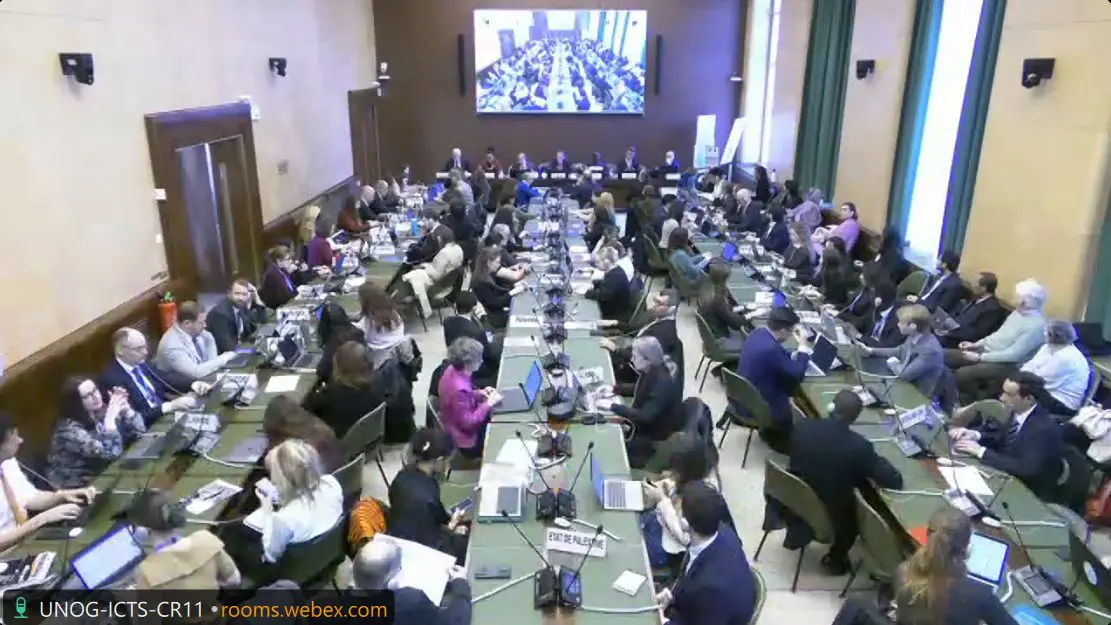
GENEVA, March — On a Tuesday morning within the aseptic corridors of the Palais des Nations, the atmosphere was subdued, yet heavy with unspoken urgency. A side event, held parallel to the 61st session of the Human Rights Council, brought together a numerous participants—a assembly given the gravity of the subject. Among the attendees were numerous diplomatic delegations, representatives of international organizations, and a cadre of human rights experts. The topic was not a new conflict or a sudden atrocity, but something perhaps more insidious: the slow, administrative suffocation of the very actors meant to hold power to account.
The event served as the platform for the launch of the analysis “Safeguarding Civil Society Space at the United Nations,” authored by Patrizia Scannella and published by the Friedrich-Ebert-Stiftung in partnership with the International Commission of Jurists. As I observed from the back of the room, the discussion did not revolve around the necessity of civil society—an established fact—but rather the alarming mechanisms currently being deployed to erode its participation.
The panelists were unequivocal in their assessment. “Civil society is not just an accessory, but the most essential pillar of the UN,” one speaker asserted, a sentiment echoed throughout the morning. Another emphasized that these organizations act as the “cohesive force that maintains the ambition of the UN, preserving the vitality of the multilateral system itself.” These were not mere rhetorical flourishes. They pointed to a structural reality: without independent voices, the UN risks becoming an echo chamber for state power, losing the credibility that underpins its human rights mandate.
Scannella’s publication provides the forensic evidence for these concerns. The document paints a stark picture of an organization under strain, caught between a geopolitical resurgence of authoritarianism and an internal crisis of identity. The analysis highlights a convergence of restrictive trends: increased reprisals against those who cooperate with the UN, administrative hurdles that limit access, and a financial environment that is becoming hostile to independent advocacy.
From a legal standpoint, this erosion strikes at the heart of the UN’s founding treaties. The Universal Declaration of Human Rights (UDHR) and the International Covenant on Civil and Political Rights (ICCPR) are not merely abstract texts; they are living documents that rely on the monitoring provided by civil society. Article 19 of the ICCPR, protecting the right to hold opinions and to seek, receive, and impart information, is operationally dependent on the ability of NGOs and activists to access forums like the Human Rights Council. When procedural barriers are erected, they do more than inconvenience an activist; they violate the state’s obligation to respect the implementation of these covenants.
One of the most compelling—and troubling—aspects of the report is its critique of the ongoing UN80 initiative. Launched in March 2025 by the Secretary-General, this reform effort is ostensibly designed to make the organization more efficient and cost-effective. However, the report argues that in the human rights pillar, this drive for efficiency masks a dangerous contraction. “It’s not UN reform, really, it’s UN contraction,” notes Chris Sidoti in the report, a quote that resonated during the discussion. When efficiency is decoupled from effectiveness and human rights protection, it becomes a tool for hollowing out the institution’s core functions.
The financial context adds a layer of cold reality to these bureaucratic shifts. The report documents a historic redirection of global resources. While global military expenditure reached a record USD 2,718 billion in 2024, funding for human rights and humanitarian work is plummeting. The analysis projects a 28 percent drop in Official Development Assistance (ODA) by 2026 compared to 2023. The freezing of USAID funds by the Trump administration is cited as a catalyst for this crisis, creating a ripple effect that has left many civil society organizations unable to sustain their operations or travel to Geneva.
This financial strangulation has a direct, “banal” impact on the machinery of justice. It manifests in cancelled sessions, delayed reports, and empty chairs in conference rooms—consequences that are often justified by budget sheets rather than malice. Yet, as Hannah Arendt might have observed, the displacement of moral responsibility by administrative routine is a hallmark of systemic failure. The UN’s human rights mechanisms are already the least funded of the organization’s three pillars; further cuts do not merely streamline the system, they cripple its ability to hear the victim.
During the panel, speakers warned that protecting civic space is not about protecting a special interest group, but about safeguarding the credibility of the entire UN human rights system. If the alarm bell is disconnected because the noise is inconvenient, as Santiago Canton, Secretary-General of the ICJ, famously remarked, the fire goes unnoticed. The silence in the room on Tuesday was not one of peace, but of a system holding its breath, watching as the space for dissent and accountability grows incrementally smaller.
The report concludes with a call for courage and leadership, urging states to reverse these restrictive trends. For the diplomats in the room, the message was clear: the cost of preserving civil society is high, but the cost of losing it—the loss of legitimacy, accountability, and ultimately, human dignity—is a price the multilateral system cannot afford to pay. As the UN approaches its 80th anniversary, it faces a choice between a streamlined, efficient echo of state power, or a messy, vibrant, and truly inclusive forum for human rights. The path chosen in the coming months will determine the future of global governance.