At the midpoint of a two-day OSCE human-dimension meeting in Vienna, the focus has settled on a growing concern across Europe and beyond: how democracies can be weakened not only by open repression, but also by the laws they pass, the way they pass them, and the safeguards that fail to stop democratic erosion in time.
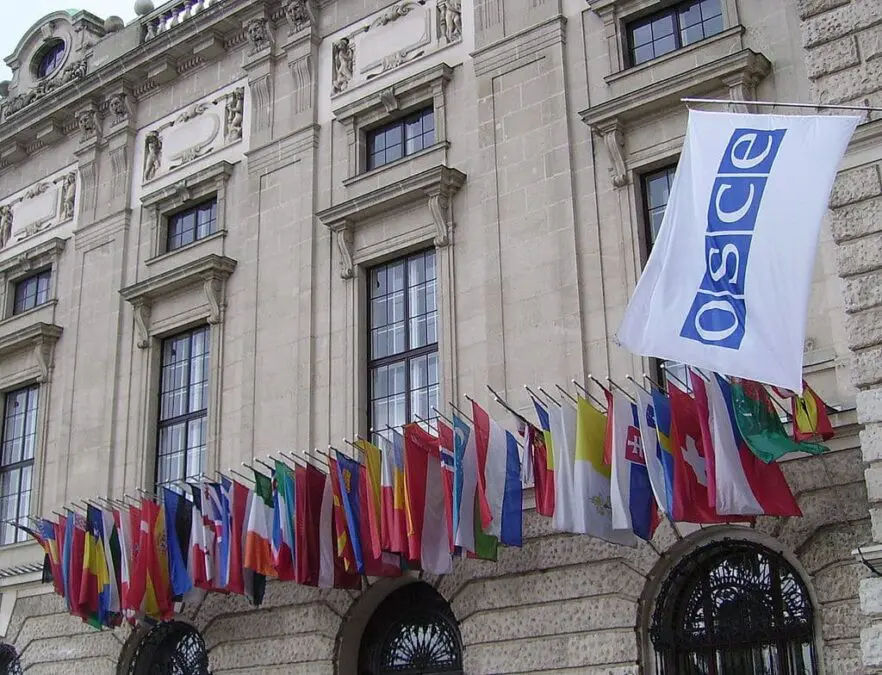
As delegates moved through the second day of the first Supplementary Human Dimension Meeting of 2026, the discussion in Vienna was centred on a theme that has become increasingly relevant across the OSCE region: “Lawmaking for Democratic Resilience.” The meeting, held on 16 and 17 March at the Hofburg Conference Center, was organized by the Swiss OSCE Chairpersonship together with the OSCE Office for Democratic Institutions and Human Rights (ODIHR).
The framing is significant. According to the official agenda, the meeting starts from the premise that democratic backsliding increasingly happens not through obviously unlawful acts, but through the weakening or circumvention of legislative procedures. In plain terms, the concern is no longer only what governments do, but how they make law, who gets heard, and whether democratic checks still function when political pressure rises.
That theme shaped the opening day. Monday’s programme began with remarks from Ambassador Raphael Nägeli, Chairperson of the OSCE Permanent Council, and ODIHR Director Maria Telalian, followed by a keynote address from Eirik Holmøyvik, Vice President of the Venice Commission. The first working session then turned to the role of robust lawmaking itself as a democratic safeguard, examining inclusive deliberation, meaningful consultation, evidence-based policy and proper parliamentary scrutiny as early protections against democratic decline.
By Tuesday morning, the meeting had shifted from general principles to practical accountability. Session II focused on the role of civil society and independent oversight in defending democratic lawmaking. The agenda underlines that legislation is not simply a technical drafting exercise. It requires policy discussion, impact assessment and meaningful consultation before and during the drafting process. Civil society organisations, ombuds institutions and national human rights bodies were therefore placed at the centre of the discussion on how transparency, participation and rights-based scrutiny can help prevent abuse or exclusion.
The importance of that discussion goes well beyond Vienna. Across many democracies, concern is growing over rushed laws, reduced consultation, shrinking civic space and tighter control over public information. The OSCE meeting suggests that these are not side issues. They go to the heart of democratic resilience. A system cannot credibly claim to defend democracy if its laws are drafted behind closed doors, pushed through without scrutiny, or shielded from independent criticism.
Later on Tuesday, the meeting turns to what may be its most consequential session: judicial review and accountability in democratic lawmaking. Introduced by Oleksandr Vodiannikov of the Constitutional Court of Ukraine, Róbert Dobrovodský, the Public Defender of Rights in Slovakia, and Chinara Aidarbekova of the Constitutional Court of the Kyrgyz Republic, the session is designed to examine what happens when preventive safeguards and public scrutiny fail. In those cases, courts may become the last corrective mechanism.
That emphasis on judicial review reflects a broader truth that many European legal systems are now confronting. Democratic erosion is often gradual. It can happen through procedural shortcuts, weak consultation, or legislation that appears formally legal while undermining pluralism, accountability or equal protection in practice. Courts, ombuds institutions and constitutional review bodies are therefore not secondary actors in a healthy democracy. They are part of the system’s emergency brakes.
The meeting also highlights the value of these ODIHR gatherings as spaces where participating States, institutions, civil society groups and other stakeholders can openly test ideas against democratic standards. As The European Times noted during an earlier ODIHR meeting in Vienna, these forums matter not only because of official speeches, but because they create room for states and non-state actors to challenge each other’s assumptions on rights, procedure and accountability.
This year’s first Supplementary Human Dimension Meeting is not expected to produce a binding political text. Its significance lies elsewhere. It is helping define the terms of a debate that is becoming more urgent across the OSCE area: whether democratic resilience can still be defended through transparent, participatory and accountable lawmaking before institutional damage becomes harder to reverse.
As the event moves toward its closing session later today, one message is already clear. Democracy is not protected only at election time or during moments of constitutional crisis. It is also protected in committee rooms, consultation processes, parliamentary scrutiny, judicial review and the daily discipline of making law in a way that remains open, rights-respecting and accountable.
Readers following the discussions can consult the official ODIHR event page, where the meeting details and livestream information are published, together with the full agenda.