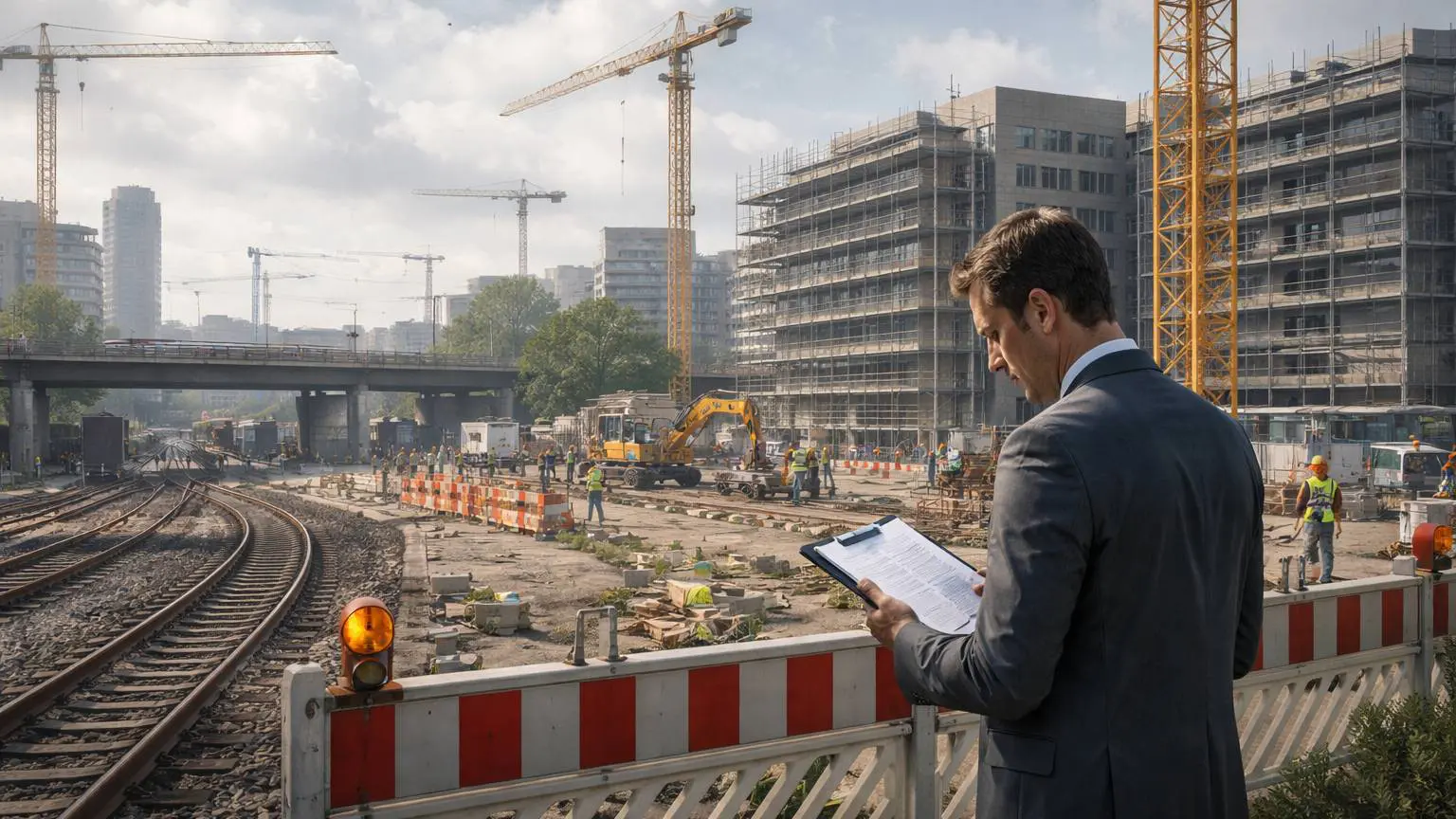
Germany’s flagship infrastructure fund was meant to help revive Europe’s largest economy. Instead, a sharp new debate has emerged over whether the money is producing real new investment or simply replacing spending that would have happened anyway. The answer matters far beyond Berlin, because if Germany cannot turn large-scale borrowing into visible growth, the wider European recovery may prove weaker than many hoped.
A major Reuters report published on 17 March has put Germany’s €500 billion infrastructure fund back under the spotlight. According to calculations by the German Economic Institute (IW) and the ifo Institute, most of the borrowing linked to the fund may not have generated genuinely additional investment. Instead, economists argue that a large share of the money appears to have substituted for expenditure that would otherwise have come from the normal federal budget.
That is a serious criticism, because the fund was presented as a strategic answer to Germany’s long-running investment gap. Roads, rail, hospitals, digital systems and energy infrastructure all need upgrades. Berlin’s political message was that special borrowing would help close that gap while supporting economic activity at a difficult time for both Germany and the wider European Union.
Yet the new analysis suggests the impact may have been far smaller than advertised. Reuters reported that IW estimated around 86% of the fund was redirected away from truly additional purposes, while ifo placed the figure even higher. Actual public investment rose only modestly in 2025, despite the large sums attached to the programme. The concern is not simply technical. If correct, it would mean Germany has created the appearance of a major investment push without delivering the full real-economy effect expected from it.
The timing is awkward. Germany has been trying to emerge from a prolonged period of weakness, and the latest official data have not painted a strong picture. The Federal Statistical Office reported this month that exports fell by 2.3% in January 2026, while industrial production slipped by 0.5% and new orders in manufacturing dropped by 11.1%. These are not numbers that suggest an economy already enjoying a powerful rebound.
Across the euro area, the picture has been slightly better, but still fragile. The European Central Bank said euro area GDP grew by 0.3% in the fourth quarter of 2025 and by 1.5% over the full year. Even so, Eurostat reported that industrial production in January 2026 fell by 1.5% in the euro area and by 1.6% across the EU compared with the previous month. Europe is still growing, but not with much room for disappointment.
This is why Germany’s investment debate matters to Europe as a whole. For months, Brussels and national capitals have spoken about the need for competitiveness, productive investment and greater economic resilience. Public money is supposed to help bridge that gap, especially where private investment is too weak or too cautious. But large headline figures are only politically useful if they translate into actual construction, modernisation and stronger productive capacity.
The German government rejects the idea that the fund is failing by definition. On its official Special Fund for Infrastructure and Climate Neutrality page, the finance ministry argues that the programme is legally additional because investment in the core federal budget remains above the required threshold. It says total federal investment spending reached around €87 billion in 2025, including roughly €24 billion financed by the special fund, and is planned to rise to around €120 billion in 2026, with €58 billion expected from the fund.
That defence matters, but it does not fully answer the political question. The issue is no longer only whether the spending passes a legal test. It is whether voters, businesses and Europe’s partners can see clear proof that the money is changing Germany’s economic foundations. A fund of this scale was never meant to be a bookkeeping exercise. It was meant to modernise the country and help restore confidence in the capacity of Europe’s biggest economy to lead.
The debate also fits into a wider European pattern. The continent has become more aware that growth, competitiveness and strategic autonomy depend on practical investment rather than declarations alone. Energy systems, transport links, digital networks, industrial capacity and innovation all require money that arrives quickly and reaches the real economy. As The European Times recently noted in its coverage of Europe’s latest energy shock, the challenge is not simply spending more, but spending in ways that genuinely reduce structural weakness.
Germany’s infrastructure fund may still prove valuable. It is too early to say that it has definitively failed. Large projects take time, and governments often argue that headline borrowing and real implementation do not move at the same speed. But the criticism published today is a warning that in the current economic climate, Europe can no longer rely on announced billions alone to inspire confidence.
If Berlin wants this fund to become a model for recovery rather than a symbol of accounting ambiguity, it will have to show faster, clearer and more measurable results. That is now the real test. In 2026, Europe does not only need public investment. It needs public investment that is visibly additional, economically productive and politically credible.