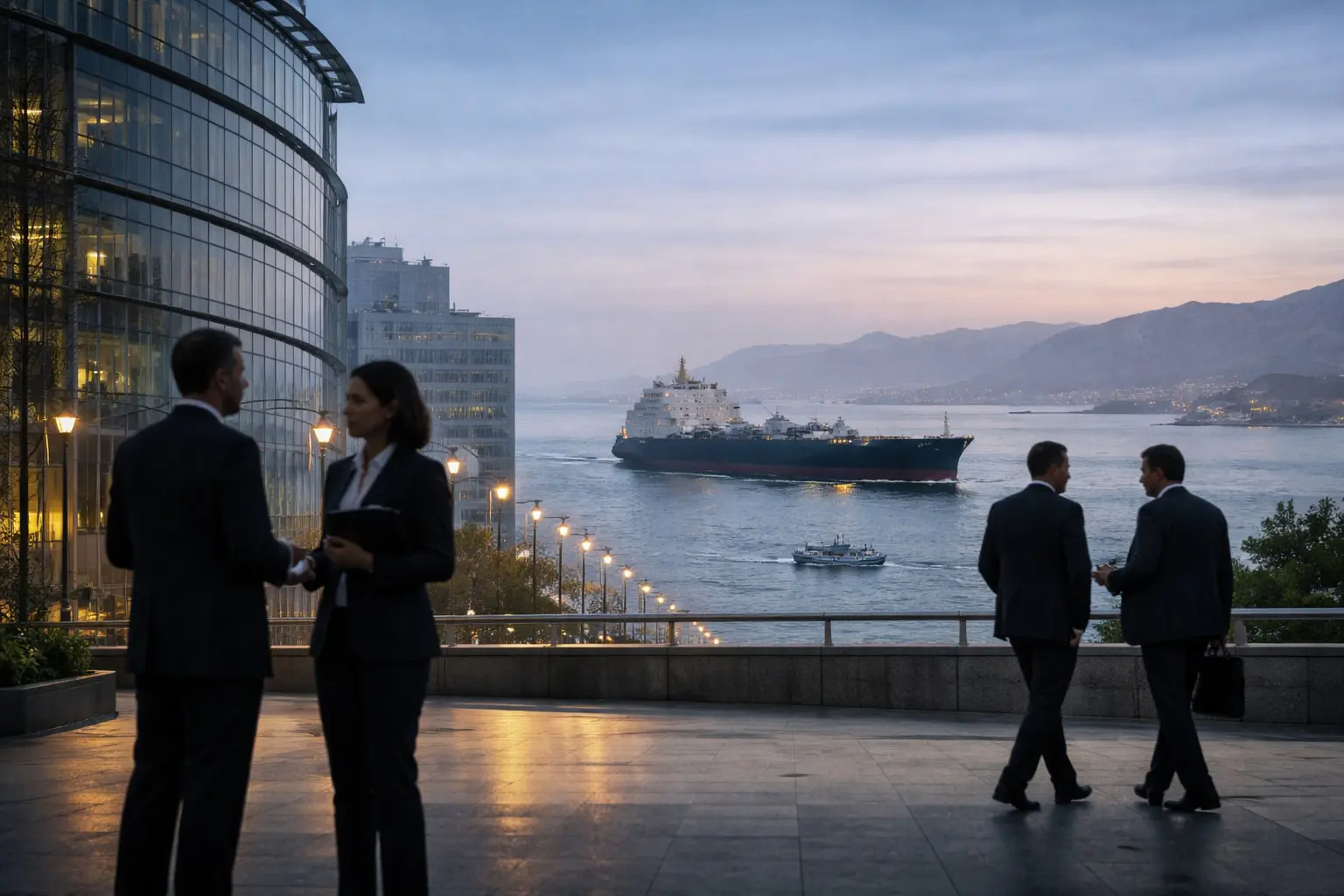
The European Commission has approved more than €103 million for seven strategic projects under the LIFE programme, backing initiatives in Finland, France, Greece, the Netherlands, Portugal, Slovakia and Spain. Brussels is presenting the package not only as environmental policy, but as an investment in economic resilience, public health and Europe’s long-term competitiveness.
The new funding, announced through the European Commission’s press service, covers around 36% of a wider €284 million envelope for long-term projects intended to run well into the next decade. Together, they focus on climate adaptation, water resilience, marine restoration, circular economy reforms and more sustainable land use.
That framing is politically important. At a time when the European Union is under pressure to reconcile climate goals with industrial competitiveness and rising public concern over the cost of transition, the Commission is increasingly presenting green spending as a form of strategic investment. Climate Commissioner Wopke Hoekstra argued that climate investment is “essential for our economy, our security and our independence,” while Environment Commissioner Jessika Roswall described Europe’s natural infrastructure as a foundation for resilience and competitiveness.
A programme with a broader political role
The LIFE programme is the EU’s only funding instrument dedicated entirely to environment, climate and clean-energy objectives. Since 1992, it has supported more than 6,500 projects across the Union and associated countries. The latest package also fits into a larger policy architecture: the projects are meant to support the European Climate Law, the EU Biodiversity Strategy for 2030, the Water Framework Directive and the bloc’s marine and mobility goals.
In practical terms, Brussels is trying to show that climate policy can also mean flood protection, cleaner water, stronger coastal economies, lower material use in industry and better preparedness for extreme weather. That is one reason the Commission is stressing that these projects should mobilise additional national and private investment, rather than function as isolated EU grants.
The move also comes as the Commission signals that LIFE-style action will remain part of its thinking for the next EU budget cycle, including in future proposals linked to competitiveness and decarbonisation. In other words, this is not just a set of environmental grants. It is also a preview of how Brussels wants to defend green spending politically in the years ahead.
Seven countries, seven priorities
The projects are spread across very different geographies, but each is tied to a concrete vulnerability or structural transition:
- Finland: ACWA LIFE will receive €16.5 million to restore and protect streams, lakes, coastal waters, river basins and groundwater.
- France: LIFE ADAPT EST gets €15.6 million to improve climate resilience in the Grand Est region, including water governance and infrastructure adaptation.
- Greece: LIFE SIP GR Blue receives €8.9 million for marine ecosystem restoration and action against pollution, litter and underwater noise.
- Netherlands: CEL4LIFE is backed with €6.9 million to help Limburg cut raw material use in chemicals, manufacturing and construction by half by 2030.
- Portugal: LIFE IP AGRILOOP will receive €15.8 million to promote circular solutions in the Azores across agroforestry, agrifood and tourism.
- Slovakia: NatAdaptSK gets €10.1 million for nature-based solutions covering water, forests, agriculture and biodiversity.
- Spain: LIFE HumedalES receives €29.7 million and stands out as the largest project ever financed under the LIFE programme.
Spain’s project is the most eye-catching of the seven. According to the Commission and the CINEA project summary, LIFE HumedalES aims to restore around 26,200 hectares of wetlands across 107 Natura 2000 sites. That gives it significance well beyond Spain, because wetlands are central to flood control, biodiversity protection, carbon storage and water security across Europe.
Why the package matters
On one level, the announcement is a routine funding story. On another, it shows how the EU is adjusting the language of the Green Deal era. The Commission is no longer speaking about climate only in terms of emissions and targets. It is also speaking about droughts, floods, island economies, industrial raw materials and water systems that underpin everyday life.
That broader language reflects political reality. Across Europe, climate policy now has to prove that it can deliver visible benefits in regions facing extreme weather, strained ecosystems and economic uncertainty. Projects like these are one way Brussels is trying to make that case: not through grand declarations alone, but through local interventions that can be counted, mapped and measured.
The challenge, as always, will be delivery. Strategic projects of this kind are designed to operate over many years and across many authorities, which makes them potentially transformative but also institutionally demanding. Their success will depend not only on EU money, but on whether national, regional and private partners follow through.
The Commission’s latest announcement therefore says something larger about Europe’s current mood. The green transition is still moving forward, but it is being defended in increasingly pragmatic terms: resilience, security, competitiveness and quality of life. For Brussels, that may be the most important political message behind this €103 million package.
For readers following the wider evolution of EU environmental funding, this latest decision also builds on earlier LIFE-backed action covered by The European Times in its report on €86 million for climate resilience and water quality projects.