By Boris Ilyich Gladkov
Conversation Three
1. Last time, I concluded my talk on communication with the afterlife with these words: “Spiritualism is not a pastime; it is a religion that dares to rise above the Christian religion. And therein lies the danger for people who view it as an innocent pastime. Unable to approach this teaching critically, many begin to engage in it, first table-turning, and then mediumship, as a joke, and become so engrossed that, without realizing it, they become zealous servants of imaginary spirits and blind executors of their commands. It is precisely this danger that I wish to warn you against.”
With these words, I concluded my talk on November 4th; and today, I should have gone straight to outlining the anti-Christian teachings of spiritualists. But since I know that some former atheists credit spiritualism with their conversion to God, I will first say a few words about it. Undoubtedly, if an atheist is convinced of the immortality of the human soul, then he logically comes to accept the existence of God. And since the entire teaching of spiritualists is based on supposed communications from immortal spirits, anyone who believes in the reality of these communications can no longer deny the existence of God. This, of course, cannot help but see some merit in spiritualism. A spiritualist who believes in God and consciously strives for perfection, even if he is mistaken in the methods leading to salvation, is still better than an atheist who worships his ego and recognizes as good only that which is personally pleasant and beneficial. But for this reason, one cannot follow a false path to knowledge of the truth. There is another way, and indeed the only one: the study of the Gospel. Having thoroughly familiarized ourselves with the Person of Jesus Christ from the Gospel, we come to the unshakable conviction (not just faith, but conviction) that He could not be other than He claimed to be, and that, therefore, He is truly the God-Man, the Son of God. Convinced of this, we are compelled by logical necessity to believe His every word as truly the word of God. Having become familiar with all He said, we will know the truth; we will receive a divine answer to the world’s mysteries that trouble humanity. There is and will be no other authority than our Lord Jesus Christ. Therefore, we must abandon all mysterious, not alien charlatanism, occult and spiritualistic attempts to lift the veil that conceals the unknown from us.
Use all your strength to expand the boundaries of the knowable through strictly scientific means; but do not resort to anything mysterious! Any such attempts lead blinded adherents of the mystical to a bold denial of Christianity and, consequently, to a deviation from the truth, from divine revelation. Discover the truth in the light of the Lord’s teaching! Expand the realm of the knowable through science! But don’t hide in the dark, don’t frame your research with conditions necessary for dark purposes, don’t be fooled!
2. Allan Kardec is considered the father of spiritualism, the one who developed mediumistic messages and systematized them. His works “The Book of Spirits,” “Heaven and Hell,” “Genesis,” and “The Gospel According to Spiritism” are considered the catechism of spiritualists. Therefore, I will focus your attention on these books.
The Book of Genesis tells us that God first revealed His will to people through Moses; however, since in Moses’s time people did not yet possess the scientific knowledge that would enable them to understand all the mysteries of the world, the revelation to Moses was incomplete. Then, fifteen hundred years later, Christ supplemented this first revelation; but He, too, did not completely lift the veil that concealed the “unknown” from people. In His farewell discourse with the Apostles, He said: “Much of what I say to you you do not yet understand. And I still have many things to say to you, but you cannot bear them now. Therefore I speak to you in parables. But afterward I will send you the Helper, the Spirit of truth, who will restore all things and explain them to you.” Having quoted the words of Jesus Christ in this form, Allan Kardec continues: “If Jesus did not say all that he could have said, it is because He deemed it necessary to leave certain truths in the shadows until people were able to understand them. Therefore, in His view, His teaching was incomplete, and He promised the appearance of One who would complete everything. He foresaw that His words would be misunderstood, that people would deviate from His teaching and destroy what He had accomplished; and if, according to His words, everything must be restored, then the entire teaching would be destroyed. And He foresaw that people would need consolation; therefore, He promised the appearance of the Comforter, Who would restore and complete all the teachings of Christ that people had destroyed.”
This is how Allan Kardec explains the words of Jesus Christ, which He addressed to the Apostles in His farewell discourse.
We know that the Apostles were infected with the false teaching of the scribes and Pharisees regarding the destiny of Christ the Messiah. They viewed their Teacher solely as the King of Israel, Who would overthrow the yoke of the Romans, conquer the entire world, subjugate all the nations of the earth to the Jews, and reign forever. During the life of Jesus Christ, they refused to even consider that He could be crucified, because, in their view, the Messiah must reign forever and therefore could not die. They considered all of Christ’s predictions about His death and resurrection to be allegories, parables, which the Lord so often resorted to. Therefore, they did not believe in the possibility of His resurrection: the Messiah cannot die, therefore, he cannot rise again. Considering Jesus to be the King of Israel, the Apostles could not comprehend that He was not an earthly king, but the God-man, the Son of God. The Lord knew all this. He also knew that the Apostles would scatter and leave Him alone as soon as He was taken into custody and brought to trial. He knew that a tormenting doubt would creep into the Apostles’ souls: was Jesus the Messiah, was He the King of Israel, if He was crucified on a cross with thieves? Yes, the Lord knew all this. He knew that the false teaching about the appointment of the Messiah was preventing the Apostles from believing in Him, and He sadly expressed this to them in His farewell discourse. However, not wishing to leave them in such a tormented state of mind, the Lord said that He would send them the Comforter, the Spirit of Truth, who would testify about Him. And we know that the Apostles, right up to the very end, until the Ascension of the Lord, looked upon Him as a conquering king, a subjugator of the entire world to the Jews; and even before the moment of His ascension, they asked Him, “Lord, wilt thou at this time restore again the kingdom to Israel?” (Acts 1:6). And how many tormenting doubts did the Apostles endure during those three years of following the Lord? What spiritual anguish they experienced when they turned to Him with the plea, “Lord! increase our faith!”
Yes, with such doubts the Apostles lived until the fiftieth day after the crucifixion of Jesus. The Holy Spirit descended upon them, and instantly the veil woven by the false teachings of the scribes, concealing from them the light of Christ’s truth, fell from their eyes. The veil fell, and they immediately understood everything about which they had so often puzzled, about which they had often doubted, about which they had not even wanted to believe. The veil fell, and instantly the image of the Messiah-Conqueror it had evoked vanished, and in its place stood the clear, distinct image of Christ the God-Man, the Son of God, equal to the Father. And then the Apostles emerged openly as bold preachers of the teaching of the Son of God, crucified, died, and resurrected. And they themselves recognized and publicly confessed that they had been transformed not by their own strength or piety, but by the power of the Holy Spirit, sent upon them by God in the name of Jesus Christ, the Son of God. This is how we Christians understand the Lord’s promise to send the Comforter, the Spirit of Truth, to the Apostles, as well as the fulfillment of this promise on the day of Pentecost.
But spiritualists think differently. They believe that the Comforter, the Spirit of Truth, promised by Christ, is the third Messiah, the third revelation—that is, spiritualism, which draws from the messages of spirits at spiritualistic séances what Christ did not say, what He could not reveal in His time. Allan Kardec says that spiritualism fulfills all of Christ’s promises about the announced Comforter; in spiritualism, the prophecy of His coming is fulfilled; spiritualism is the true Comforter. The ease with which it has acquired a significant number of followers, without any coercion, proves that it satisfies the need for something to believe in after the void created by unbelief, and that, therefore, it has come at the right time. Thus, spiritualism denies the descent of the Holy Spirit upon the Apostles, although it in no way explains the change that occurred on the day of Pentecost in the Apostles’ views on the work of Christ and on Himself. Moreover, Allan Kardec completely rejects the Holy Spirit, and therefore does not believe the clear, unmistakable words of Jesus Christ concerning Him. The Lord spoke of the Holy Spirit not only in His farewell discourse, when He called Him the Comforter; He spoke of the Holy Spirit many times. He proclaimed to His listeners that while blasphemy against Him, the Son of Man, accepted only as Man, can be forgiven, blasphemy against the Holy Spirit is unforgivable for anyone, and will not be forgiven either in this life or in the next. And it will not be forgiven precisely because everyone knew of the Holy Spirit, proceeding from the Father, from the books of the Old Testament. After His resurrection, the Lord gathered the Apostles in Galilee and said to them: “Go ye and make disciples of all nations, baptizing them in the name of the Father and of the Son and of the Holy Spirit, teaching them to observe all things whatsoever I have commanded you” (Matthew 28:19–20). And John the Baptist publicly proclaimed that he had seen the Holy Spirit descend upon Jesus during His baptism. In short, the Gospel repeatedly speaks of the Holy Spirit, and by the words “I will send you the Comforter, the Spirit of truth,” the Lord meant precisely the Holy Spirit who descended upon Him at His baptism, blasphemy against whom is unforgivable and in whose name believers must be baptized. Spiritualists, however, consider this Comforter to be their own teaching, which supposedly proclaimed the truth and replaced the destroyed teaching of Christ.
3. Let us now consider whom the spiritualists consider Christ Himself to be. But before answering this question, we must become familiar with the spiritualist teaching on spirits in general.
According to spiritualist teaching, the Almighty God has created a multitude of spirits and is continually creating them. All spirits are created by God as identical, simple, and ignorant—that is, devoid of all knowledge. All spirits must strive for perfection and, to this end, are incarnated by God into various bodies, not only of humans but also of apes, in various worlds of the boundless universe. During their incarnations, spirits acquire knowledge and develop their abilities; and after the death of the body in which the spirit was incarnated, God incarnates it into a new body, in accordance with the merits of the previous incarnation. Such incarnations continue until the spirit attains complete purity, the highest perfection. Then, incarnations cease, and the pure spirit becomes the executor of God’s commands. The same spirits incarnate on different planets as they approach perfection, for God divides the planets into ranks, and our Earth belongs to one of the lowest ranks. The created spirit is first incarnated on a planet of the lowest order, and even then, it is clothed in a body of the least perfect, such as that of a monkey. As the spirit develops and perfects, it is incarnated in other bodies on the same planet; then it is transferred to a planet listed as belonging to a different, higher order. And such reincarnations and transfers to higher orders continue until the spirit achieves absolute purity. Pure spirits fulfill God’s mandate and, to do so, must sometimes reincarnate even on a planet of the lowest order, although they themselves, having attained perfection, no longer have any need for incarnation.
And so, spiritualists recognize Christ as one of these highest, pure spirits, incarnated in a human body not to strive for further perfection, but to fulfill the mission entrusted to Him by God. In short, according to spiritualist teaching, Christ is a created spirit, just like all other created spirits; and He was created as a simple, ignorant spirit, possessing no knowledge. Like all other spirits, He incarnated many times in various bodies, on different planets. When, through reincarnation, He attained perfection and purity, He was elevated to a higher rank and became the executor of God’s commands, a executor like the other pure spirits, of which there are many in the universe.
In confirmation of this, I will cite the actual words of Allan Kardec: “Considering Christ as the highest Spirit, one cannot help but see that, in His perfection, He stands immeasurably above earthly humanity.” His incarnation in this world, given its enormous results, must have been one of those missions entrusted only to direct messengers of the Deity for the fulfillment of His purposes. As a Man, He had a material constitution, but as a pure Spirit, detached from matter, He was to live a spiritual life rather than a material one, the weaknesses of which were alien to Him. No spirit could use Him as an intermediary, as a medium, since, by the definition of one spirit, He was a medium of God Himself.
Thus, according to the teaching of spiritualists, Christ is an ordinary spirit created by God, who achieved perfection through reincarnation, a spirit of which there are many in the universe.
4. As for the miracles performed by Jesus Christ, spiritualists reject them all. Without denying God the right to perform miracles, they assert that God never performs them, because His laws governing the world are perfect and there can be no need for Him to violate them; If people, misunderstanding many things, accept incomprehensible phenomena as miracles, this stems from their ignorance of the laws of nature.
But by rejecting any possibility of miracles, spiritualists fall into self-contradiction. After all, they recognize all the miracles performed by spirits who appear at their request at spiritualistic séances. Isn’t it a miracle that a spirit unquestioningly appears at the summons of spiritualists? Isn’t it a miracle that not only free spirits, so to speak, that is, those dwelling in the spiritual world, but even those incarnated in human bodies appear at spiritualistic séances? According to spiritualist teaching, only spirits who have achieved absolute purity and complete perfection do not reincarnate; all other spirits are constantly reincarnated, that is, they live material lives on various planets of the vast universe. Yet, despite this, spiritualists summon them, and they unquestioningly appear to them, perhaps simultaneously in different places, to many mediums. After all, for an embodied spirit to appear at a séance, it must abandon its body, leaving it lifeless, dead, and then, upon returning from its involuntary absence, revive it again! Isn’t that a miracle? Isn’t it a miracle that a spirit, wherever it may be, immediately recognizes that it is being called by such-and-such spiritists to such-and-such a house, and, having recognized it, immediately responds to the summons? After all, for a spirit, located unknown whereabouts, to be able to know the thoughts and desires of people living on our Earth, it must be omniscient; and in order to instantly respond to a summons on every planet in the vast universe, it must be omnipresent. But this is not enough: if a disembodied spirit, lacking the powers of the material world, can turn tables, move furniture, throw things from one place to another, and write with the hand of a medium in all sorts of languages, then it must also be omnipotent. But we acknowledge only God as omniscient, omnipresent, and omnipotent! And if spiritualists ascribe these same properties to the spirits who appear to them, then isn’t that a miracle of miracles? No, Messrs. Spiritualists! If you believe in all the miracles of your spiritualistic séances, then you are extremely inconsistent when you deny the possibility of miracles altogether. If you strive to verify the reality of the miracles you perform in the dark, then don’t dare deny the reality of the miracles performed by Jesus Christ! After all, He didn’t fear the light, as you do, and He performed no miracles in the dark. Everything He did took place in broad daylight and publicly; and it was attested not by mediums, but by absolutely trustworthy eyewitnesses who confirmed the truth of their words with their martyrdom.
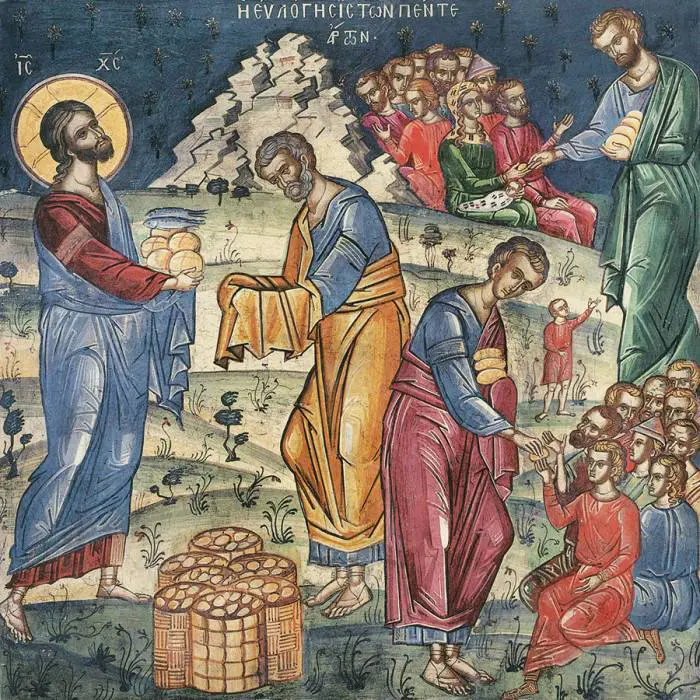
In examining the works of Jesus Christ, Allan Kardec sees nothing miraculous in them. He attributes all the Lord’s healings of the sick to magnetism, supposedly emanating from Christ Himself. However, while offering this explanation for the healings performed directly by Jesus Christ, Allan Kardec remains silent about the healings performed in absentia, or at significant distances. He explains the miraculous catch of fish by double vision: Jesus spiritually saw a spot in the Sea of Galilee where there were many fish and commanded the Apostles to cast their nets in that very spot. Allan Kardec rejects the resurrections of Jairus’s daughter and the son of the widow of Nain, claiming that they were supposedly dead, in a lethargic state, and that Christ, possessing great magnetic power, could easily have broken their lethargy. Allan Kardec even considers Lazarus to have been in a lethargic sleep. He explains Martha’s words, “It already stinks,” as mere conjecture, since Lazarus had been buried for four days, and therefore Martha could not have known anything about the decomposition of her brother’s body. Furthermore, Allan Kardec says, some sick people experience partial decomposition before death. He explains the Lord’s walking on water by the appearance of Christ’s ethereal, astral body on the water, while His material body remained on dry land. Regarding the calming of the storm, he says: “The spirit of Jesus, asleep in the stern, saw that there was no danger and that the storm would immediately subside; therefore, upon awakening, Jesus said, “Peace! Cease!” and spoke at the precise moment when the storm should have subsided without Him. Regarding the miraculous feeding of the people, he says that the people, captivated by Jesus’ word and the magnetic influence He exerted on them, did not feel hunger.
All these explanations for the miracles performed by the Lord are so absurd that anyone who has read the Gospel at least once in their life can refute them. Therefore, I do not consider it necessary to burden you with refutations of these far from new attempts to diminish the significance of miraculous events described by truthful and impartial eyewitnesses. Such attempts were made by pagans in the early centuries of Christianity, but they remained mere attempts with undeniably inadequate means.
Healings of the possessed are also rejected by spiritualists, as they do not recognize the existence of demons. Dividing all spirits created by God into ranks according to their degree of perfection, spiritualists claim that the spirits of the lower ranks, who delight in evil, were mistaken by Christ for demons.
Here is what Allan Kardec writes in his article “Demons According to Spiritualist Teachings”:
“According to the teachings of spiritualism, neither angels nor demons constitute separate beings, since all rational beings are created equally. United with a material body, they constitute humanity, which inhabits the earth and other inhabited spheres; Separated from their bodies, they constitute the spiritual world, or spirits, which fill space. God created them capable of improvement and set them the goal of achieving perfection, as well as happiness as a consequence of perfection; but He did not give them perfection itself: He wanted them to achieve it through their own efforts, so that it would be deserved. They progress from the moment of their creation, sometimes in a state of embodiment, sometimes in a disembodied state; having reached the apogee, they become pure spirits, angels, in the common expression, so that, from the embryo of a rational being to an angel, there exists an unbroken chain, each link of which represents a certain degree of perfection. From this it follows that spirits exist in all degrees of moral and intellectual perfection, depending on where they are located—at the bottom, top, or middle of the ladder. Consequently, they possess knowledge, ignorance, malice, or goodness in corresponding degrees. In the lower ranks, there are those who are still inclined to evil and who enjoy it. You can call them demons, if you like, because they are capable of all evil. According to Church teaching, demons were created good and became evil through disobedience; they are fallen angels. The Lord placed them high, but they descended. According to spiritualism, they are imperfect spirits who will yet be corrected; they are still on the lower rungs of the ladder, but they will ascend. Those who, through their negligence, carelessness, stubbornness, or ill will, remain on the lower rungs for a longer period bear the consequences; and habituation to evil makes it even more difficult to escape this situation. But the time comes when they begin to tire of this difficult state and the suffering that accompanies it. Then, comparing their situation with that of good spirits, they will understand that it is in their interests to be good, and they will strive to improve; but they will do so only of their own free will, without any coercion. In their ability to progress, they are subject to the law of progress and, if they do not progress, then by their own will” (“Heaven and Hell.” Chapter 9).
In another book, Allan Kardec states that spirits are created with a striving for perfection and cannot deteriorate (“The Book of Spirits,” Book 2, Chapter 1, “The Perfection of Spirits”).
Thus, according to the teachings of spiritualists, so-called evil spirits are nothing more than the souls of people who lived on earth, souls of a lower order. Christ Himself is such a spirit, incarnated many times and having attained perfection, and therefore transferred to a higher order, to which all lower spirits, called demons, will eventually be transferred when they achieve perfection through their own efforts. According to spiritualist teaching, the law of constant and steady development operates invariably in the spirit world as well; and spirits, by virtue of evolution, constantly advance along the path of self-improvement, and are incapable of deteriorating or descending into lower orders. If, according to spiritualist teachings, all spirits are created equal, neither good nor evil, if they are created with a desire for goodness and, moreover, cannot deteriorate, then the question arises: what compelled spirits still at the lowest stages of development to love evil? What prompted them to deteriorate, to change the inclinations toward good given to them at creation, and to become evil spirits? If spirits cannot deteriorate, if they are subject to the law of evolution, then evil spirits should not exist at all? But since spiritualists also acknowledge their existence, calling them the souls of wicked people, this undoubtedly contains a self-contradiction.
While not denying the influence of one spirit on another, spiritualists admit the possession of people by evil spirits; however, they attribute liberation from such possession not to a miracle, but to the power of each spirit, ranking higher in rank than the possessing spirit. And since Christ, according to spiritualists, attained the highest rank through reincarnation, the lower spirits submitted to Him and freed the people they possessed from their power.
As for the greatest miracle, the resurrection of Christ, spiritualists reject it as well. They acknowledge that during His life, Christ possessed a material body, completely subject to the laws of the material world; but this body died, just as all human bodies die. Where it disappeared to and whether it was stolen is a question spiritualists do not address, as they consider the resurrection of a material body contrary to the laws of nature and therefore impossible. But since, according to spiritualist teaching, every spirit, in addition to the material body into which it incarnated, also has an ethereal body connecting it with the material body, spiritualists consider Christ’s appearances after death to be spectral; the Spirit of Christ appeared not in a material body, but in a spectral one, like a ghost. At Christ’s ascension, this ghostly, ethereal body also dissipated and disappeared, leaving no trace.
This is how spiritualists explain not only the miracles performed by Jesus Christ, but also His resurrection itself. But this explanation clearly contradicts the words of the Lord. He spoke of the miracles He performed to His embittered enemies: “The works which the Father has given Me to finish, the very works that I do, bear witness of Me, that the Father has sent Me. If I do not the works of My Father, believe Me not: but if I do, though ye believe not Me, believe the works, that ye may know and believe that the Father is in Me, and I in Him” (John 5:36; 10:37-38). From these words, it is clear that Christ attributed the miracles He performed not to natural forces, unknown to His listeners; no, He attributed them to the omnipotence of God the Father and His equality with the Father. He spoke of His death on the cross and resurrection many times, but He never said that He would be resurrected by the Father. On the contrary, speaking of His impending death, He said: I lay down My life that I might take it again. No one takes it from Me, but I lay it down of Myself. I have power to lay it down, and I have power to take it again (John 10:17-18). And He explained to the Apostles many times that He would be killed and rise again on the third day. And we know that He truly rose again and that His appearances to the Apostles after the resurrection were not phantoms, but entirely real: the Apostles were convinced by their touch that it was not a phantom, not the Spirit of their Teacher, who appeared to them, but He Himself, possessing a body and bones, which the Spirit does not have; finally, Christ ate before them, which phantoms cannot do. This is not the place to prove the reality of Christ’s resurrection; those wishing to study this matter in more detail are referred to my brochure, “Yes, Christ Has Truly Risen.” Now I ask: how can these spiritualists dare to reject the miracles and resurrection of Christ, while simultaneously acknowledging the authenticity of other events described by the Evangelists? After all, if the Evangelists deviated from the truth in this regard, then they deserve no credibility at all. One cannot cherry-pick from the Gospels only that which fits the teachings of the spiritualists and reject everything that contradicts this false teaching.
By denying the divinity of Jesus Christ, spiritualists were also forced to deny His omniscience, His knowledge of the future. Allan Kardec says of this: “The ability to sense the future is a quality of the soul, which Jesus possessed in the highest degree. Thus, He could foresee the events that would follow His death; and there is nothing supernatural about this, since we encounter this phenomenon even today under completely ordinary circumstances. People often accurately predict the moment of their death, because their soul, in a moment of freedom, is like a man standing on a mountaintop and clearly seeing what constitutes the future for the one walking beneath. All the more so did this apply to Jesus, who was aware of the mission He had come to fulfill, aware that its necessary consequence would be the death penalty. His spiritual vision and penetrating thought must have indicated to Him future events and the fateful outcome. For the same reason, He could foresee the destruction of the temple and Jerusalem, the calamities that would befall its inhabitants, and the dispersion of the Jews.” (Genesis, Chapter XVII).
This is the teaching of spiritualists regarding the person and work of Jesus Christ. Everyone understands that this teaching is unchristian, reducing the Lord to the level of an ordinary spirit created by God—a simple one at that, possessing no knowledge, incarnated many times in the bodies of people, and perhaps even apes, and ultimately attaining the perfection of pure spirit.
5. Let us now consider what, according to spiritualist teaching, was the purpose of Christ? What was His mission? Why was He sent by God to earth and reincarnated?
Of course, spiritualists say nothing about Christ’s purpose to save people from the sad fate awaiting sinners in the future eternal life. They do not speak of this because they recognize no need for the salvation of people, that is, the spirits embodied in them; because all incarnated spirits will in the future share the same blessed destiny of pure spirits who have attained perfection; because all spirits without exception, even the most evil, incarnating many times, are constantly perfecting themselves and will certainly attain perfection through their own efforts, without any significant help from God; it is only a question of time: some spirits will attain the state of pure spirits sooner, others more slowly; but sooner or later, all will be holy, all will attain perfection. Therefore, spiritualists say that Christ could do nothing for the salvation of people. And His entire mission was limited to merely clarifying to people the true attributes of God and the good news of the future life. Here is what Allan Kardec, among other things, says about the mission of Christ: “Moses, as a prophet, revealed to people the existence of the One God, the omnipotent Ruler, the Creator of all things. He proclaimed the Sinaitic law and laid the first foundations of the true faith. Christ, accepting from the Old Testament what was divine and eternal and rejecting what was the product of human invention, added the revelation of a future life, which Moses had not mentioned, and established an entirely new view of God. This is no longer the threatening, jealous, and vengeful God of Moses, who commands the extermination of nations, not excluding women, children, and the elderly, and punishes anyone who withheld sacrifice. This is not the God who avenges the guilt of the innocent and punishes children for the sins of their fathers. This is a merciful, kind, just, gentle, and compassionate God, who forgives the repentant sinner and rewards each according to his deeds. This is the God not of one chosen people, but the common Father of all humanity. This is not a God who commands vengeance and the repaying of evil with evil. This is a God who says: forgive those who offend you, if you want to be forgiven. “And all of Christ’s teaching is based on His concept of God. It is a revelation of the true properties of the Divinity, combined with the good news of the immortality of the soul and eternal life.” (Genesis, Chapter 1:21-26).
Having thus revealed to people the true properties of God and the mystery of the soul’s immortality, Christ, according to spiritualists, did nothing else, nor could He have done anything else. Spiritists consider the prophecy of His Second Coming and the Last Judgment an allegory, lacking any real meaning. Why, they ask, judge people when all will attain perfection and become pure spirits, just like the Spirit of Christ? For their sins in previous incarnations, spirits, as a form of punishment and atonement, already suffer various misfortunes in subsequent incarnations and will cease to incarnate only when they have atoned for all their sins through their sufferings. What does the Last Judgment have to do with this?
Yes, for the sake of consistency, spiritualists are forced to reject the revelation of Jesus Christ about His Second Coming and the Last Judgment. But, instead of a universal judgment, they recognize constant, individual judgments of souls. According to their teaching, all inhabited planets in the boundless universe are divided into ranks according to the perfection of the people who inhabit them, with our Earth being classified among the lowest ranks. Spirits created by God are incarnated, at His command, first on planets of the lower ranks and in the least perfect bodies, such as those of apes. Then, as they acquire knowledge and strive for goodness, after the death of the body in which they were originally incarnated, they are reincarnated on the same planet in similar bodies or in bodies of a higher order, that is, human. And this reincarnation of the same spirits continues many times. Finally, when the spirits incarnated on a planet of a lower order reach a certain level of development, knowledge, and striving for good, a great migration occurs to a planet of a different order, ranked higher in the table of ranks than the one on which these spirits lived. Such great migrations of spirits for new incarnations occur continually, each time transferring them to planets of a higher order. However, there are exceptions: for punishment, spirits may be relocated to a planet of a lower order, as happened with Adam’s tribe, relocated to Earth from a higher planet for disobedience. Thus, according to spiritualist teachings, the creation of new spirits occurs continuously, and all must undergo a long series of reincarnations and visit planets of all orders until they achieve perfection. It is in these great migrations of spirits from one planet to another that spiritualists perceive individual judgments over individual groups of spirits on each planet. But even these partial judgments are not final, because not all incarnate spirits, for example, on Earth, are simultaneously transferred to another planet, but only those who have advanced a certain level in the table of ranks. Those who have been transferred are replaced by either newly created spirits or spirits transferred from another, lower planet. Such judgment by transmigration, according to Allan Kardec, is entirely rational and just, whereas a final judgment is inconsistent with the infinite goodness of the Creator, who is ready at any time to extend His hands to the prodigal son; and “if Jesus had understood judgment in this sense, He would have contradicted His own words” (Genesis: The Last Judgment).
This is the extent to which spiritualists reach such audacity! They say that Jesus Christ did not know, did not understand, what the judgment of people would consist of; and if He had been familiar with the teachings of spiritualists, He certainly would not have spoken to the Apostles about the Last Judgment. 6. We Christians believe unconditionally every word of our Lord Jesus Christ; and we believe it because, as I have already said, we have thoroughly studied His life and teachings, and in general everything pertaining to His Person, and have come to the unshakable conviction that He could not be other than He claimed to be, and that He is truly the God-Man, the Son of God, equal with the Father. And every believer in Christ, the Son of God, will indignantly reject the false teaching of spiritualists, based on their imaginary communications from spirits. If we do not understand everything the Lord said, if, for example, the concept of the eternity of the spiritual life ahead of us is inaccessible to our minds, limited by certain boundaries of time and space, then we have at least the consolation that what we do not understand still constitutes, as the word of God, the absolute truth, for the Lord could not deceive us, could not speak an untruth.
What certainty can spiritualists have in the truth of their teachings? Are the spirits who dictate their messages to them truly infallible? But, according to Allan Kardec, lower spirits, evil spirits, often appear at spiritualistic séances; and judging by the mediumistic reports cited in the work of the physiologist Carpenter, among the spirits who appear to spiritualists, there are often even those who could be called hooligans. How do spiritualists discern such a motley crowd of spirits who obligingly appear at their first call? Allan Kardec says that a spirit that inspires goodness is a good spirit and therefore can be trusted unconditionally; while a spirit that inspires evil is not worthy of trust. But in addition to instructions on how to live, spirits impart to spiritualists the secrets of existence. From messages from spirits, spiritualists have learned, for example, that Jupiter, a giant planet of our solar family, is not only inhabited but even populated by people of a higher race—that is, embodied spirits who have almost reached perfection. The medium Sardou even drew the palace of Zoroaster, who lived on Earth more than two thousand years before our time, on Jupiter; the same Sardou also provided drawings of various scenes of life on Jupiter. And spiritualists believe that it wasn’t Sardou himself who drew these palaces and scenes, but rather a spirit living on Jupiter who guided his hand. This was in the 1960s, when astronomers assumed life was possible on Jupiter. Now, however, they have a different opinion of this planet and consider it to be at an age when life on it is impossible. In general, the spirits, whom spiritualists consider omniscient, have not yet communicated anything to spiritualists that scientists didn’t already know at the time of the communication. Spirits have yet to teach anything, nor have they protected those devoted to science from any errors or delusions. If spiritualism is the third revelation of God Himself, if it is the Comforter Christ promised to send, then why don’t spirits lift the veil that conceals the unknown from us? After all, we have now advanced so far in our knowledge of the laws of nature and in our development compared to Christ’s contemporaries that we could understand much that would have remained incomprehensible nineteen centuries ago. And if, according to spiritualists, the fullness of time announced by Christ has already arrived, then why don’t spirits teach us anything? Is it not because they can teach nothing? Why do they offer nothing in their communications other than interpretations of what we already know? After all, according to spiritualist teaching, spirits, according to their perfection and their knowledge, are divided into many ranks, with us, inhabitants of Earth, standing in one of the lowest. This means that there are spirits immeasurably higher than us in their development, knowledge, and proximity to the state of pure spirits; and these spirits, incarnated on planets of the highest order, should possess such a knowledge of the laws of nature that our own knowledge is pitiful in comparison. Why then do they not teach us anything, why do they not console us, who have been weary since the time of Socrates from the realization that we, in essence, know nothing? If the method of communication with the afterlife invented by spiritualists is truly the Comforter promised by Christ, then this Comforter must justify its purpose, must fulfill its mission. Why then does it not fulfill it? If spirits can appear on all planets, at all times, and to people of all nationalities; if they can communicate, that is, write their messages through the hands of mediums, in all possible languages, the number of which on Earth alone exceeds 500, and throughout the universe is innumerable, then these spirits are truly omniscient. Why then do they not wish to share their knowledge with us? We often read in spirit messages that they do not answer the question posed because the inquirers will not understand it. But this is such a crude evasion that such a spirit can unmistakably be called a charlatan. More than fifty years have passed since the practice of recording spirit messages at séances began. And if these were truly messages from spirits who had attained perfection, such as the Apostles, or those close to perfection, and therefore possessed the omniscience possible for them, then why have they still not taught us anything? If scientists had not understood the truths revealed by spirits in the 1960s, surely now, fifty years later, these truths would not only be understood but even confirmed by observation and verified by experiment. But we see nothing of the sort in spirit messages. True, mediums have attempted to explain mysterious natural phenomena, but these attempts have led nowhere; on the contrary, observation has proven them to be erroneous. For example, the famous spiritualist Aksakov, in his work “Animism and Spiritualism,” writes that one spirit, who appeared at a spiritualistic seance, declared to the medium that in a previous incarnation he had been an astronomer; and when he was asked if he knew why the satellites of the planet Uranus revolve around it in a different direction than the satellites of other planets, the spirit very willingly gave a detailed answer to this question; and this answer, before being verified by astronomers, seemed so plausible that the spiritualists celebrated their victory of his teaching. However, verification of this message by astronomers, including Flamarion, proved the omniscient spirit’s message to be false. Indeed, the spirits have never yet communicated a scientific truth unknown to us, and everything mediums wrote in their name turned out to be nonsense, absurdity.
From the spirit messages cited by Allan Kardec, it is clear that the spirits who allegedly appeared at spiritualistic séances in the 1960s were captivated by Darwinism, evolutionism, and Renan’s critique of the Gospels: they assumed the descent of man from apes, subordinated spirits to the law of evolution, and rejected the divinity of Christ. Doesn’t this serve as proof that the messages are written not by spirits, but by the mediums themselves, and that they write what they themselves believe, what they themselves know, what they themselves think?
Such are the shaky foundations on which rests the spiritists’ confidence in the truth of their religion, which they call the third revelation, destined to replace the supposedly destroyed teaching of Christ—the Comforter who finally came and explained everything to people and restored everything.
And who are the prophets of this third revelation, the intermediaries between people and the omniscient, omnipresent, and omnipotent spirits? Mediums, the majority of whom are charlatans convicted of deception, and the minority are neurasthenics and psychopaths, operating under self-hypnosis and self-suggestion, and apparently recording not the messages of spirits, which can convey nothing to them, but their own thoughts.
No spirits or human souls appear at spiritualistic séances, because they cannot appear to us. In the parable of the rich man and the beggar, the Lord explained that spirits, that is, the souls of the dead, cannot appear to us still living on Earth, nor can they manifest their existence through any action in the material world. The deceased rich man, despite his best desire, could not appear to his surviving brothers to teach them how to live, to warn them of the sad fate he suffered after death. Recognizing the impossibility of such a manifestation, he thought it was possible for the righteous, and asked Abraham to send Lazarus to his brothers. But even this request proved impossible: even the righteous, without a special command from God—that is, without a miracle performed by God—cannot come to us from the other world of their own free will. This idea is expressed so clearly in the Lord’s parable that any other conclusion contradicting it would be a bold refutation of the Lord’s teaching.
Oh, how many times have dying people promised their loved ones to appear to them from the other world and tell them what was happening there; and yet no one has ever appeared. Wouldn’t a widowed mother, for example, leaving behind young, homeless orphans after her death, have come to them, if possible, to console and reassure them? A loving mother should strive for them with all her soul; and no surmountable obstacles would stop her on the path to her unfortunate, suffering orphans. But she will not come from the graveyard to soothe their tears. And he won’t come, of course, only because it’s impossible to come.
7. Some spiritualists try to convince us that they are true Christians, that they begin their séances with prayer and ask a merciful God to send them good spirits who would teach them how to do God’s will; they claim that their mediums fast before séances and reverently begin recording the spirits’ messages.
I don’t deny that among those interested in spiritualism there are many very good people, quite conscientious, passionately desiring to know the “unknown.” I believe that such spiritualists pray before their séances and invoke God’s blessing on their upcoming conversations with the spirits. I admit all this. But I also know that not every prayer addressed to God is fulfilled by Him; not every work begun with prayer is sanctified by it and becomes pleasing to God.
I know, for example, that an Italian robber, before plunging a dagger into his victim’s heart, prays to the Blessed Virgin Mary, beseeching Her to help him thrust the dagger so firmly that his hand will not tremble. Blasphemously calling upon the Mother of God for help, he reaches such impudence that he even attributes the success of his vile deed to Her assistance. I know that a horse thief, trying to escape his pursuers on a stolen horse, calls upon St. Nicholas and all the Saints for help. I know that a gambler, sitting down to play cards, asks God to help him outsmart his partners. Both the innkeeper and the keeper of a brothel, when opening their establishments, also ask God’s blessing for the intoxication and corruption of the people. I know that many pray to God for wealth so that they can live in luxury, idleness, and indulgence. And who knows what blasphemous requests people who have forgotten the Lord’s commandments make to God?
It’s the same at spiritualistic séances. No matter how much spiritualists pray to God for help in their work, they will never receive it; for, as I have already said, God Himself condemned the conjuring of spirits and equated this practice with disobedience to God’s will. How spiritualists distort their concept of God if they believe that they need only ask Him, and He will immediately bless what He has once and for all forbidden and condemned! Pray, gentlemen spiritualists, not for this! Pray that the merciful Lord will help you free yourself from this error! Pray that He will help you finally abandon this pernicious practice! Pray that the veil that obscures the light of Christ’s truth will fall from your eyes! Seek the truth in the Gospel, in Christ’s revelation, and believe that the Lord will help you. Don’t count on God’s assistance in an ungodly deed! You’ll never receive it!
Spiritualists consider Jesus Christ a Spirit who, through reincarnation, attained the highest purity and is a medium for God Himself. It would seem that on this basis they should believe every word of Christ, even though some of what He said was incomprehensible to the human mind. However, they rejected all of His teachings except the moral rules He established; and they rejected His teachings at the instigation of other spirits who appeared at their spiritualistic séances. This is a gross self-contradiction. If Jesus Christ is a medium for God Himself, then He spoke the words of God, and the word of God is the absolute truth, which no one has the right to reject. But if spiritualists reject all of His teachings except the moral rules, then they do not recognize Him as the highest Spirit, the medium of God Himself. One can either fully believe Jesus Christ as the Witness of the truth, or not believe Him at all; there can be no middle ground between these positions. And therefore, spiritualists, not believing Jesus Christ in the most important part of His teaching, must also treat His moral rules with equal distrust; for where is the guarantee that Christ, while (supposedly) deviating from the truth in one part of His teaching, did not deviate in another? Why should human morality be based on love for one’s neighbors, and not on hatred for them? Let spiritualists summon the spirit of the famous philosopher Nietzsche and ask him: what should people be guided by in their relationships? Shouldn’t it be love for one another? And the spirit of Nietzsche will laugh maliciously and tell them that the struggle for existence is the basis of morality, and that the weak have no right to life, but must perish in the struggle; Therefore, there is no need to support a brother who has stumbled on the path of life: he must be pushed so hard that he will never rise again. Summon, gentlemen spiritualists, the spirit of a certain feuilletonist who is still living among us (for you can summon the living too), and he will repeat to you the fundamental commandment he wrote not long ago: “I am your God! And you shall have no other gods but your self”; therefore, worship your self and serve it alone! Ask the spirit of some bushman: what is good and what is evil? And he will answer you: if I steal a cow, then this is good, but if someone steals from me, then this is evil. In a word, by asking the spirits, you will learn a multitude of peculiar rules of morality. How will you sort out these contradictory rules, and which one will you choose? And why will you consider the rule you have chosen to be true? On what will your confidence in this be based? If you don’t believe that Christ spoke the words of God at all, then you have no right to consider His commandments an expression of divine will; you’ll have to rely on your personal preferences: consider as true what you like, what you feel comfortable with. And in that case, given freedom of choice, everyone will preach their own morality. This is the kind of self-contradiction you reach when you try to pass yourself off as Christians.
8. Thus, based on all that I have said, I am deeply convinced that all so-called mediumistic phenomena occurring at spiritualist séances are explained partly by the charlatanism of many mediums, partly by the emission of energy from people’s bodies, which acts on objects in the material world, and, finally, partly by the autosuggestion of the mediums. No spirits from the afterlife participate in these séances.
But if spiritualists insist on at all costs explaining certain phenomena by the action of spirits, then let them leave the souls of the dead alone! Then the only spirits left at their disposal will be those we call evil spirits, the devil, or Satan, along with his like-minded companions, the demons. If mediums act not under autosuggestion, but under the hypnosis of a spirit, then, of course, only an evil spirit could instill in them such anti-Christian thoughts as fill the entire spiritualist catechism. Only an evil spirit could dare to elevate its false teaching above the teaching of the Son of God; only it could suggest to mediums that Christ was an ordinary created Spirit, the same as all spirits created by God, who had incarnated many times in the bodies of apes and humans on various planets and finally attained the perfection of pure spirit. Only an evil spirit could suggest to spiritualists that Christ’s purpose was limited to clarifying the true attributes of God and announcing the coming of the Comforter, who had now appeared and was giving them revelations through mediums.
Yes, if all this is not the mediums’ own imagination, but extraneous suggestions, then you must agree that these are diabolical suggestions, and not the suggestions of the apostles and Church Fathers, whose holy names the mediums use as cover. Do not succumb to temptation! Abandon forever the evocation of spirits, condemned in ancient times by divinely inspired prophets. Know that if any spirit can appear in response to your challenge, it will only be a spirit of malice and hatred, which will teach you nothing good! Pray to the merciful Lord that He will support you in your struggle against this temptation! Cross yourself and say to the spirit tempting you: “Get behind me, Satan! For it is written: ‘Worship the Lord your God, and Him only shall you serve!'” (Matt. 4:10; Luke 4:8).
Source in Russian: Conversations on the Transmigration of Souls and Communication with the Afterlife (Buddhism and Spiritualism) / B.I. Gladkov. St. Petersburg: Printing House “Public Benefit”, 1911. – 114 p.