If an online purchase turns into a scam—no delivery, fake goods, or a seller who disappears—you still have practical options in the EU. This guide walks you through the fastest steps to protect your money, document what happened, and use EU complaint channels (especially for cross-border shopping) to push for refunds and enforcement.
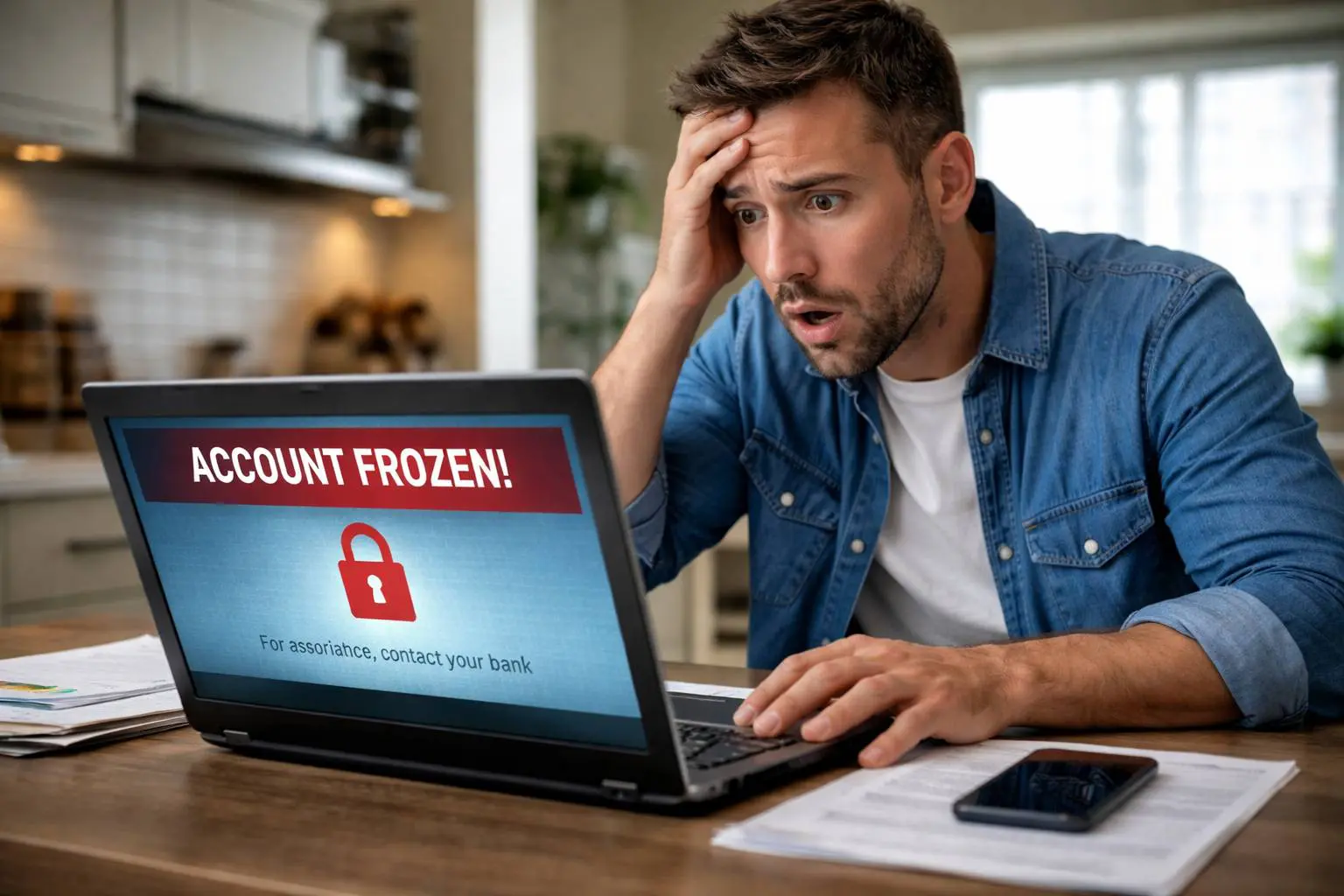
It’s early evening. You’re at the kitchen table, checking your order status again. The tracking link leads nowhere. The seller’s inbox is silent. You realise you may have paid into a trap—one that thousands of Europeans encounter every day when shopping online.
Step 1: Secure evidence before anything changes
- Take screenshots of the product page, price, seller profile, terms, delivery promise, and any “proof” the trader displayed (reviews, badges, guarantees).
- Save the order confirmation, invoice/receipt, and all emails or messages.
- Record transaction details: date/time, amount, payment method, merchant name, and reference numbers.
- If you clicked suspicious links or shared passwords, change passwords immediately (email first), and enable two-factor authentication.
Step 2: Contact the seller in writing (and set a clear deadline)
- Send a short written complaint (email or platform message) asking for delivery or a full refund.
- Give a reasonable deadline (for example, 7–14 days) and keep a copy.
- If the trader replies with stalling tactics, keep everything in writing—no phone-only agreements.
Step 3: Contact your bank or payment provider fast
- Card payment: ask about chargeback (a card-scheme dispute process that can reverse a payment in many “goods not received” or “not as described” cases). Act quickly—time limits vary by provider and card network. The European Consumer Centres Network (ECC-Net) also publishes practical information on chargeback as a recovery option. :contentReference[oaicite:0]{index=0}
- Bank transfer: call your bank immediately and ask whether a recall is possible. Success depends on timing and whether the recipient account is still reachable.
- Instant payment / wallet: open a dispute inside the payment app and with your card/bank behind it if applicable.
Step 4: Report it to the marketplace or platform (if you used one)
- Use the platform’s “report seller” or “problem with order” tools.
- Request a refund under the platform’s buyer protection rules.
- If the listing is still live, report it—platform action can help prevent other people being caught.
Step 5: Use EU help channels, especially if it’s cross-border
- If the trader is in another EU/EEA country, contact ECC-Net (free help in many cross-border cases). :contentReference[oaicite:1]{index=1}
- Ask about Alternative Dispute Resolution (ADR)—approved out-of-court bodies that can help settle disputes without going to court. Start here: European Commission ADR guidance. :contentReference[oaicite:2]{index=2}
- Check your national consumer authority and any national reporting portals for online scams.
Step 6: Decide whether to report to police (and why it can still matter)
- If money was taken through deception, or you suspect organised fraud, file a report with local police (especially if you have bank details, IBANs, phone numbers, or delivery addresses used in the scam).
- A police report can support chargeback disputes, insurance claims, and broader enforcement patterns.
Step 7: Watch for follow-up scams
- Be wary of “recovery agents” who contact you promising to retrieve your funds for a fee—this is a common second-wave scam.
- Do not share one-time passcodes, remote-access links, or identity documents unless you are certain you are dealing with an official channel.
Know the wider EU context (and why you’re not alone)
EU institutions have repeatedly warned that fraud and scams are a large-scale problem, with Commission reporting pointing to “almost half” of EU consumers encountering fraud or scams online in 2024. :contentReference[oaicite:3]{index=3} The Commission also maintains a consumer data overview that highlights the persistence of online scams across the Single Market. :contentReference[oaicite:4]{index=4}
For a wider consumer-rights lens—especially when you’re travelling, booking, or dealing with cross-border services—see The European Times’ consumer-focused explainer Travelling in Europe: What to Know in 2026.
How many people are affected yearly?
EU consumer data reported by the European Commission shows that 45% of consumers encountered online scams in the past year (reported for 2024 in the Commission’s consumer data/Scoreboard context). See the Commission’s consumer data overview here, and the Commission update on fighting online consumer fraud here.
Online scams are not just private misfortune—they test trust in the Single Market. Using documented complaints, payment disputes, and EU-level channels helps protect your own rights and strengthens the enforcement ecosystem that keeps cross-border commerce workable for everyone.