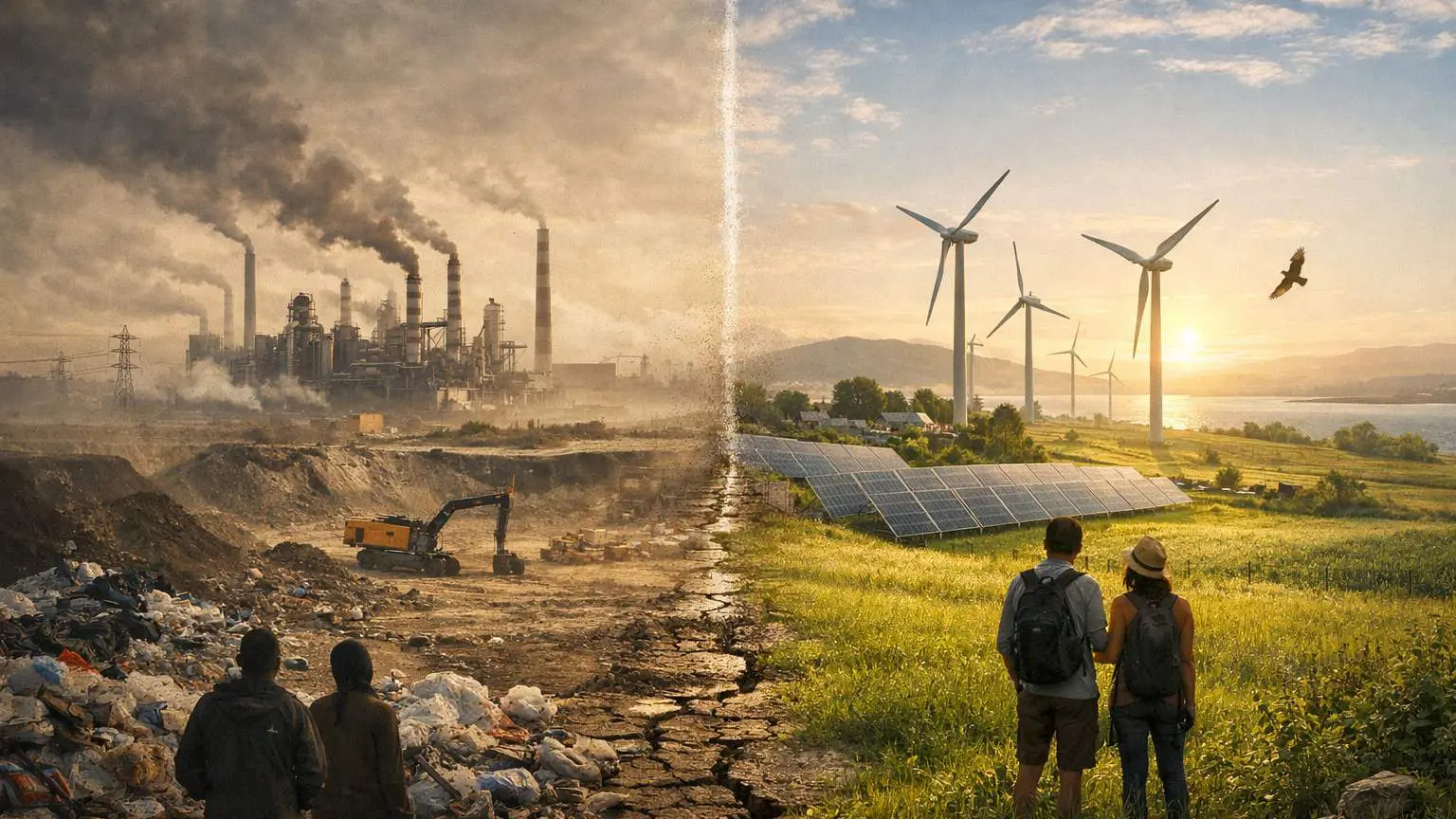
The dominant approach to the climate crisis nowadays is everything sustainable. Sustainable development, sustainable trade, sustainable travel, sustainable economics, and so on. Or in other words – everything green. We continue doing whatever we have been doing until now, but in a slightly altered way – in a green way. Fundamentally, there are three issues at the heart of this idea: are such alternations even possible within a system that requires constant expansion and exploitation of new and uncommodified realms? Even if they were, would such a transition to a greener and more sustainable everything happen quickly enough? Even if it did, would that be sufficient, having in mind the damage already done? Albeit very critical, these questions bring to the forefront of the environment-economy nexus some issues that are worth discussing.
Within the sustainability narrative, there exist two broad approaches to the climate crisis – climate mitigation and climate adaptation. As their names suggest, climate adaptation from an economic perspective relates to focusing our response to environmental issues on activities that help us adapt to changes. For example, in case of an irreversible sea-level rise, as expected, one should not focus on preventing this from happening, but rather on finding ways to put up with that by, for instance, relocating from places that are not in danger of this occurring. Of course, this is a very unequal approach – it would only be possible in highly-developed places which have the financial ability to allow themselves to do that. The rest of the world simply cannot adopt this approach. Luckily enough, the more used approach in practice is climate mitigation.
Mitigating climate (change/issues/crises) means trying to control it, stop it, reverse it. If I were allowed a hot take, I would say that reversing it within the dominant economic system is impossible. Therefore, we are left with controlling it and stopping it. The vast majority of climate-related issues, as we are aware by now, have been caused by exploitative economic activities which have externalised the environment from the economy and have subjugated it in a way that the economy has become dominant over the environment. The vital importance of the environment for the economy, however, has necessitated for the economy to figure out a way in which to preserve this environment full of resources (potential commodities). Very simply put, one could not risk losing something that is vital for its sustainment. Thus the change – a green focus trying to preserve the environment and control or even stop the climate crisis. This is called sustainability. Ability to sustain. To sustain what?
The inherent logic of sustainability suggests that the economy needs to be made sustainable so that it is able to sustain the environment (on which it depends). A more critical view upon that, however, uncovers another idea. Following the logic of constant expansion, and having in mind the fact that the economy depends on the environment, it is logical that there needs to be a healthy natural environment for the expansion of the economy. Therefore, by making the economy able to sustain the environment, by default we also ensure the sustainment of the economy itself. Although this might sound like a ‘the chicken or the egg’ question, it is important to look into it on a deeper level. What is the real inherent logic behind sustainability? A more critical answer would be the more straightforward in that case – sustainability is simply an approach to the environmental crisis that ensures the sustainment of the economic system we live in by trying to reduce the damage this same system does to the natural environment. An environment-centred approach is nevertheless impossible within the current economic system, as this would mean reversing the process of subjugation and positioning the environment on top of the economy in the realm hierarchy – a step that would harm the logic of constant expansion and thus prevent the system from growing, hence sustaining itself.
Even if we were to believe that sustainability practices that centre the economy and not the environment would be beneficial for the natural environment, another question arises – would they happen quickly enough? Again, this could have two simple answers – yes and no; yes, because we are so advanced technologically that we could easily switch from non-renewables to renewables, from petrol-using cars to electric ones, from plastic straws to paper ones, from paper cups to reusable cups… the examples are numerable. Yet, no, because this transition would only appear quickly enough in societies that are financially able to afford all of this. There is also another issue here – take electric cars, for instance. The production of a battery for such a car involves in the process lithium and cobalt extraction from mines in Africa, where children are being made to work in dangerous mines for less than a euro per day (Amnesty International 2016). This showcases the active underdevelopment of one part of the world in exchange for the sustainable development of another.
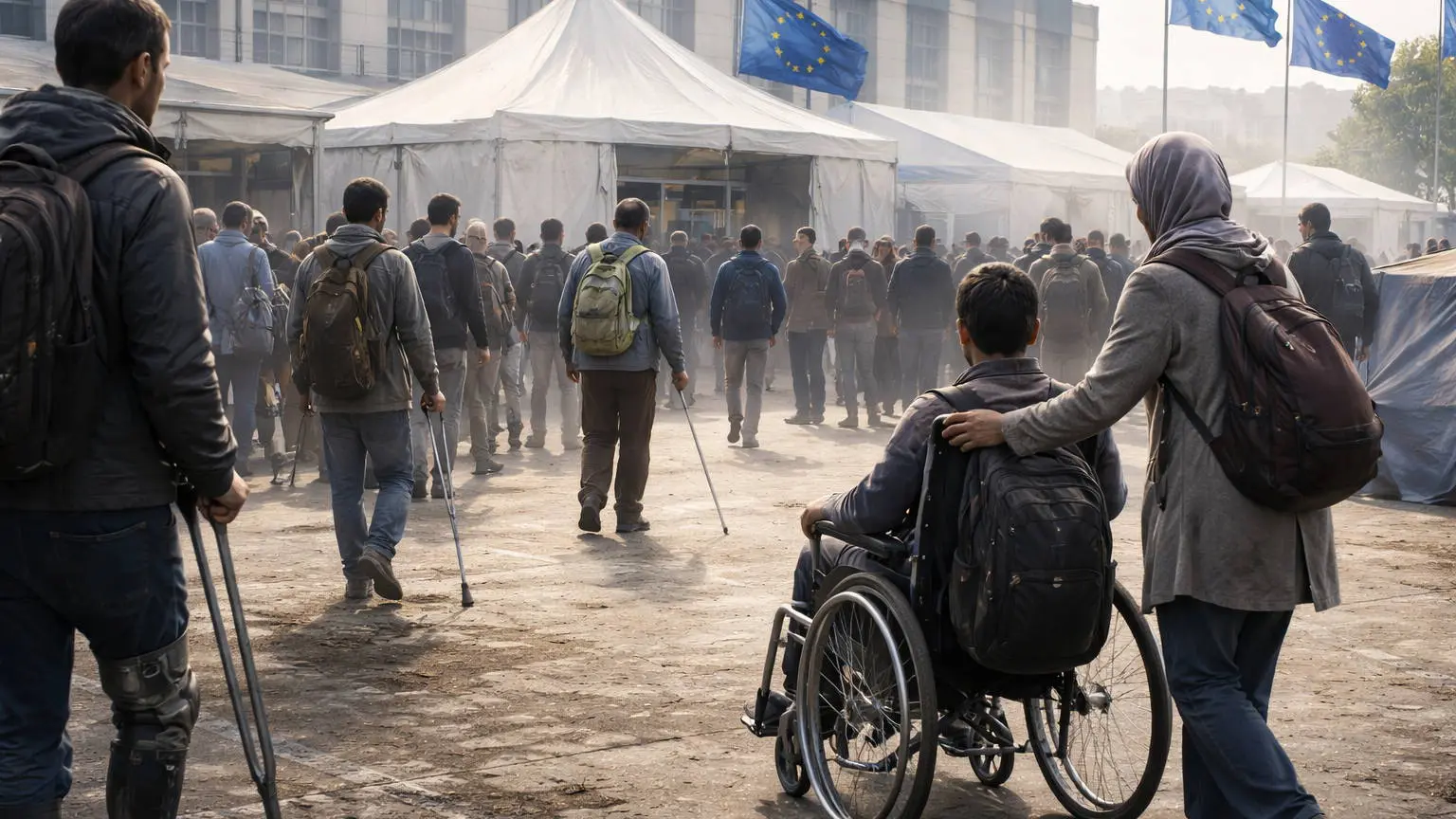
Even if we were to give the benefit of the doubt to these two assumptions, it is difficult to believe that these transitions (to a greener economy) would be enough – simply because there is damage already done, most of which visible in places which are neither to blame for the economically-caused climate crisis, nor able to mitigate it, let alone adapt to it. Places like low-income countries from the Global South are the ones which suffer the most from these unfair economic developments. Food insecurity, forced climate migration and health deterioration are but three examples rarely seen in places like Europe and the US, but are largely present in Latin America, the MENA region, Africa, and South East Asia, to name a few.
Does all of this mean, then, that we should totally scrape sustainability off the table? Absolutely not. After all, systemic changes bring about more than just a change of a system. Also, they rarely happen. The fact that one acknowledges the flaws of an approach is a great step towards finding better solutions. And, in fact, there is nothing bad in paper straws, bringing your own bag when shopping, or refilling your glass bottle when at work instead of buying a plastic one. Having a critical mindset open to other possibilities, however, is a necessary tool in today’s ever-changing world. Approaches other than the sustainable economics outlined above and the likes are worth considering, as they bring ideas from different backgrounds. I discuss such theoretical and practical alternatives in the article to follow.