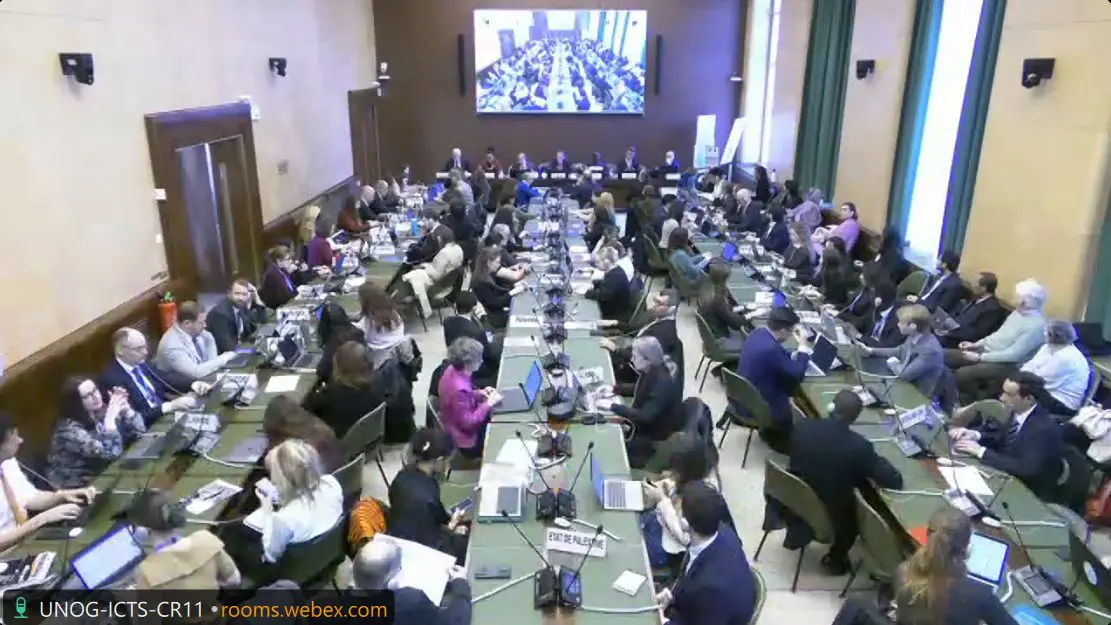
The Parliamentary Assembly of the Council of Europe’s (PACE) SOC committee said it is against a possible new protocol on the involuntary placement and involuntary treatment of persons in mental healthcare services, pointing out it would “make it more difficult to abolish coercive practices” in such settings.
Strong Criticism of Additional Protocol
The drafted possible new Additional Protocol to the Convention on human rights and biomedicine (Oviedo Convention) has been subjected to strong criticism and opposition from even before the drafting work started. The PACE Committee on Social Affairs, Health and Sustainable Development (SOC) in its just released Opinion on the Additional Protocol points out that the PACE, in fact, already expressed its opposition to such a draft Protocol with Recommendations in 2016, 2019, 2022, and 2024.
It further notes that the Assembly in 2024 recommended that the Council of Europe’s decision-making body, the Committee of Ministers, should:
“ensure that any Council of Europe guidance was fully in line with the United Nations Convention on the Rights of Persons with Disabilities (CRPD) and the guidance of the United Nations and its agencies.”
The PACE SOC Committee that had been assigned to draft the Opinion on the Additional Protocol reiterates that the Council of Europe, as the leading regional human rights organisation, “must fully integrate the CRPD’s paradigm shift into its work.”

The Opinion unanimously adopted by the PACE Committee has been received with praise by leading civil society groups.
“We are pleased to see this decision, which reaffirms the rights, dignity and autonomy of persons with psychosocial and mental health problems,” John Patrick Clarke, Vice-President of European Disabilities Forum (EDF) told the European Times.
Olga Kalina, Chair of the European Network of (Ex)Users and Survivors of Psychiatry (ENUSP) expressed that “ENUSP very much welcomes the unanimous decision of the committee of PACE and would like to express our deep gratitude and appreciation for the willingness of the committee to stand by the standards of the UN CRPD and, therefore, stand by the rights of persons with psychosocial disabilities and mental health problems.”
The persistent and strong criticism of the drafting of the Additional Protocol had been noted by the PACE Committee. In the Opinion itself the Committee noted that the former Council of Europe Commissioner for Human Rights, civil society organisations and various relevant United Nations bodies, including the Committee on the Rights of Persons with Disabilities, “are firmly opposed to the draft Protocol, considering in particular that it is incompatible with the CRPD, which has been ratified by all Council of Europe member States.” The Committee added that they argue that “the draft Protocol would make it more difficult to abolish coercive practices in mental healthcare settings and would be contrary to the spirit and letter of the CRPD.”
“The negative opinion by the PACE SOC Committee is a very encouraging step in safeguarding the rights and dignity of people with psychosocial disabilities and mental health problems across Europe,” Kadri Soova, Director of Mental Health Europe told the European Times. “It shows that policymakers are listening to the concerns raised by civil society, human rights experts and persons with lived experience,” she added.
María Luz Martínez Seijo, a member of the Spanish Parliament and the Council of Europe SOC Committee took part in the debate in the PACE SOC Committee. She did so, “because this issue has been part of the debate in Spain in the last months. As a MP, I have been addressed together with my colleagues from numerous Disabled people’s organisations and NGOs. They all expressed their viewpoint and rejection to the protocol.”
She added “We, have supported their claims from the very beginning and so, we expressed it in the Committee, in the last one as well.”
The Citizens Commission on Human Rights Spain (CCDH) is one of the many groups that had been advocating for human rights in mental health in Spain. Salvador Fernández, the President of CCDH expressed that “We appreciate the Committee’s clear reaffirmation that autonomy, dignity, and non-discrimination must guide all policy in this field, paving the way for support-based models and proven good practices rather than involuntary measures.”
In line with this, Olga Kalina, noted that “ENUSP together with our allies has been advocating against the adoption of the Draft Additional Protocol for years, as it seeks to legitimize coercive interventions in psychiatry and substitute decision making in the post CRPD era. We firmly believe, along with WHO QualityRights Initiative, that it is possible to build mental health support services based on human rights, and that coercion can never amount to care.”
The Opinion still to be debated in the Plenary PACE
While there is a general very positive receipt of the Opinion that was unanimously adopted by the PACE Committee it still has to be debated and finalized by the Plenary Assembly. This is scheduled for end of January 2026.
And it is with some confidence this is being envisioned. John Patrick Clarke, Vice-President of European Disabilities Forum (EDF) noted:
“We now look to the full Assembly and the Committee of Ministers to carry this momentum forward, to firmly endorse this rights-based approach to mental healthcare and end the threat of coercion once and for all”.
Salvador Fernández is quite positive in regards to the outcome of the upcoming debate in the plenary assembly, “We trust that the broader Assembly will take the same principled approach and further strengthen Europe’s commitment to fully implementing the CRPD and advancing the elimination of all forms of coercion.”
Yet, in view of the many years that the civil society was not heard by the group drafting the Additional Protocol, the Bioethics Committee of the Council of Europe, the dark past still cast its shadows. Kadri Soova, Director of Mental Health Europe with some caution noted,
“This is not the end of the road. The upcoming plenary vote in January and the subsequent decision by the Committee of Ministers will be decisive. We welcome this important moment, but we do so with caution and a renewed commitment to ensuring that any legal framework in Europe is fully in line with the UN CRPD and upholds human rights, autonomy and equality for all. Our work continues.”