In the muted corridors of European policy and the austere meeting rooms where NGOs polish their reputations, the European Federation of Centres of Research and Information on Cults and Sects—better known by its French acronym, FECRIS—presents itself as a guardian of the vulnerable. Founded in France and sustained largely by French public funds, it claims to protect individuals from the predations of so-called “sectarian aberrations.” On paper, it is an alliance of civic organizations defending human dignity. In practice, it has carried the baggage of long-standing and politically charged alliances.
That tension erupted into view in November 2022, when more than eighty Ukrainian academics, human rights defenders, and religious studies experts signed a letter to French President Emmanuel Macron. They began with a gesture of gratitude, acknowledging France’s aid to Ukraine during the war. But quickly, the letter cut to its grievance: FECRIS, they alleged, had for years harbored and promoted its Russian branch, a “key and constant actor in the Kremlin’s propaganda” against Ukraine.
The signatories did not mince words. They recalled that Alexander Dvorkin—FECRIS’s vice-president from 2009 to 2021 and still a board member—had been barred from entering Ukraine since 2014 for his virulent anti-Ukrainian rhetoric. From Russian state television, he denounced post-Maidan authorities as “neo-pagans” and “Nazis,” accused them of being “cult-followers” under Western control, and visited separatist enclaves in eastern Ukraine to continue the message. Other Russian FECRIS affiliates, such as Alexander Novopashin, were quoted in Russian media calling Ukrainians “Satanists” and “cannibals,” justifying the war as a “holy fight” and even likening Ukraine to gangrenous flesh that must be amputated.
The letter’s catalogue of evidence extended to the Saratov branch of the Center for Religious Studies, a FECRIS member that in early 2022 urged citizens to report to them any “provocateurs” advocating for peace, promising to liaise with Russian law enforcement. Even after the war began, the Ukrainian scholars noted, FECRIS’s treasurer, Didier Pachoud, had hosted in Paris the Russian anti-cultist Roman Silantyev—who accused Ukrainian leaders of “occult and pagan” beliefs and claimed they infiltrated Satanists into Russia for sabotage.
The scholars’ request was pointed: France, they argued, should stop funding an association “that is an enemy of the West and democracy and has worked hand in hand with the Russian authorities against Ukraine.” They saw FECRIS’s quiet website clean-up—removing Russian members’ names—as a cosmetic change, not a moral reckoning. Dvorkin remained on the board; no public sanction was issued; no apology was made.
One year later, on March 24, 2023, under mounting public pressure and in the shadow of ongoing litigation in France seeking its dissolution, FECRIS announced it was parting ways with its Russian affiliates. The decision was devoid of contrition.
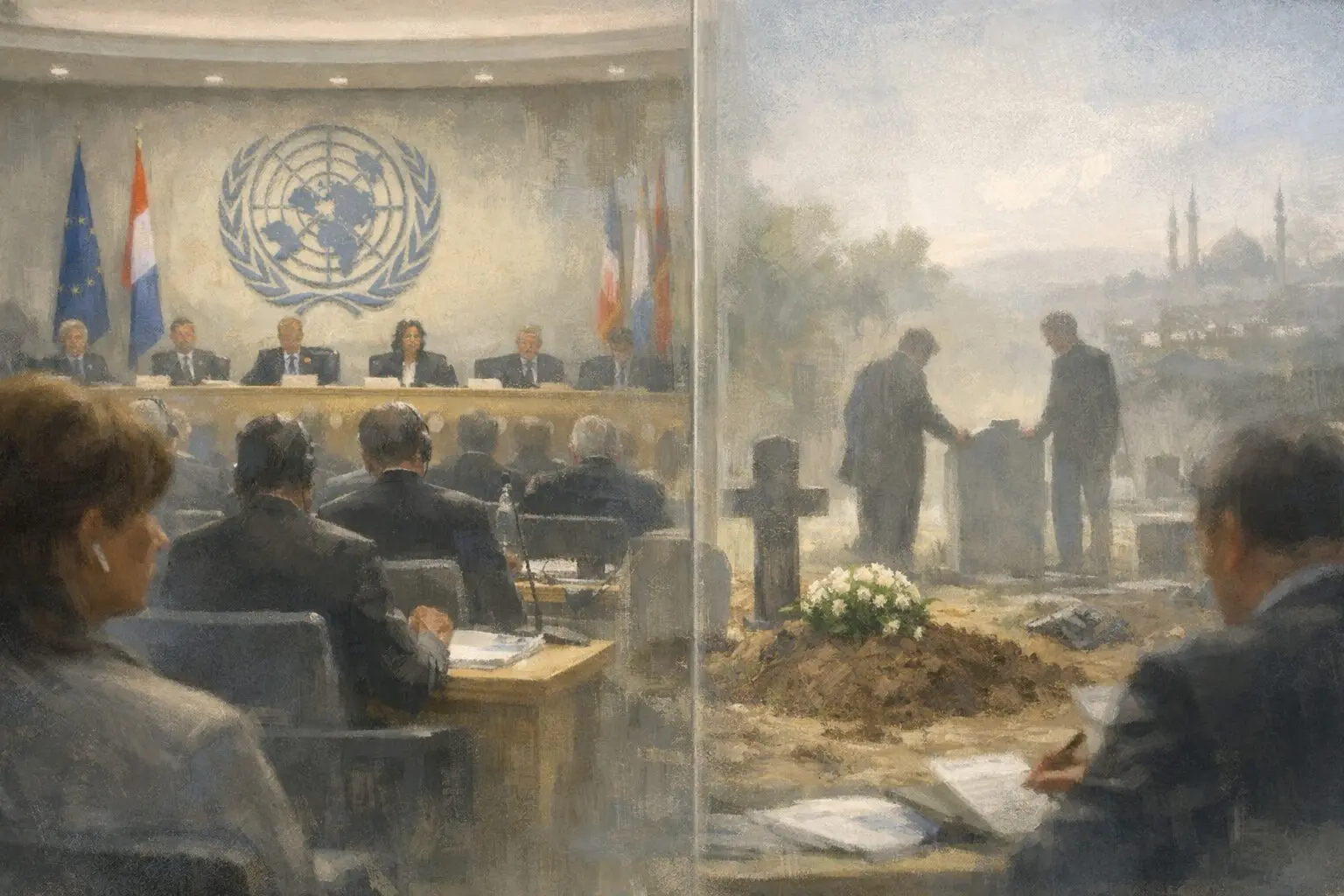
And then, in June 2025, FECRIS met in Brussels for its general assembly and expert conference. The theme—“Undue Influence: A Multisectoral Approach”—promised the language of social science and public protection. Presentations covered cult exit therapy, investigative journalism inside alternative religious movements, and case studies from Catholic abuse scandals to pseudo-Buddhist exploitation.
But on the list of attendees, two names stood out: Andrej Protić and Slobodan Spasić, representing the Serbian Centre for Anthropological Studies (CAS), a full FECRIS member. Both are also permanent experts with the Apologetics Section of the Missionary Department of the Archdiocese of Belgrade and Karlovci, part of the Serbian Orthodox Church. This is no minor ecclesiastical assignment: the section’s work includes “monitoring sectarian activities” and promptly relaying findings to church authorities—authorities with established ties to Serbia’s police and intelligence agencies.
Protić, a Serbian intelligence officer, presents himself as an expert in theology and the criminality of “alternative religions.” His public statements have lumped together sectarianism, abortion, cannibalism, and homosexuality. Spasić shares the ecclesiastical platform and its mission. A third figure, Zoran Lukovic—also linked to CAS, a “respected” FECRIS member, and a retired Serbian police captain—was active during the Bosnian war in a security apparatus notorious for its role in atrocities against Muslims.
The Serbian press has amplified these voices in dramatic tones, warning of satanic cults kidnapping children, desecrating graves, and committing ritual killings. CAS’s rhetoric, heavy with moral panic, casts net after net over “non-traditional” religious groups, lumping in everything from Jehovah’s Witnesses to meditation centers. Its work is deeply entwined with Orthodox religious authority and state security concerns.
That interlacing of church, state, and anti-cult activism mirrors patterns long evident in Russia’s own “sectology” industry—a field in which FECRIS’s former vice-president Dvorkin remains a central architect. And indeed, the supposed break with Russian elements has proven porous. On August 1, 2025, Dvorkin was received by the very missionary department in Belgrade that houses Protić, Spasić, and Lukovic. The department’s own account of the visit described it as an “informal and friendly” discussion, exploring “possibilities of future cooperation” and expressing “particular honor” at hosting so eminent an expert.
It is this choreography—public rupture, private reconnection—that undercuts FECRIS’s narrative of reform. The federation’s official communications stress international collaboration against manipulation and abuse; its conference stages are filled with earnest papers on rehabilitation and prevention. Yet its network continues to include figures bound, ideologically and institutionally, to Orthodox nationalist projects aligned with Moscow’s worldview.
For critics, including the Ukrainian signatories of 2022, this is not a peripheral matter. It speaks to the persistence of a transnational anti-cult apparatus that serves, wittingly or unwittingly, as a channel for authoritarian religious policy. In Russia, as documented by the U.S. Commission on International Religious Freedom, “anti-cult” laws and rhetoric have dovetailed with crackdowns on Baptists, Pentecostals, Jehovah’s Witnesses, and other minorities—branding them threats to public order, foreign agents, or spiritual pollutants. FECRIS’s Russian affiliates were part of that machinery.
The question now, for France in particular, is whether the continued public funding of FECRIS represents a blind spot or a tacit endorsement. The Ukrainian letter framed it starkly: in a war where Kremlin propaganda paints the West as satanic, the intellectual scaffolding has often been built by the same networks that FECRIS long nurtured. Even stripped of its Russian branch, the federation still cultivates relationships with actors embedded in similarly militant Orthodox milieus.
In the end, FECRIS’s story is not one of a clean break, but of continuity under altered banners. The façade—of a neutral, humanitarian coalition—remains intact for official purposes. Beneath it, the lines of loyalty and collaboration run on, less visible but no less intact. For an organization whose credibility depends on its moral independence, those lingering connections may be the most corrosive influence of all.