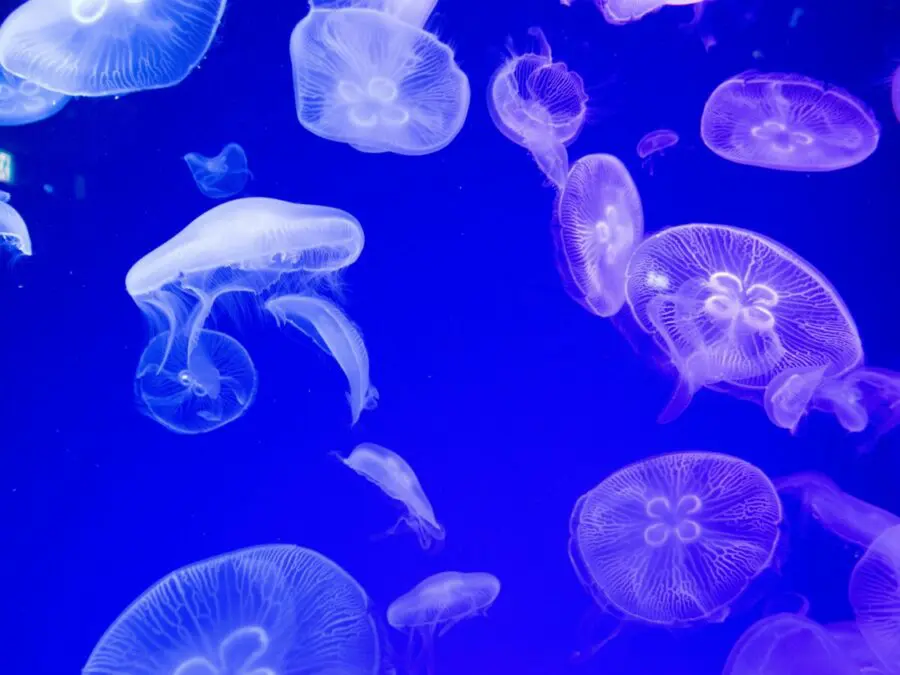
Purple jellyfish, known as Pelagia noctiluca, reappeared in Greek waters in the summer of 2025, causing concern among locals and tourists. These jellyfish are known for their painful stings and characteristic purple hue.
A Bulgarian filmed the dangerous jellyfish in the Paralia region. We recall that at the end of July, Greek authorities warned of the appearance of purple jellyfish, which are dangerous to humans.
When stung by a purple jellyfish, people experience painful symptoms and should seek medical attention. The areas where they have been spotted are Halkidiki, Katerini and Evia. They are also found near Thessaloniki, as well as on the islands of Skiathos and Skopelos.
According to the Hellenic Observatory, purple jellyfish have been spotted in the following regions:
Pagasitic Gulf
Northern Evia and the islands of Skiathos and Skopelos
Eastern coast of Greece, including Halkidiki and Katerini
Areas around Thessaloniki
These areas are subject to warnings from local authorities and hoteliers, who inform tourists about beach safety.
Pelagia noctiluca, also called the “glowing jellyfish”, is a small jellyfish with a bell diameter of up to 12 cm. It is covered with stinging cells on both its bell and its tentacles. Stings cause pain, redness and sometimes a rash that can last up to two weeks. In rare cases, more serious reactions, such as allergic reactions or even Guillain-Barré Syndrome, have been observed.
What to do if you are stung
Clean the sting site with seawater (not fresh water) to remove any remaining stinging cells.
Do not rub the affected area.
Apply a warm compress to relieve pain.
Consult a doctor, especially if symptoms worsen or signs of an allergic reaction appear.
Illustrative Photo by Huu Huynh: https://www.pexels.com/photo/blue-light-over-jellyfish-17065171/