New Evidence Raises Fears of Escalating Forced Organ Harvesting from Uyghur Population
News Highlights:
• China’s Xinjiang Health Commission announces plan to build 6 new organ transplant medical institutions by 2030, signalling concerns that China’s forced organ harvesting campaign is escalating
• Experts warn expansion is disproportionate given Xinjiang’s low voluntary organ
donation rate, population and GDP compared to other provinces
• Expansion raises alarm due to ongoing human rights abuses, lack of transparency in
China’s transplant system and forced organ harvesting
• Uyghur detainees have reported organ-focused medical testing while imprisoned
• Experts highlight risk of coerced or non-consensual organ sourcing from persecuted
minorities
• Expanded transplant facilities in Xinjiang to cover all major organs, outpacing
similarly sized provinces
• 60,000 to 100,000 organ transplants estimated to be carried out every year in
China, many of which use organs harvested without consent
• International scrutiny urged amid documented mass detentions, biometric surveillance, and forced labour
• Campaigners call for independent inspections and safeguards to ensure all organ sourcing adheres to international ethical standards
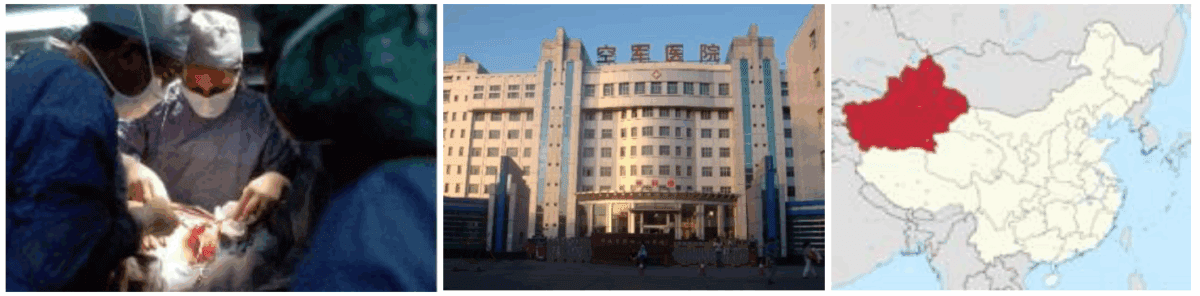
[Xinjiang, China: 3 July 2025]: Today, experts have revealed fears of increased forced organ harvesting from Uyghurs following a recent announcement by China’s Xinjiang Uyghur Autonomous Region Health Commission to dramatically expand its organ transplant infrastructure.
According to an official Chinese announcement1, the Plan for the Establishment of Human Organ Transplant Hospitals in Xinjiang Uygur Autonomous Region (2024-2030) states that six new human organ transplantation medical institutions are to be established in Xinjiang by 2030 — a move critics say is dangerously disproportionate and lacking transparency given China’s forced organ harvesting crimes.
The planned expansion will triple the number of transplant centres in the region, bringing the total to nine, signalling a drive to escalate China’s forced organ harvesting campaign. The new facilities will offer heart, lung, liver, kidney, and pancreas/small intestine transplants, with seven centres performing heart transplants and five performing lung transplants by the end of the decade.
The move has prompted grave concern among international observers, who point to credible evidence of ongoing mass incarceration, biometric data collection, and forced organ harvesting2 from prisoners of conscience in China. Since 2006 practitioners of the Buddhist qigong practice of Falun Gong have been the primary victim group of forced organ harvesting3, with the Uyghur population now also a primary target.
“This massive expansion in Xinjiang — a region already under scrutiny for systematic repression — raises deeply troubling questions about where the organs will come from,” said Wendy Rogers, Distinguished Professor of Clinical Ethics and Chair of the International Advisory Board of the International Coalition to End Transplant Abuse in China (ETAC), an international coalition of lawyers, medical ethicists and human rights experts. “There is simply no justification for such growth in transplant capacity given the region’s official organ donation rate, which is far below the national average.”
Lack of Consent in a Climate of Coercion
Xinjiang’s official organ donation rate stands at just 0.69 per million people — far below China’s claimed national average of 4.6. Yet the region will soon have more transplant capacity than many provinces with similar or larger populations and GDPs, including Gansu, Jilin, Shanxi, and Guizhou4.
Experts warn that in a context of mass surveillance, forced labour, and widespread incarceration of ethnic minorities, the possibility of truly voluntary organ donation is effectively non-existent. Uyghur detainees have reported forced blood tests, ultrasounds, and organ-focused medical scans while in custody5 — procedures consistent with organ compatibility testing.
“The concept of informed, voluntary consent is meaningless in Xinjiang’s carceral environment,” said David Matas, International human rights lawyer and investigator of forced organ harvesting in China “Given the systemic repression, any claim that donations are voluntary should be treated with the utmost scepticism.”
An Infrastructure Without Transparency
The new transplant institutions will be located across Urumqi and regions of northern, southern, and eastern Xinjiang. Among them, in addition to existing facilities6, six will perform heart transplants, four will perform liver transplants, and five will carry out kidney and pancreas/small intestine procedures. Experts highlight that this scale of transplant capacity is inconsistent with the low levels of voluntary donation in the region
and raises fears of a covert organ supply chain to fuel the increased volume of transplants. Pattern of Abuse and Lack of Oversight
Independent investigations have previously found that China has engaged in widespread forced organ harvesting from prisoners of conscience. In 2020, the China Tribunal, chaired by Sir Geoffrey Nice KC, found “beyond reasonable doubt” that the Chinese State had killed prisoners of conscience — primarily Falun Gong practitioners and later Uyghurs — to extract organs for transplant. The China Tribunal also found that forced organ harvesting amounts to crimes against humanity. As many as 60,000 to 100,000 organ transplants were found to be carried out every year, far more than officially claimed7
Although the Chinese government claimed in 2015 that it had ceased using organs from executed prisoners, no legal reforms accompanied the announcement, and sourcing organs from prisoners of conscience was never explicitly banned.8
“The lack of legal safeguards, the history of abuse, and the ongoing repression in Xinjiang all point to the urgent need for independent scrutiny of this transplant expansion,” said Dr. Maya Mitalipova, a geneticist who testified before the U.S. Congress about the use of DNA testing in reverse organ matching. “This could be industrial-scale organ harvesting under a state-controlled system.”
Call to Action
Legal and medical experts are urging governments and human rights bodies to press Beijing for answers and demand immediate transparency about Xinjiang’s organ transplant expansion plans.
“Without meaningful oversight and accountability, this expansion risks becoming a front for continued crimes against humanity and genocide,” said Ramila Chanisheff, President of the Australian Uyghur Tangritagh Women’s Association (AUTWA). “Governments around the orld must push for independent inspections and safeguards to ensure all organ sourcing in Xinjiang adheres to international ethical standards.”
1 https://wjw.xinjiang.gov.cn/hfpc/yljggl/202412/5dbccfdddae4449bac11e380e0481800.shtml https://web.archive.org/web/20250415070235/https://wjw.xinjiang.gov.cn/hfpc/yljggl/202412/5dbccfdddae4449bac11e380e0481
2 Forced organ harvesting is a form of organ trafficking where people are killed during the organ extraction operation.
3 www.chinatribunal.com – In 2020, the China Tribunal, chaired by Sir Geoffrey Nice KC, found “beyond reasonable doubt” that the Chinese State had killed prisoners of conscience — primarily Falun Gong practitioners and later Uyghurs — to extract organs for transplant
4 SEE INFORMATION SHEET FOR DETAILS – https://endtransplantabuse.org/wp- content/uploads/2025/07/Xinjiang-transplant-expansion-Information-Sheet-3.pdf
5 https://endtransplantabuse.org/wp-content/uploads/2021/04/ETAC-China-Tribunal- Testimonies_Final.pdf
6 https://zwfw.nhc.gov.cn/kzx/tzgg/yljgrtqgyzzyzgddsp_228/201910/t20191029_1298.html
7 Bloody Harvest / The Slaughter: An Update”, David Kilgour, Ethan Gutmann, David Matas (2016)
China Tribunal Judgment https://chinatribunal.com/final-judgment/
8 https://endtransplantabuse.org/wp-content/uploads/2025/06/Chinese-Transplant-Laws-by-David- Matas-June-2025.pdf