A constitution can promise liberty on paper and still leave believers, dissidents and minorities exposed in practice. That is the central tension in freedom of religion in South Asia, a region where democratic aspiration, majoritarian politics, state insecurity and identity-based mobilisation often collide.
For European readers, this is not a distant concern. South Asia matters to international human-rights diplomacy, asylum policy, development partnerships, trade relations and the wider defence of freedom of religion or belief as a universal right. It is also a region where formal guarantees frequently coexist with blasphemy laws, anti-conversion rules, surveillance, communal violence and unequal citizenship.
Why freedom of religion in South Asia matters
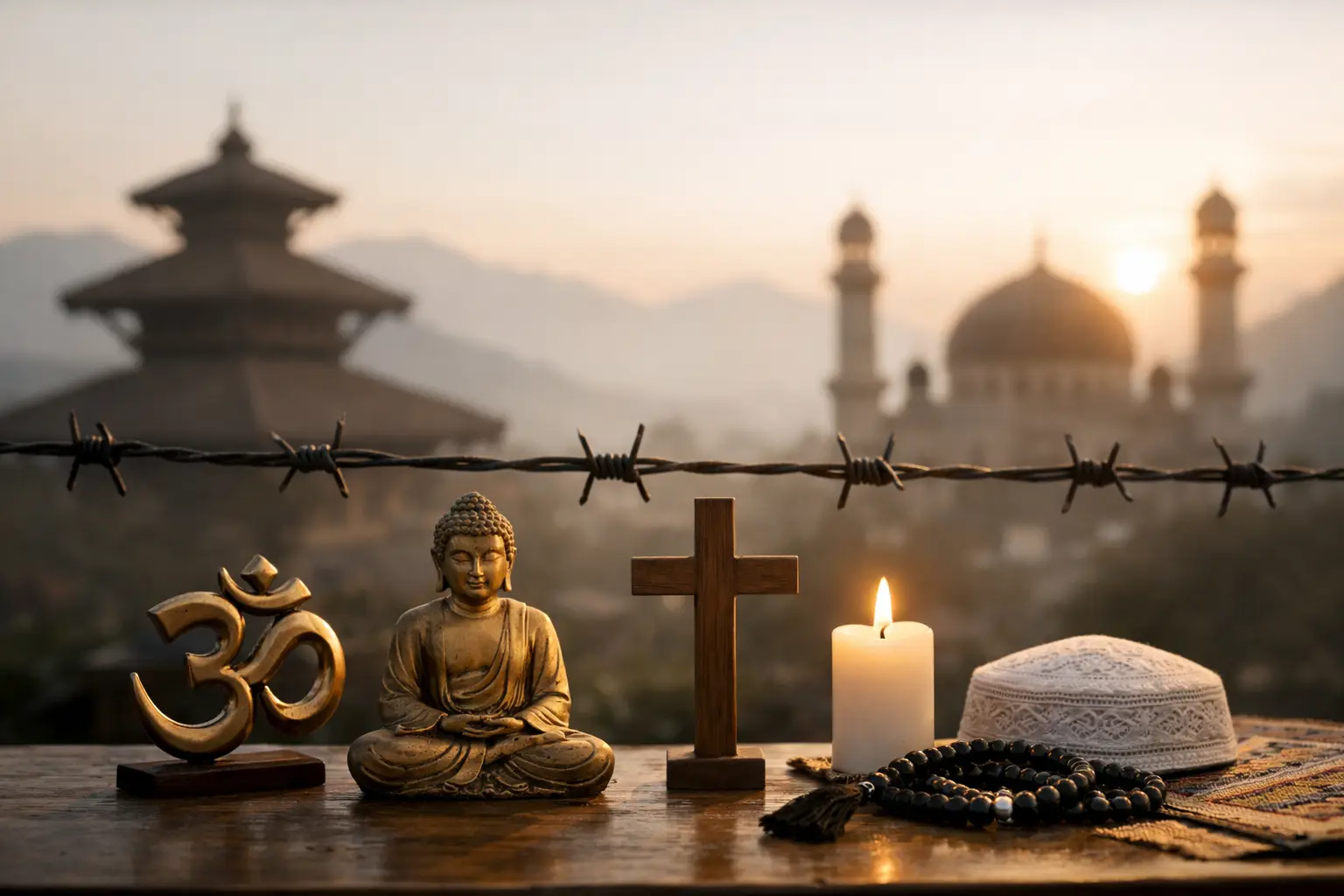
South Asia is home to extraordinary religious diversity. Islam, Hinduism, Buddhism, Christianity, Sikhism, Jainism and a range of indigenous and local traditions shape public life across India, Pakistan, Bangladesh, Sri Lanka, Nepal, Bhutan, the Maldives and Afghanistan. That pluralism should make the region a powerful test case for equal rights. Instead, it often exposes how fragile those rights become when religion is folded into nation-building.
The issue is not simply whether people may worship. Freedom of religion or belief includes the right to change religion, to have no religion, to express belief publicly, to educate children in line with convictions, to gather peacefully and to be protected from coercion. In parts of South Asia, each of those freedoms is contested.
That is why narrow readings of the problem miss the point. The real question is whether states treat religion as a liberty to protect or as a loyalty to police. Once the second approach takes hold, minorities are not the only ones at risk. Journalists, academics, human-rights defenders and members of the majority who reject hardline orthodoxy can also become targets.
The regional pattern: rights guaranteed, rights restricted
There is no single South Asian model. Legal systems, political traditions and religious demographics vary sharply. Even so, a recognisable regional pattern has emerged.
Constitutions and official rhetoric often affirm tolerance, equality or religious freedom. Yet these guarantees are weakened by ordinary legislation, selective policing and impunity for private actors. In some countries, the state itself imposes criminal penalties linked to belief or religious expression. In others, governments allow social intimidation, mob pressure or discriminatory administration to do the work.
This creates a layered form of repression. A person may not be formally banned from practising a religion, but may be prevented from building a place of worship, denied registration, threatened for converting, accused of insulting religion, or attacked while authorities look away. Measured only at the constitutional level, the picture can appear better than reality.
India: scale, polarisation and legal ambiguity
India’s constitutional framework remains one of the region’s most significant promises of pluralism. But the practical environment has become far more contested. Anti-conversion laws in several states, often framed around forced or fraudulent conversion, are regularly criticised for enabling harassment of Christians, Muslims and interfaith couples. In effect, laws said to protect free consent can become tools to presume coercion where none is proved.
The problem is not only legislation. Vigilante violence, inflammatory political speech and the spread of communal narratives online have intensified pressure on minorities. Demolitions, arrests and localised restrictions can carry a message that citizenship itself is graded by identity. The legal process then becomes part of punishment, even before any conviction.
That does not mean India’s institutions are irrelevant. Courts, civil society, independent journalists and rights advocates still matter greatly. But their presence should not obscure the seriousness of the trend. A democracy can retain elections and constitutional language while allowing equal freedom to erode in everyday life.
Pakistan: blasphemy accusations and structural fear
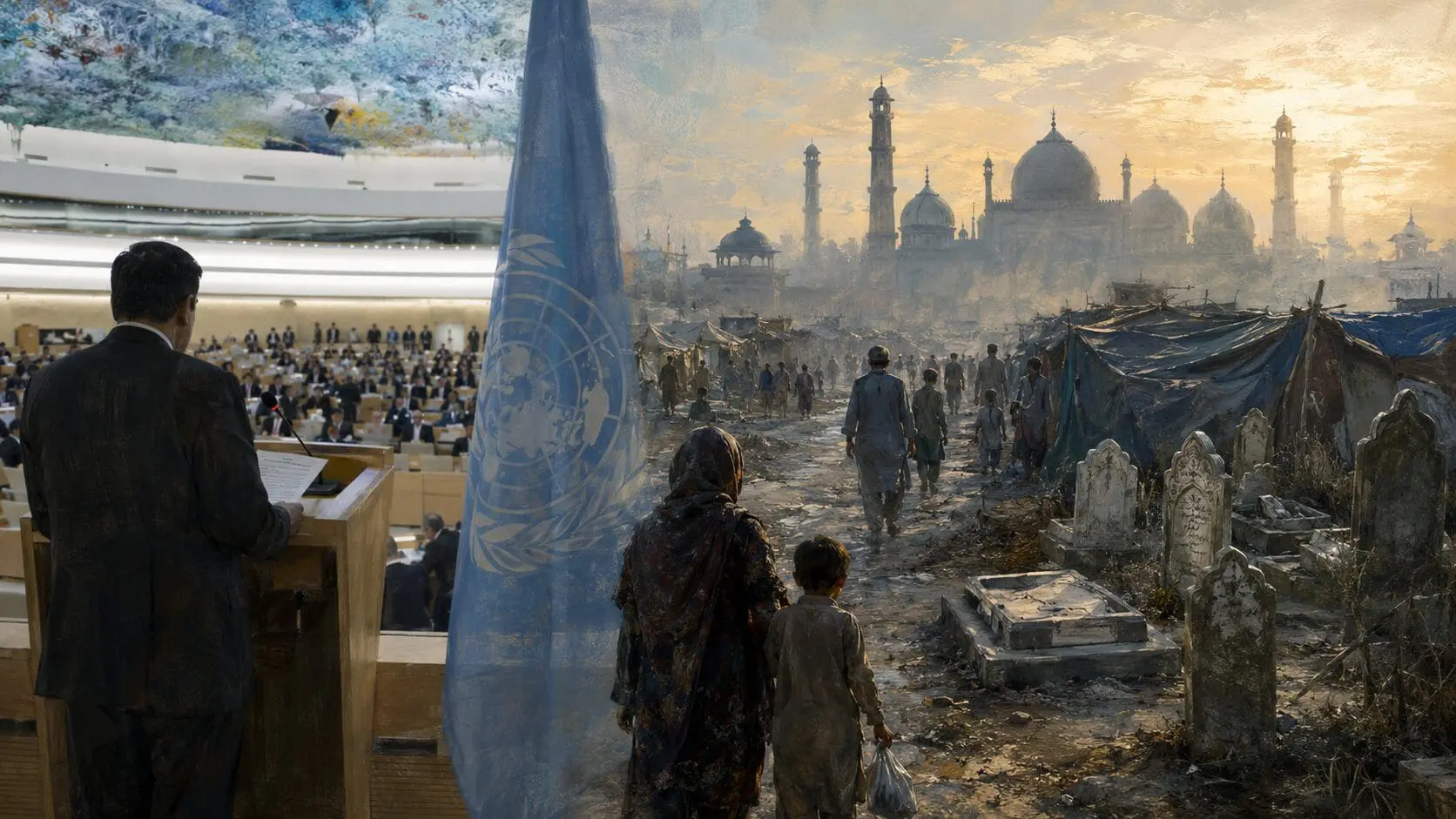
Pakistan presents a different but equally serious challenge. Blasphemy laws remain among the most visible threats to religious freedom, especially for Ahmadis, Christians, Hindus, Shia Muslims and anyone accused of disrespecting Islam. The fear lies not only in formal prosecution but in accusation itself. Allegations can trigger mob violence, displacement, killings and long-term social exclusion, even where evidence is weak or absent.
Ahmadis face a particularly entrenched form of state-backed exclusion, since the law restricts their religious self-identification and practice. This is more than social prejudice. It is a legal architecture that narrows who may belong on equal terms.
Pakistan’s authorities periodically condemn mob violence, but condemnation without consistent accountability has limited effect. Where police fail to protect the accused, and where courts operate under intense public pressure, the rule of law is visibly compromised.
Bangladesh and Sri Lanka: vulnerability beyond headlines
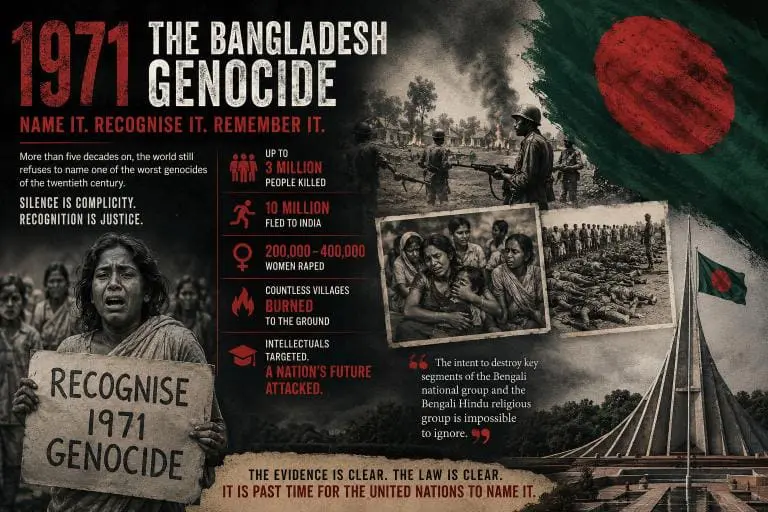
Bangladesh is often discussed through the language of secular nationalism, yet religious minorities and secular voices alike have faced serious threats. Hindus, Buddhists, Christians and indigenous communities have all reported episodes of intimidation or violence. The state’s response has varied, and official commitments to pluralism have not always translated into durable protection on the ground.
Sri Lanka, meanwhile, continues to wrestle with the legacy of civil war, ethno-religious nationalism and uneven accountability. Muslims and Christians have both faced hostility, while Buddhist majoritarian rhetoric has at times shaped the political climate. Here, too, the problem is not reducible to one law or one incident. It is about whether the state consistently acts against incitement and protects all communities equally.
Afghanistan and the hardest edge of coercion
Afghanistan represents the starkest end of the regional spectrum. Under Taliban rule, freedom of religion or belief is subject to severe repression, particularly for non-Muslims, converts, dissenters and women whose rights are constrained through a broader theocratic order. In such conditions, public religious freedom cannot be separated from the collapse of other civic liberties.
This matters when discussing South Asia as a whole. The region contains both flawed constitutional systems and outright authoritarian religious control. Policy responses need to reflect those differences rather than flatten them.
What drives religious repression in the region
It is tempting to explain these problems as ancient hatreds. That is too easy, and often inaccurate. Religious repression in South Asia is usually modern, political and highly organised.
Governments and political movements use religion to consolidate majorities, discredit opponents and redefine national belonging. Administrative tools – registration rules, school curricula, policing, land disputes, speech laws – can then enforce that project quietly. Social media amplifies rumour and grievance at speed, making local incidents combustible.
Economic insecurity also plays a role. Minority communities are often targeted where land, jobs or local influence are at stake. Religion becomes the language through which material competition is justified. This is why a purely theological reading fails. The issue is power.
The European dimension
Europe cannot credibly defend freedom of religion or belief only when it is geopolitically convenient. South Asia tests whether human-rights policy is applied consistently. European institutions and governments engage the region through trade, migration cooperation, development assistance and strategic dialogue. Those relationships create leverage, even if it is not always used well.
That leverage has limits. Public condemnation alone rarely changes entrenched domestic politics, and heavy-handed external pressure can be portrayed as interference. But silence carries its own cost. When legal discrimination, mob violence or impunity become normalised, the message received by victims is clear enough.
A more serious European approach would integrate religious-freedom scrutiny into broader rule-of-law engagement rather than treating it as a niche concern. It would also recognise that asylum and protection systems are part of the response, particularly for individuals facing credible threats linked to belief, conversion or blasphemy accusations.
What accountability should look like
The first test is legal. States should repeal or amend laws that criminalise belief, punish peaceful religious expression, or obstruct voluntary conversion and interfaith relationships. Where governments claim such laws protect public order, the burden should be on them to prove necessity and proportionality. Too often, that burden is reversed.
The second test is institutional. Police and local administrations must be judged not by statements of neutrality but by whether they prevent attacks, protect threatened communities and prosecute perpetrators. In much of South Asia, impunity is the bridge between hateful rhetoric and repeated violence.
The third test is political leadership. Officials who exploit sectarianism cannot be treated as incidental to the problem. They are often central to it. Accountability means naming the role of parties, clerics, media figures and local power brokers who legitimise exclusion.
Religious leaders also matter, though not in a uniform way. Some inflame conflict; others mediate it. Serious analysis should resist simplistic binaries. Faith communities can be sources of both persecution and protection, depending on leadership, incentives and state behaviour.
Freedom of religion in South Asia will not be secured by constitutional slogans alone. It will depend on whether states protect individual conscience when it is unpopular, inconvenient or politically costly. That is the measure that matters. For rights advocates in Europe and beyond, the task is to keep that measure in view – steadily, publicly and without lowering the standard when strategic interests intervene.